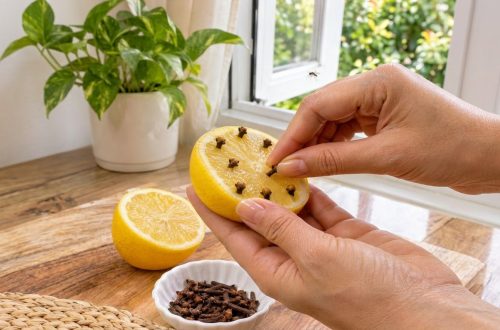
If you want to keep bugs away from your kitchen, patio, or entryway without spraying harsh chemicals around the house, a simple lemon and clove combination is worth a try. It uses ingredients you probably already have, takes about five minutes to make, and gives your space a fresh, citrusy scent while you work on it.
To be clear from the start, this is a natural freshener with a reputation for helping deter some insects, not a guaranteed pest control solution. Think of it as a low-cost way to make your home less inviting to flies, gnats, and ants, especially when you combine it with good habits like covering food and taking out trash regularly.
What You’ll Need
Core Ingredients
- 1 fresh lemon (medium size, firm and unbruised)
- 12 to 15 whole cloves (dried cloves, not ground)
Helpful Substitutions
- Lime can replace the lemon if that is what you have on hand. Limes give a slightly sharper scent.
- Orange or grapefruit works as a sweeter, more fragrant alternative, though the cloves will be less noticeable.
- Ground cloves can be used in a pinch. Mix about 1 teaspoon with a little water to form a paste and dab it onto a small dish, but whole cloves last longer and look more attractive.
- Clove essential oil is an option for a stronger scent. Add 3 to 5 drops to a cotton ball and place it in a small dish. Keep it away from pets and children, and never apply it directly to your skin.
- Cinnamon sticks, bay leaves, or a sprig of rosemary can be placed in the same bowl for an extra layer of aroma.
Tools
- Cutting board and sharp knife
- Shallow bowl or small plate
- Toothpick or skewer (optional, for making pilot holes in the lemon)
Why This DIY Can Be Useful
Lemon has a bright, clean citrus scent that many people associate with freshness. Cloves have a warm, spicy aroma that is much stronger than most household air fresheners. Together, they create a scent profile that many people find pleasant, and that is the main reason this method works as a freshener.
The natural oils in both ingredients are the reason they are often used in homemade pest deterrent ideas. Results vary from home to home, so treat this as a supportive habit rather than a complete solution for an existing insect problem.
How to Make It
- Wash the lemon under warm water and dry it thoroughly with a clean towel.
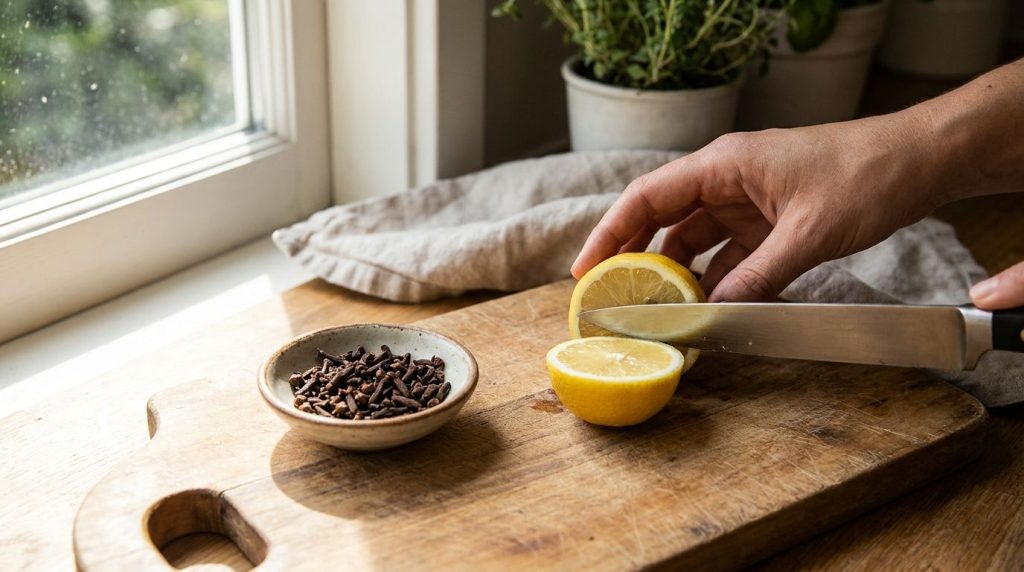
- Cut the lemon in half crosswise, so each half has a flat cut surface.
- Use a toothpick to make small pilot holes in the pulp if the cloves feel too firm to push in. This keeps them from snapping.
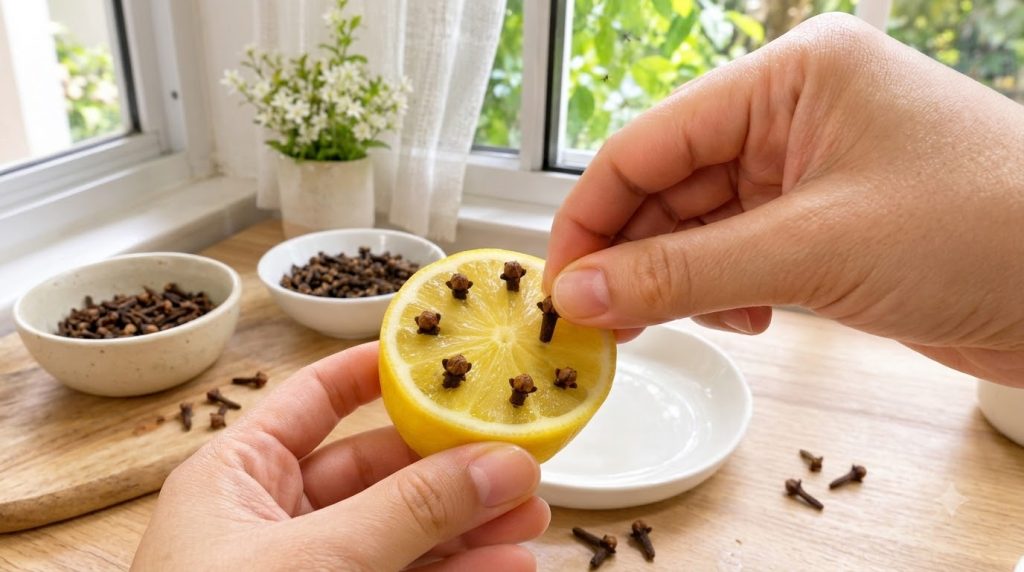
- Press the whole cloves into the exposed pulp, spacing them about half an inch apart. You can cover the surface, or arrange them in a simple pattern for a decorative look.
- Place each lemon half cut side up in a shallow bowl or on a small plate.
- If you want extra scent, tuck in a cinnamon stick or a bay leaf around the lemon.
How to Use It
- Entryways: Place one lemon half near a door or window where insects tend to slip in.
- Kitchen counters: Set a bowl on the counter away from food preparation areas. Keep it out of direct contact with food.
- Near trash bins: Position a lemon half a few feet from the bin, not inside it.
- Patio or outdoor table: Put a half on the table under a small plate, where it will not blow away.
Use one lemon half for every 100 to 150 square feet of living space as a starting point, and adjust based on how strong the scent is. Replace the lemon every three to five days, once the citrus starts to dry out or the cloves lose their aroma. Keep the bowl in a spot that gets indirect light, since strong sun can speed up drying.
What to Expect
In most homes, you will notice a light citrus and spice scent within the first day. The fragrance will be strongest at the start and gradually fade as the lemon dries. You may also see fewer insects around the treated spots, but results depend on your environment, the type of pests, and how well you keep food and moisture under control.
This method is best for everyday prevention and making your space smell pleasant. If you have a serious infestation, such as a steady stream of ants or a wasp nest, contact a professional pest control service instead.
Helpful Tips
- Choose lemons with smooth, bright skin. Thin-skinned fruit is easier to press cloves into without tearing.
- Make a fresh batch every few days rather than letting one lemon sit for weeks.
- Pair this with habits such as wiping counters, storing food in sealed containers, and fixing leaks, since insects are drawn to moisture and crumbs.
- Use a different bowl for the lemons so they do not stain your favorite serving dishes.
- Dry cloves kept in an airtight jar will stay fragrant for months. Buy them in small amounts so they stay fresh.
Important Notes and Safety
- Pets: Clove oil and whole cloves can be harmful to cats and some other pets if they chew or ingest them. Place lemons where pets cannot reach them, and skip the clove oil option if you have animals in the home.
- Children: Keep the bowls out of reach. Cloves are a choking hazard and should never be eaten.
- Skin contact: Wash your hands after handling cloves, especially if you have sensitive skin. Avoid touching your eyes while preparing the lemons.
- Surfaces: Lemon juice can leave marks on some wood finishes, stone, and painted surfaces. Always set the bowl on a coaster or small plate.
- Storage: Store leftover whole cloves in a sealed container away from heat and moisture. Discard lemons once they become moldy or soft.
- Ventilation: If you use clove oil, ventilate the room well, since the scent can be strong in small spaces.
With a little attention to placement and freshness, this simple lemon and clove setup is an easy, low-cost way to keep your home smelling clean and make it less inviting to unwanted visitors.