Thin or weak hair can be frustrating, especially when you are looking for a gentle, natural way to care for your scalp at home. A homemade hair oil made with onion, ginger, and rosemary is a popular DIY option that many people try when they want to support healthier, fuller-looking locks.
In this guide, you will learn what each ingredient is traditionally used for, how to prepare a simple infused oil, how to apply it to your scalp, and what to keep in mind for safe, realistic results.
Why This Natural Hair Oil Recipe Is So Popular
Hair oil recipes have been part of home beauty routines for generations. This blend pairs three ingredients that are often mentioned in natural haircare: onion, ginger, and rosemary. Each one is traditionally associated with scalp care, and together they make a simple infusion that can feel like a relaxing part of your weekly routine.
It is important to keep expectations balanced. Home remedies can be a pleasant addition to a healthy hair routine, but they are not a guaranteed solution for hair growth. Good nutrition, gentle handling, and a healthy scalp all play a role in how hair looks and feels.
What the Ingredients Are Commonly Associated With
- Onion: Often used in traditional haircare for its natural sulfur content. It is commonly associated with hair that looks shinier and feels stronger, though research on onion for hair growth is limited.
- Ginger: Frequently included in scalp massage blends because of its warming aroma. It is traditionally used to support a feeling of freshness on the scalp.
- Rosemary: One of the most widely used herbs in natural hair care. It is often included in homemade oils for its pleasant scent and its traditional reputation for supporting scalp health.
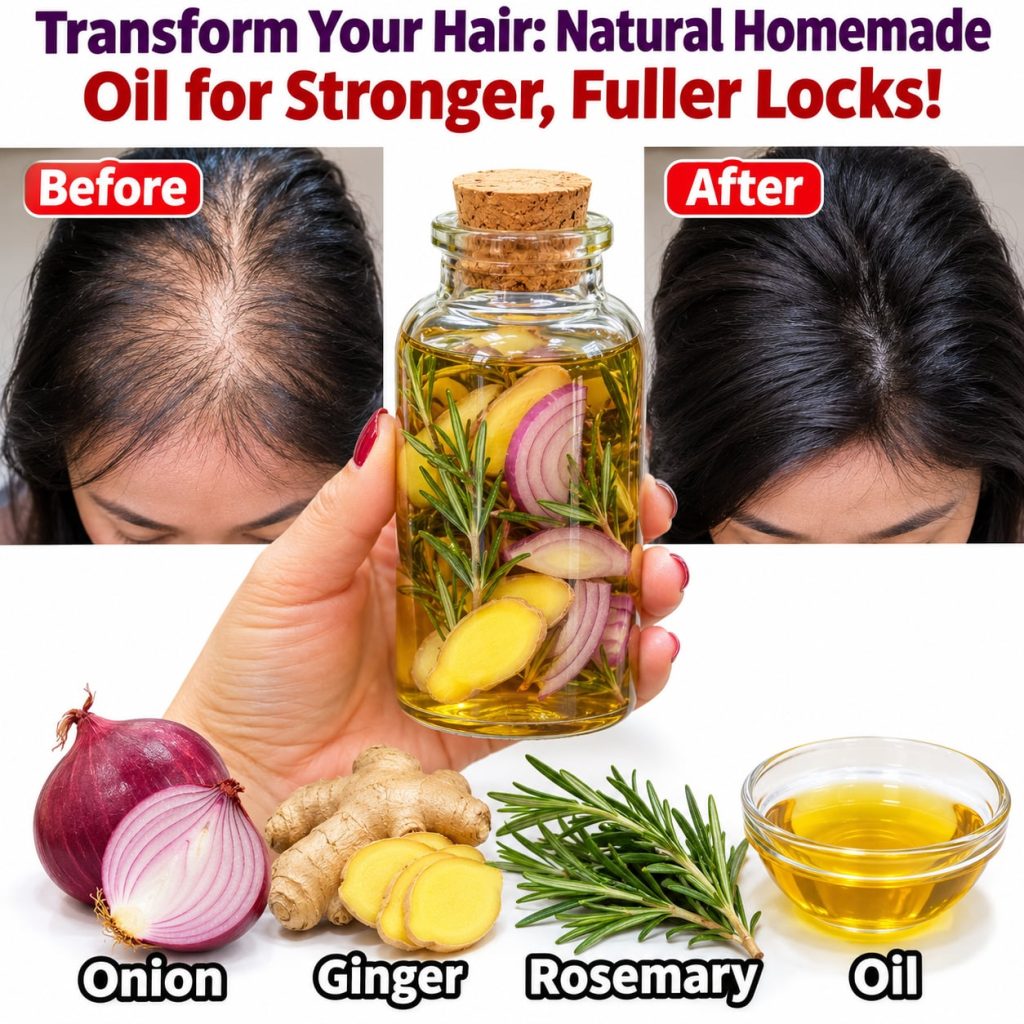
Ingredients for Homemade Onion, Ginger and Rosemary Hair Oil
Servings: About 1/2 cup (enough for 4 to 6 applications)
- 1 small yellow onion, finely grated (about 2 tablespoons of juice, strained)
- 1 inch fresh ginger root, finely grated
- 2 sprigs fresh rosemary (or 1 teaspoon dried rosemary)
- 1/2 cup carrier oil, such as coconut oil, jojoba oil, or extra virgin olive oil
A carrier oil is needed to give the blend a base that can be spread easily across the scalp and hair. Choose one that you already tolerate well on your skin.
Step-by-Step: How to Make the Oil
- Warm the carrier oil. Add 1/2 cup of oil to a small saucepan over low heat and warm for about 3 to 5 minutes. Do not let it smoke or bubble.
- Add the rosemary. Place the rosemary sprigs in the warm oil and let them steep on very low heat for about 5 minutes.
- Add the ginger and onion. Stir in the grated ginger and the grated onion. Simmer gently for 10 to 15 minutes, stirring occasionally, until the oil smells fragrant.
- Cool completely. Remove the pan from the heat and let the oil cool to room temperature, about 30 minutes.
- Strain. Pour the oil through a fine mesh strainer or cheesecloth into a clean glass jar. Press the solids gently to remove as much oil as possible.
- Store. Keep the oil in a sealed glass jar in the refrigerator and use it within 1 week, since fresh onion and ginger do not keep as long as plain oils.
How to Use It on Your Hair and Scalp
- Patch test first. Apply a small amount to the inner forearm and wait 24 hours. Skip the oil if you notice redness, itching, or irritation.
- Warm a small amount. Place about 1 to 2 tablespoons of the oil in your palm and warm it briefly between your hands.
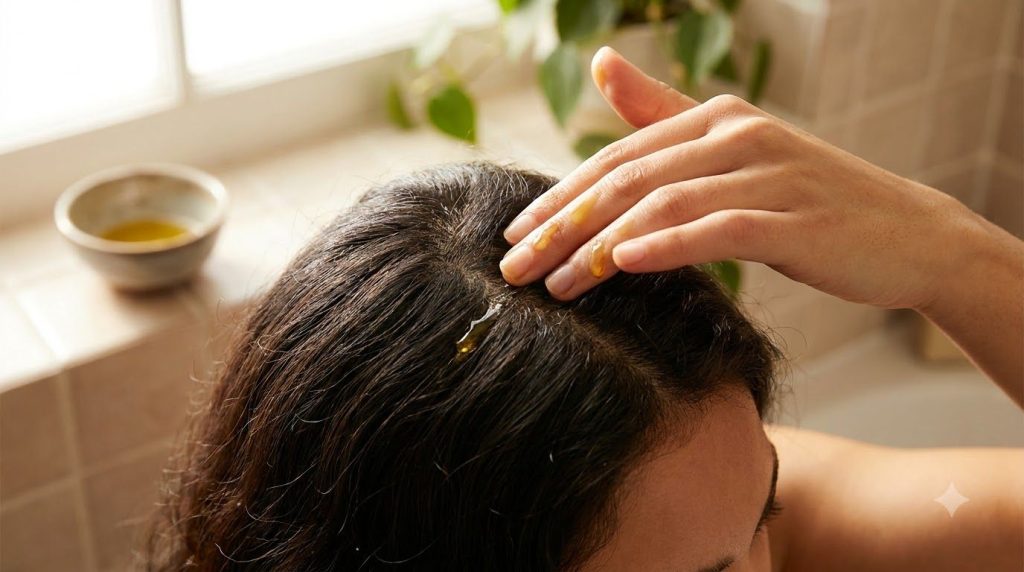
- Massage the scalp. Part your hair into sections and use your fingertips to massage the oil into the scalp for about 5 minutes. Gentle circular motions work well.
- Leave it on. Let the oil sit for 30 minutes, or leave it on overnight under a shower cap or old towel.
- Wash thoroughly. Shampoo twice if needed. The onion scent fades after washing, but a light conditioner can help the hair feel smooth.
Using the oil once or twice a week is a common routine. Consistency matters more than quantity, and it can take several weeks to notice any change in how your hair feels.
Safety Tips and Who Should Be Careful
- Always patch test before using a new blend, especially if you have sensitive skin or a history of allergies.
- Onion and ginger can irritate broken or sensitive skin. Avoid applying the oil to cuts, rashes, or inflamed scalp.
- Do not leave homemade oils at room temperature for long periods, and discard any batch that smells sour or looks cloudy.
- Keep the oil away from your eyes.
Frequently Asked Questions
Can this oil make hair grow faster?
There is limited direct research on this exact blend. Its ingredients are traditionally used in haircare, and a relaxing scalp massage may feel pleasant, but no homemade oil can be guaranteed to speed up hair growth.
Will the oil smell like onion?
The scent is noticeable during application, though it is usually mild after shampooing. Adding a few drops of an essential oil can help, but only if you have already tested it safely on your skin.
When should I talk to a professional?
If you notice sudden hair loss, patchy thinning, or scalp pain, speak with a dermatologist or healthcare professional. Hair changes can have many causes, and some need proper evaluation.
Final Thoughts
A homemade onion, ginger and rosemary hair oil is a simple DIY option for anyone who enjoys natural haircare rituals. Prepare small batches, patch test, massage gently, and keep your routine consistent. Pair it with a balanced diet, gentle styling habits, and a healthy scalp for the best overall results.
Medical disclaimer: This article is for general information only and is not medical advice. Consult a qualified healthcare professional or dermatologist before using home remedies, especially if you have a scalp condition or ongoing hair loss.