Dry, cracked heels can be frustrating, especially when sandals season arrives or the weather turns cold and dry. The good news is that many people reach for simple, everyday ingredients to create a gentle DIY foot routine that aims for smoother-looking feet. This guide walks you through what the popular blend contains, how people commonly prepare it, and what to know before you try it.
Why Heels Get Dry and Cracked
Heels are naturally thicker skin, and they have fewer oil glands than other parts of the body. Dry air, long periods of standing, closed-in shoes, and cold weather can all leave them rough and prone to cracking. Regular care helps keep the skin comfortable and more supple.
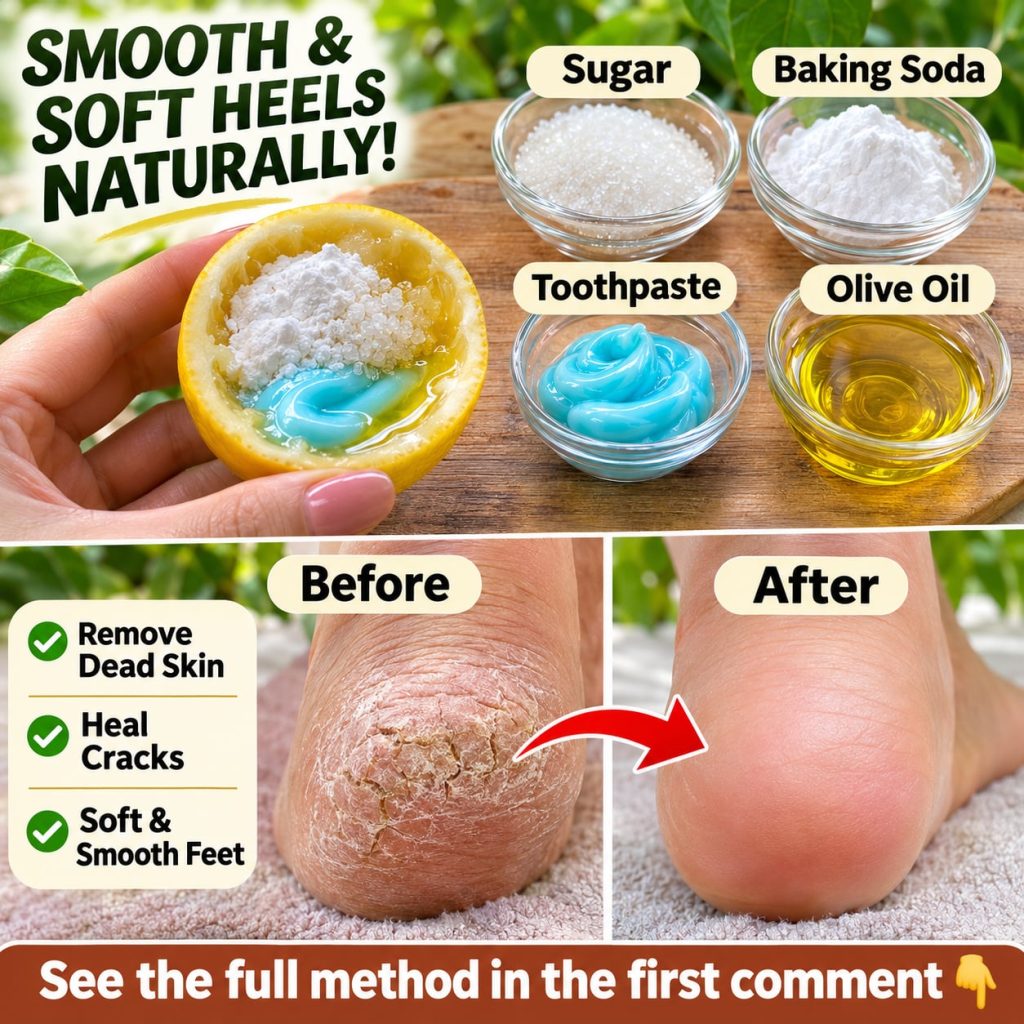
The Popular Natural Blend
The routine people are talking about combines a few common kitchen staples:
- Lemon: Often used in DIY beauty routines for its fresh scent and natural acidity.
- Sugar: A gentle physical exfoliant that can help loosen dry surface skin.
- Baking soda: Frequently mentioned in home cleaning and beauty tips for its mildly abrasive texture.
- Toothpaste: Included by some people for its cooling feel, though it is not designed for skin care.
- Olive oil: A familiar moisturizing oil that can help soften the skin after exfoliation.
How People Prepare It
- Soak your feet in warm water for 10 to 15 minutes to soften the surface skin.
- Pat your feet dry gently, leaving them slightly damp.
- Mix a small amount of sugar with a few drops of lemon juice and a pinch of baking soda to form a loose paste.
- Gently massage the mixture onto your heels for a minute or two, avoiding any cracks that are bleeding or irritated.
- Rinse thoroughly with warm water and pat dry.
- Apply a layer of olive oil or your favorite moisturizer while skin is still slightly damp.
Before You Try This
Patch-test any mixture on a small area first, since lemon and baking soda can sting or cause irritation for sensitive skin. Skip toothpaste altogether if you have sensitive skin, as it can dry out or irritate the area. Limit exfoliation to a few times per week rather than daily, and stop if you notice redness, burning, or pain. If your cracks are deep, painful, or show signs of infection, it is best to speak with a healthcare professional rather than relying on home remedies.
Tips for Keeping Heels Soft Longer
- Moisturize daily with a thick cream, especially after showering.
- Wear breathable shoes and cotton socks when possible.
- Stay hydrated and keep a consistent foot care habit.
- Use a pumice stone gently on thicker areas once skin has softened.
The Bottom Line
A simple, natural foot routine can be a pleasant addition to your self-care habits, and many people find that consistent moisturizing makes the biggest difference. Results vary from person to person, so approach these everyday ingredients with patience and care. Keep your routine gentle, listen to your skin, and enjoy the feeling of softer-looking heels.