Embarking on a ketogenic journey often brings incredible benefits like sustained energy and effective weight management. However, some people might experience digestive discomfort, largely due to a shift in dietary fiber intake. The good news? You don’t have to compromise on gut health while staying true to your low-carb goals!
Fiber is crucial for a healthy digestive system, aiding regularity, supporting beneficial gut bacteria, and helping you feel full. Incorporating high-fiber vegetables into your keto diet is a smart strategy to optimize digestion, enhance nutrient absorption, and further support your overall wellness journey.
Why Fiber Matters on Keto
While the ketogenic diet emphasizes healthy fats and protein, adequate fiber intake is non-negotiable for holistic health. Fiber helps prevent constipation, a common side effect for those new to keto, by adding bulk to stool and facilitating its passage. It also acts as a prebiotic, feeding the beneficial bacteria in your gut, which is vital for immune function, nutrient synthesis, and even mood regulation.
Choosing the right low-carb, high-fiber vegetables ensures you get these benefits without kicking yourself out of ketosis. Let’s explore some of the best options!
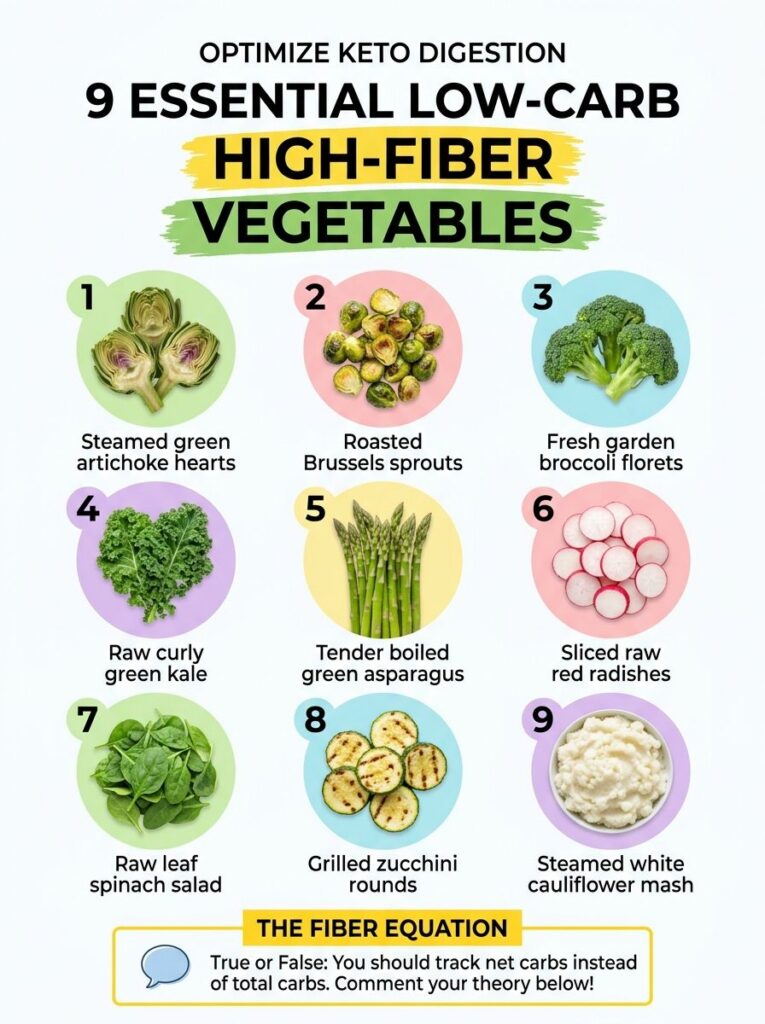
9 Essential Low-Carb, High-Fiber Vegetables for Keto Digestion
1. Spinach
This leafy green powerhouse is incredibly versatile and packed with vitamins K, A, and C, as well as iron and magnesium. It’s exceptionally low in carbs and high in insoluble fiber, promoting healthy bowel movements.
- Preparation: Sautéed with garlic, added raw to salads, or blended into a low-carb smoothie.
2. Broccoli
A cruciferous champion, broccoli offers a good amount of fiber, along with vitamin C, vitamin K, and potent antioxidants. Its fiber content helps support a healthy gut microbiome.
- Preparation: Steamed, roasted with olive oil, or lightly sautéed.
3. Cauliflower
Often hailed as the ultimate keto swap, cauliflower is not just low in carbs but also a decent source of fiber. It provides vitamins C and K, and can be used in countless ways to mimic higher-carb foods.
- Preparation: Roasted, mashed as a potato substitute, or riced for grain-free dishes.
4. Avocado
While technically a fruit, avocados are often used as a vegetable and are a keto superstar. They are rich in healthy monounsaturated fats and provide an excellent source of soluble and insoluble fiber, crucial for satiety and digestion.
- Preparation: Sliced into salads, blended into guacamole, or added to smoothies.
5. Asparagus
Known for its elegant spears, asparagus is low in carbs and high in fiber, particularly inulin, a prebiotic that supports gut health. It also delivers vitamins K, A, and C.
- Preparation: Roasted, grilled, or steamed with a drizzle of olive oil.
6. Brussels Sprouts
These mini cabbages are surprisingly high in fiber and vitamin C. They contain compounds that support detoxification and are fantastic for digestive health.
- Preparation: Roasted until crispy, halved and sautéed with bacon, or shredded raw in salads.
7. Zucchini
A summer squash favorite, zucchini is incredibly low in carbs and provides a good amount of fiber, contributing to digestive regularity. It’s also hydrating and contains vitamin C.
- Preparation: Spiralized into ‘zoodles,’ grilled, baked, or added to stir-fries.
8. Bell Peppers (Green, Red, Yellow)
While slightly higher in carbs than some other keto vegetables, bell peppers (especially green) offer fiber, vitamin C, and antioxidants. Enjoy them in moderation.
- Preparation: Sliced raw for dipping, stir-fried, or roasted.
9. Kale
Another king of leafy greens, kale is nutrient-dense, high in fiber, vitamins K, A, C, and various minerals. Its robust fiber content is excellent for digestive well-being.
- Preparation: Massaged into salads, sautéed, or baked into crispy kale chips.
The Fiber Equation: How Much is Enough?
While there’s no strict ‘keto fiber’ recommendation, general guidelines suggest around 25-30 grams of fiber per day for adults. On a ketogenic diet, focusing on the high-fiber, low-carb vegetables listed above can help you meet these goals naturally without exceeding your carbohydrate limit.
Pro Tip: Gradually increase your fiber intake to allow your digestive system to adjust, and always remember to drink plenty of water when consuming more fiber.
Ready to Optimize Your Keto Digestion?
By consciously adding these fantastic low-carb, high-fiber vegetables to your meals, you can significantly improve your digestive health on the ketogenic diet. Not only will you feel better, but you’ll also be nourishing your body with essential vitamins and minerals.
We hope this guide helps you unlock better digestion and support your weight loss goals on keto. What’s your favorite high-fiber vegetable for keto? Share your answer to ‘The Fiber Equation’ in the comments below!