There is something calming about watching a fresh leaf release its flavor into warm water. It is a small, quiet ritual that can turn an ordinary moment into a gentle pause in your day. This simple guava leaf tea is an easy way to enjoy a soothing, caffeine-free sip at home.
Below you will find a complete recipe with exact measurements, step-by-step instructions, safety notes, and practical tips so you can make this tea with confidence.
Recipe Overview
- Recipe Name: Homemade Guava Leaf Tea
- Drink Category: Herbal tea (caffeine-free)
- Preparation Time: 5 minutes
- Steeping Time: 5 to 7 minutes
- Total Time: About 12 minutes
- Servings: 2
- Serving Size: 1 cup (240 ml)
- Difficulty Level: Easy
- Best Serving Temperature: Warm
- Main Ingredients: Fresh guava leaves and water, with optional lemon and honey
Why You Will Love This Drink
- It uses just two main ingredients you may already have access to.
- It is quick to prepare and needs no special equipment.
- The mild, slightly grassy and fresh flavor is pleasant on its own.
- It is naturally caffeine-free, making it a relaxing option for the evening.
- It is easy to customize with lemon, honey, or a squeeze of citrus.
Complete Ingredients List
Guava Leaf Tea – 2 Servings
- 4 to 6 fresh guava leaves (about 5 g total), rinsed and gently crushed by hand to release their aroma
- 2 cups (480 ml) fresh water
- 1 teaspoon (5 ml) fresh lemon juice (optional)
- 1 teaspoon (7 g) honey (optional)
- 2 thin lemon slices for garnish (optional)
Use leaves from a clean, unsprayed guava tree that you know to be free of pesticides. Dried guava leaves can be used in place of fresh leaves, but use about 1 teaspoon (1 g) of dried leaves instead and reduce the steeping time slightly to avoid a bitter taste.
Equipment Needed
- Small saucepan with a lid
- Measuring cups and measuring spoons
- Fine-mesh strainer
- Two heat-safe cups or mugs
- Small knife or cutting board (for lemon slices)
Step-by-Step Preparation
Step 1: Prepare the Leaves. Rinse the guava leaves under cool running water to remove any dirt. Pat them dry with a clean towel. Gently crush each leaf between your fingers to help release its natural aroma. The leaves should feel slightly pliable and smell fresh and green.
Step 2: Heat the Water. Pour 2 cups (480 ml) of fresh water into a small saucepan. Heat over medium heat until small bubbles begin to form along the bottom of the pan, about 4 to 5 minutes. Do not let the water reach a hard, rolling boil.
Step 3: Add the Leaves. Reduce the heat to low. Add the crushed guava leaves to the hot water and cover the saucepan with its lid.
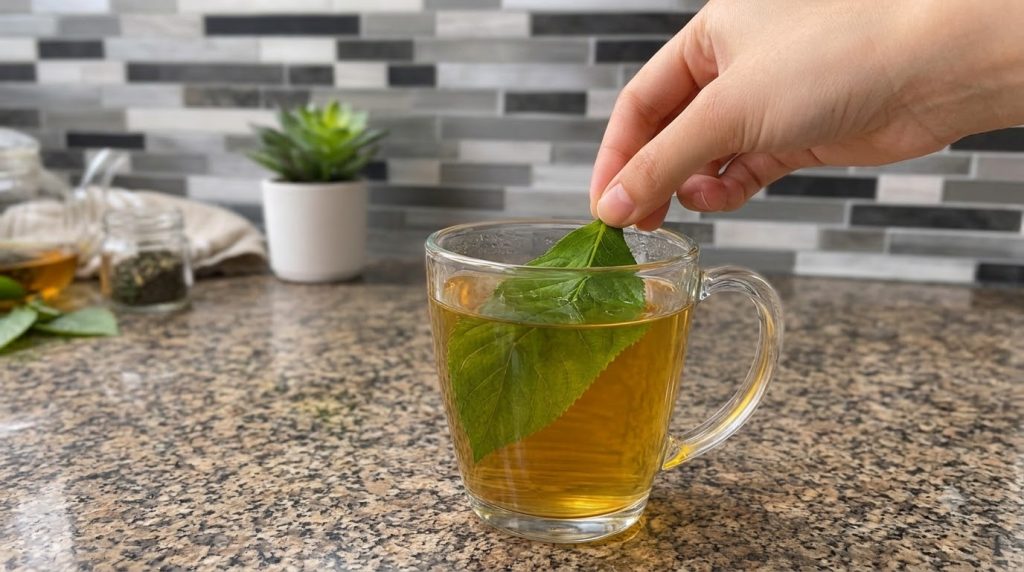
Step 4: Steep the Tea. Let the leaves simmer very gently on low heat for 5 to 7 minutes. The water should turn a pale golden-green color and smell fresh and slightly sweet. Shorter steeping gives a lighter flavor, while longer steeping makes it more intense.
Step 5: Strain the Tea. Turn off the heat. Pour the tea through a fine-mesh strainer into two heat-safe cups, discarding the leaves.
Step 6: Add the Lemon and Honey. Let the tea cool for about 1 minute. If you like, stir in 1 teaspoon (5 ml) of fresh lemon juice and 1 teaspoon (7 g) of honey, stirring until the honey has fully dissolved.
Step 7: Serve. Garnish each cup with a thin lemon slice if desired. Serve warm and enjoy while the tea is still comfortably hot.
Ingredient Benefits
Guava leaves provide a mild, fresh, and slightly herbal flavor. They are traditionally used in many households to brew tea, and they contain naturally occurring plant compounds. Research on guava leaves is still limited, so their effects on health should not be assumed.
Lemon juice adds bright acidity and contributes a small amount of vitamin C.
Honey adds natural sweetness. It contains sugars, so use it sparingly if you are watching your intake.
Water is the base of the drink and contributes to your daily fluid intake.
Expert Preparation Tips
- Use fresh, bright green leaves with no brown spots for the most pleasant flavor.
- Do not boil the leaves hard. A gentle simmer keeps the tea smooth rather than bitter.
- Start with 5 minutes of steeping, then taste. Adjust the time next time to suit your preference.
- Add lemon after straining and once the tea has cooled slightly, so the flavor stays fresh and bright.
- Stir honey into warm tea until fully dissolved to prevent it from settling at the bottom of the cup.
- If you want a stronger aroma, crush the leaves a little more before adding them to the water.
Healthy Recipe Variations
- Sugar-free version: Leave out the honey entirely. The lemon slice alone adds a pleasant touch.
- Mint twist: Add 3 to 4 fresh mint leaves (about 1 g) during steeping for a cool, refreshing flavor.
- Iced version: Let the strained tea cool completely, then pour it over ice in a glass. Add lemon as desired.
- Ginger version: Add 2 thin slices of fresh ginger (about 3 g) during steeping for a warm, spicy flavor.
Best Time to Enjoy
This tea is a comfortable choice in the afternoon or evening because it is naturally caffeine-free. It also pairs nicely with a light meal or as a calming break during a busy day. Enjoy it as part of your normal routine rather than expecting a specific effect from drinking it at a particular time.
Storage and Shelf Life
Serve the tea fresh for the best flavor. If you have leftovers, let the tea cool, then store it in a covered glass container in the refrigerator for up to 24 hours. Do not add lemon or honey until you are ready to serve if you plan to store it. Discard any tea that smells sour or looks cloudy. Freezing is not recommended because the flavor may become flat after thawing.
Safety Precautions
- Guava leaf tea is a traditional food-based beverage, not a treatment or substitute for medical care.
- Speak with a healthcare professional before drinking it regularly if you are pregnant, breastfeeding, or have a medical condition.
- If you take medication, especially for blood sugar, blood pressure, or blood clotting, check with your doctor or pharmacist before adding this tea to your routine.
- Stop drinking the tea and seek advice if you notice an allergic reaction such as itching, swelling, or difficulty breathing.
- Keep the tea to moderate amounts, such as one to two cups per day, and avoid making it stronger than the recipe describes.
- Use only leaves from a source you trust, and never use plant parts that have been treated with chemicals.
Common Mistakes to Avoid
- Boiling the leaves too hard: This can make the tea taste bitter. Keep the heat low and steep gently.
- Steeping for too long: Stop after about 7 minutes to keep the flavor balanced.
- Adding too much honey: One teaspoon per two servings is enough for most people. Taste before adding more.
- Using wilted or damaged leaves: Choose fresh, healthy-looking leaves for the cleanest flavor.
Frequently Asked Questions
Does this tea contain caffeine?
No. Guava leaves are not a source of caffeine, so this tea is naturally caffeine-free.
Can I drink this tea every day?
Many people enjoy herbal teas in moderation as part of a balanced routine. However, check with a healthcare professional first if you have a health condition or take medication.
Can I use dried guava leaves?
Yes. Use about 1 teaspoon (1 g) of dried leaves for 2 cups of water and steep for about 5 minutes.
Can I prepare it ahead of time?
You can brew it and store it in the refrigerator for up to 24 hours. Add lemon and honey when you are ready to serve.
Can I serve it cold?
Yes. Let it cool completely, then serve over ice for a refreshing iced tea.
Can I replace honey with another sweetener?
Yes. Maple syrup or a small amount of sugar can be used instead, but start with a small quantity and adjust to taste.
Conclusion
Homemade guava leaf tea is a simple, fragrant drink that needs only fresh leaves, water, and a few minutes of gentle steeping. Its mild, fresh flavor makes it a pleasant choice for a quiet moment in the afternoon or evening.
Enjoy it as one part of a balanced lifestyle, and remember to check with a healthcare professional if you have any health concerns. Take a slow sip, savor the moment, and enjoy your calm ritual.