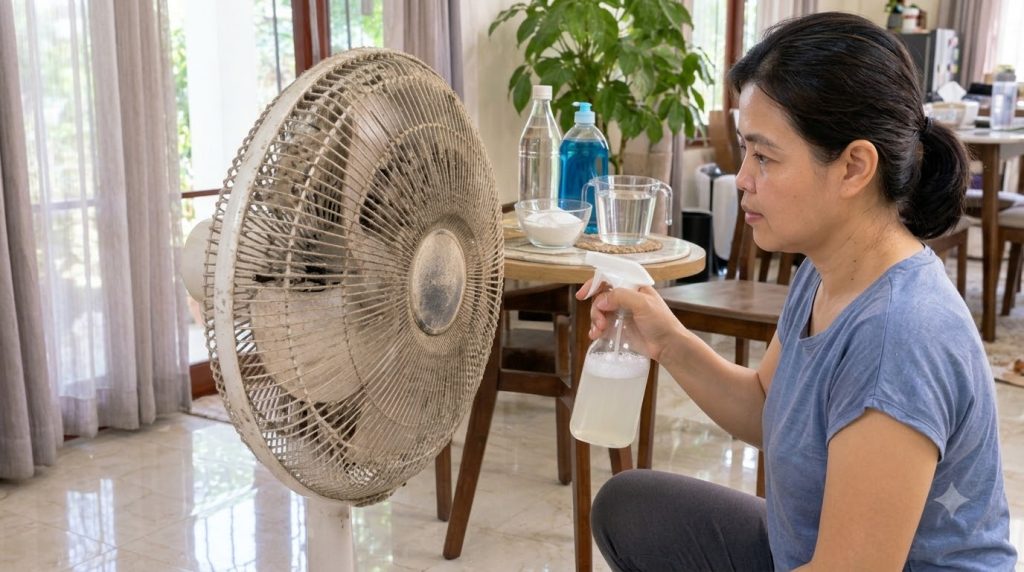
A standing fan can look fairly clean from the front while the grille, blade edges, and motor housing quietly collect a thick layer of dust. Every time the fan runs, some of that dust gets pushed back into the room. For anyone dealing with stuffy air, sneezing, or a fan that sounds louder than it used to, a deep clean is one of the simplest fixes you can do in an afternoon.
This guide walks you through a simple vinegar and dish soap method for cleaning the fan thoroughly, along with tips on what to use if you don’t have every ingredient on hand.
What You’ll Need
Cleaning Solution
- 1 cup white vinegar
- 1 cup warm water
- 1 teaspoon mild dish soap
Optional substitutes: If you don’t have vinegar, use a mild all-purpose cleaner diluted according to its label. For a gentler option on painted or plastic parts, use only warm water with the dish soap.
Tools
- Spray bottle
- Microfiber cloths (2 to 3)
- Soft-bristle brush or old toothbrush
- Vacuum with a brush attachment
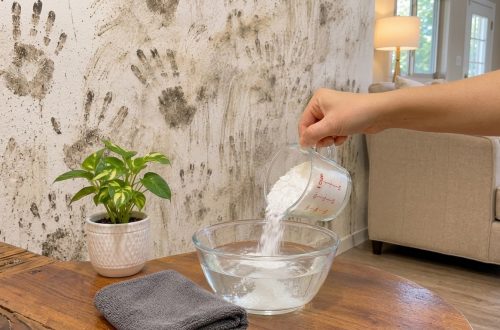
- Bowl for soapy water
- Cotton swabs for tight corners
- Dry towel
Why This DIY Can Be Useful
Dust on a fan is usually a mix of skin cells, pet hair, and fine particles that cling to the grille and blades. Vacuuming removes the loose layer first, so the cleaning solution only has to deal with what remains. White vinegar helps break down light grime and mineral residue, while a small amount of dish soap lifts greasy film that dust tends to stick to. The result is a cleaner fan that moves air more freely, which can help it run more quietly and efficiently.
How to Make It
- Unplug the fan completely and move it to an open area where you can work comfortably.
- Vacuum the front and back grilles, the blades, and the base using a brush attachment to remove loose dust.
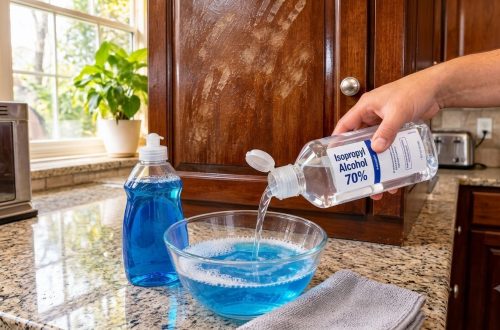
- Pour the warm water and vinegar into a spray bottle. Add the dish soap and gently swirl the bottle to mix. Avoid shaking it hard, since this creates a lot of foam.
- Test the solution on a small hidden area of the fan first to make sure the finish is not affected.
How to Use It
- Remove the front grille if your fan model allows it, following the manufacturer’s instructions. Soak it in a bowl of warm soapy water for 10 to 15 minutes.
- Lightly mist the blades and the back of the fan with the solution. Do not spray directly into the motor housing or any electrical openings.
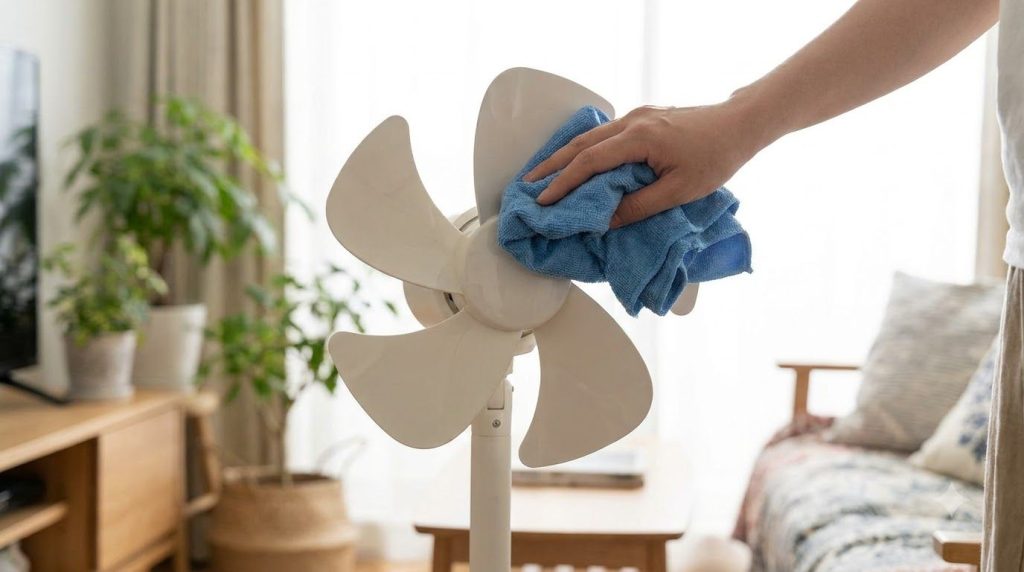
- Wipe each blade with a damp microfiber cloth, working from the center outward. Flip the blades over and repeat on both sides.
- Use a soft brush or cotton swab to clean the grille openings, the base, and the area around the motor.
- Scrub the grille gently with the brush while it soaks, then rinse it under clean water and let it air dry completely.
- Wipe all surfaces with a dry microfiber cloth so no moisture remains on the fan.
- Reassemble the fan only after every part is fully dry, then plug it in and run it on low for a few minutes.
What to Expect
After cleaning, the fan should look noticeably brighter, and the blades should feel smoother to the touch. You may notice less dust settling on nearby surfaces over the next few days. Keep in mind that a single cleaning will not fix an underlying motor problem or remove every trace of dust in the room, but regular cleaning will make a real difference over time.
Helpful Tips
- Clean the fan every two to four weeks during heavy-use seasons, and monthly the rest of the year.
- Vacuum before wiping. Wet cleaning on top of loose dust just creates muddy streaks.
- Use a cotton swab or old toothbrush for the small gaps around the motor cover.
- Wipe the surrounding floor and nearby walls while you work, since the dust you remove often lands there.
Important Notes / Safety
- Always unplug the fan before cleaning and make sure it is completely dry before plugging it back in.
- Never spray liquid directly into the motor or control panel.
- Check the manufacturer’s manual before soaking any part, especially if the grille or blades have a special coating.
- Do a patch test on painted or wooden components before using vinegar more broadly.
- Do not mix vinegar with bleach or any other cleaning product. Rinse the fan well if you switch cleaners.
- Store the cleaning solution in a clearly labeled bottle and keep it away from children and pets.