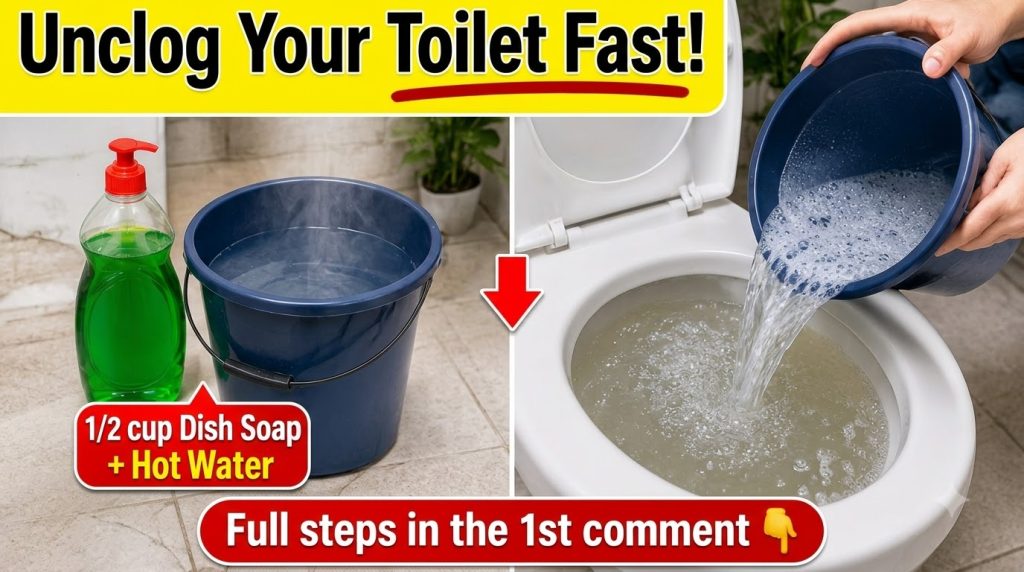
Few things are more frustrating than a toilet that won’t flush when the tank is empty, the handle feels loose, or the bowl needs a little extra push. When the usual fix isn’t available right away, a bucket of water can often do the job. This manual flush is a simple, low-cost way to move waste through the trap and refill the bowl until you can address the real problem.
Why This Method Works
A toilet flushes because a rush of water pushes waste through the trap and into the drain. When the tank can’t deliver that rush, pouring water quickly into the bowl recreates the same effect. The water needs to enter fast and in one steady volume, which is why a bucket works better than a slow trickle from a faucet.
What You’ll Need
- A bucket holding about 2 to 3 gallons of clean water (a standard 2-gallon bucket works well)
- Water from a sink or tub, or a nearby source you can carry easily
- Disposable or rubber gloves
- Optional: a small cup or pitcher for topping off the bowl
- Optional: a toilet plunger, if the bowl is partly blocked
How to Do a Manual Flush
- Put on gloves. Even when the water is clean, toilet bowls can carry bacteria.
- Fill the bucket with water from a sink or tub. Warm or cold water both work.
- Stand at the side of the toilet with the bucket close to the bowl so you can pour with control.
- Pour the water into the bowl in one smooth, steady motion, aiming toward the inside of the bowl rather than onto the rim. Pouring it at the far edge helps create a stronger rush.
- Watch the water level. If the bowl drains and the waste disappears, the flush has worked. If the water rises close to the rim, stop pouring and wait.
- If the water doesn’t drain, wait a few minutes and try a plunger before pouring more water. Adding repeated buckets to a blocked toilet can cause an overflow.
- Once the bowl has cleared, refill the tank as needed so the next flush works normally.
What to Expect
A bucket flush usually clears normal waste and toilet paper when the trap isn’t severely clogged. It won’t fix a worn flapper, a broken fill valve, or a partial blockage deep in the drain. Expect some splashing, especially if you pour too fast, so keep the bucket close and work slowly. If the bowl drains slowly even after a good flush, the problem is likely in the pipe or trap and needs a closer look.
Helpful Tips
- Use a bucket with a comfortable handle and a lip for pouring, which gives you better control.
- Lay down an old towel or a bath mat to catch splashes on the floor.
- Pour in one strong, steady stream rather than several small splashes, which often don’t have enough force.
- Keep the bathroom door open or run a fan for ventilation while you work.
- Clean the bucket afterward with warm soapy water and rinse it well before storing it.
Important Notes and Safety
- Use only plain water. Do not add bleach, drain cleaners, or other chemicals to the bucket, especially if you might mix them with leftover cleaners in the bowl. Certain chemical combinations release harmful fumes.
- Stop pouring if the water level rises near the rim and the bowl isn’t draining. Overflow can cause a mess and damage flooring.
- If you have a clog that won’t clear after several attempts, call a licensed plumber instead of repeatedly flushing with buckets.
- Wash your hands thoroughly after the job, even if you wore gloves.
- Fix the underlying tank problem as soon as possible so you won’t need to repeat this method.
A bucket flush is a handy temporary solution that many households can rely on in a pinch. Used carefully with clean water and a steady pour, it can get the job done until a permanent repair is made.