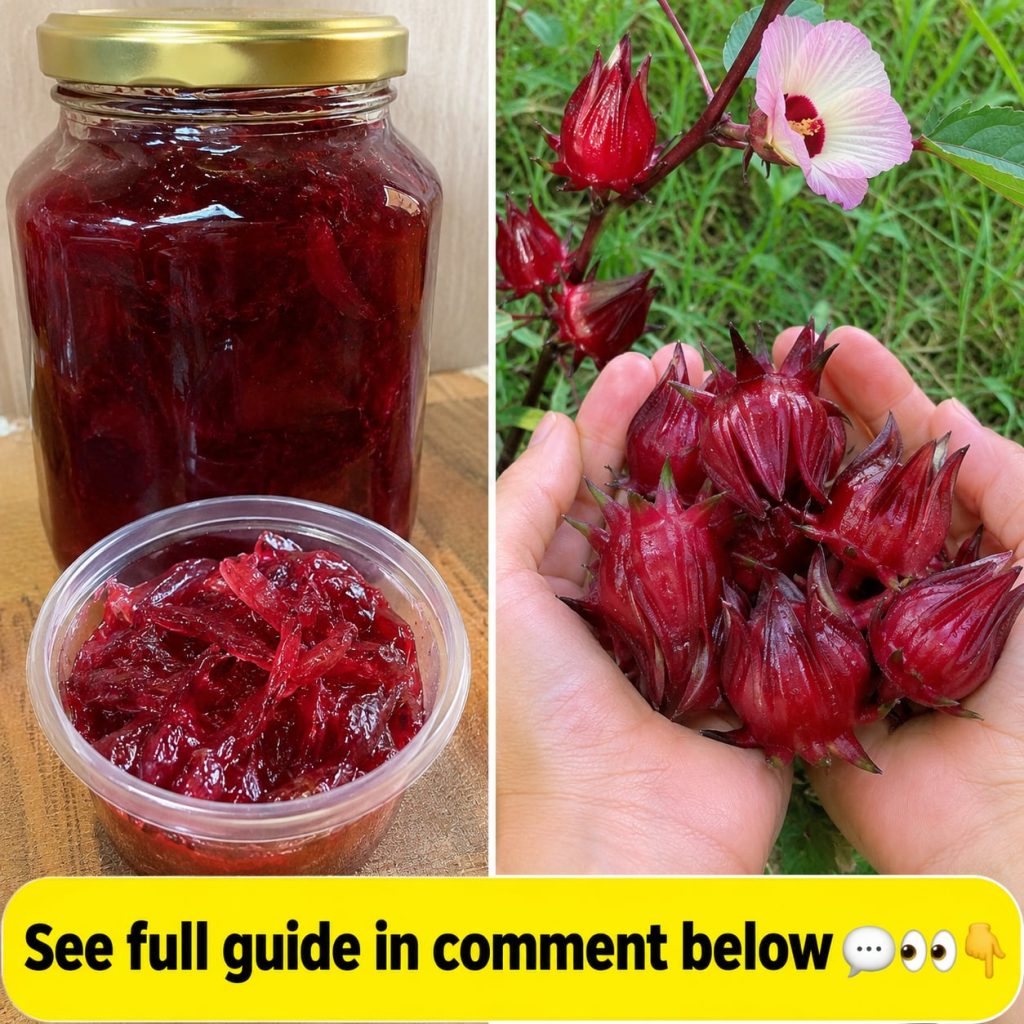
Most people throw away the most useful part of this plant. The fleshy red cup that surrounds the seed pod, called the calyx, is what turns into a deep ruby tea and a jam with a sharp, fruity bite. This is the part most people skip, and it is why a plant that was once prized in home kitchens is now rarely grown.
What It Is
Roselle is a hibiscus relative grown in warm climates. The plant itself is attractive, but the valuable part is the calyx, which becomes thick, tart, and deep red as the flower fades. Cooks use it for drinks, syrups, sauces, and preserves. Because it is less common in grocery stores, many home cooks have never tried it.
Ingredients
- Fresh or dried roselle calyces (about 1 cup fresh or 1/2 cup dried for tea)
- Water (about 1 liter for a tea batch)
- Raw cane sugar or honey, optional
- Fresh ginger slices, optional
- For jam: roselle calyces, sugar, lemon juice, and a little water
Approximate Measurements
For a basic tea, use about 1 cup of fresh calyces or 1/2 cup of dried calyces per 1 liter of water. For a small jam batch, plan roughly 500 grams of cleaned calyces, 400 grams of sugar, the juice of one lemon, and 100 milliliters of water. These amounts are a starting point. Adjust sugar to taste and to how tart your calyces are.
Formula and Recipe
The simplest formula is 1 part roselle calyx to 6 parts water for tea, then sweeten lightly after brewing. For jam, use a 1:0.8 ratio of calyx to sugar by weight, plus a squeeze of lemon to help set the mixture and brighten the color.
Step-by-Step Method for Tea
- Rinse the calyces under cool water and remove any brown or soft pieces.
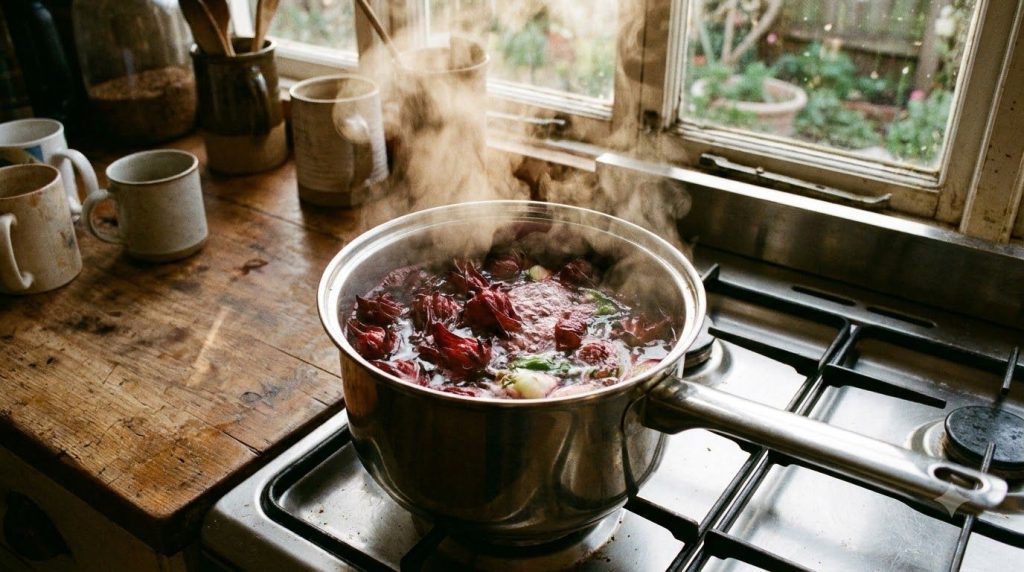
- Bring the water to a gentle boil in a stainless steel or glass pot.
- Add the calyces and reduce heat to low.
- Simmer for 5 to 10 minutes. Do not boil hard for longer.
- Turn off the heat, cover, and steep for 10 more minutes.
- Strain, cool, then sweeten if needed.
Step-by-Step Method for Jam
- Remove the seeds from the calyces and chop them roughly.
- Simmer the calyces with water for 15 minutes until soft.
- Add sugar and lemon juice, then stir until dissolved.
- Cook over medium heat until the mixture thickens, about 15 to 20 minutes.
- Test by spooning a little onto a cold plate. If it wrinkles when pushed, it is ready.
- Pour into clean, dry jars while still hot.
How to Use It
Serve the tea warm or chilled. Use the jam on toast, yogurt, or oatmeal. A spoonful of the jam can also flavor a simple glass of sparkling water. Start with a small cup, especially if you are new to hibiscus-type drinks.
How Often to Use It
One to two cups of tea per day is a reasonable routine for most adults who tolerate it well. Use jam in small amounts, such as one tablespoon at a time, because it is sweetened.
Quick-Reference Table
| Version | Best Use | Shelf Life |
|---|---|---|
| Fresh calyx tea | Same-day drinks | Up to 2 days refrigerated |
| Dried calyx tea | Everyday brewing | 6 to 12 months in a sealed jar |
| Jam (sealed jar) | Toast and desserts | Up to 3 months refrigerated |
| Cold brew concentrate | Summer drinks | Up to 5 days refrigerated |
How to Choose Good Calyces
Look for plump, deep red calyces without mold, insect damage, or heavy dust. Dried calyces should smell fruity and tart, not musty. If you buy from an international grocer, check the packaging date and avoid bags with clumps caused by moisture.
Storage
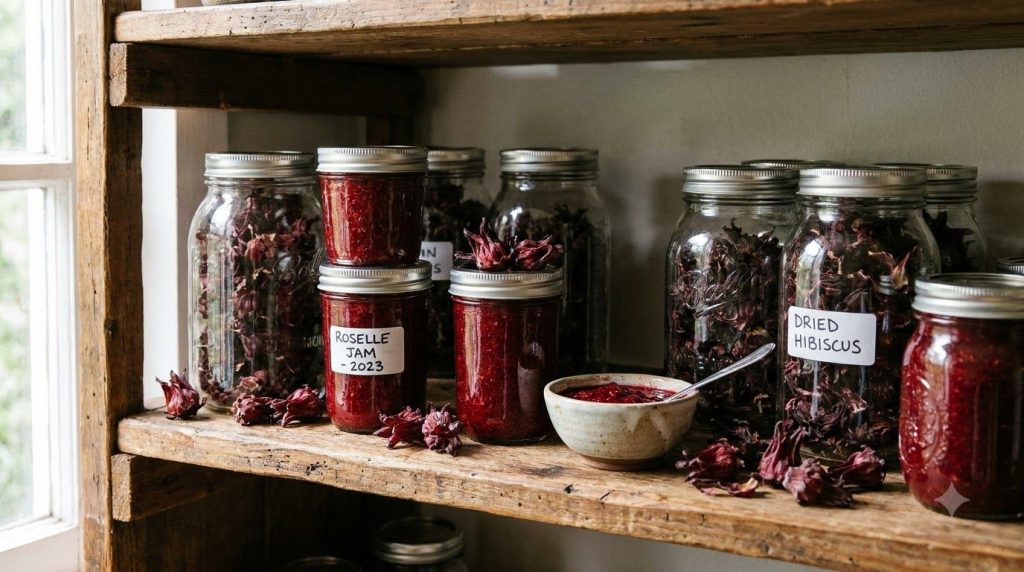
Store dried calyces in an airtight glass jar away from light and heat. Keep fresh calyces refrigerated in a paper towel inside a sealed container. Store jam in sterilized jars in the refrigerator, or follow a tested canning method if you plan to keep it at room temperature.
Practical Tips
Quick Tip: Freeze fresh calyces whole in a zip bag if you cannot use them within two days. Frozen calyces brew well without thawing.
Did You Know? The color of the tea can shift slightly with pH. Adding a little lemon juice makes it brighter red, while a pinch of baking soda turns it darker and duller.
Common Mistakes
- Using damaged or moldy calyces, which spoil the taste and can cause spoilage.
- Boiling too hard or too long, which makes the tea bitter.
- Storing in damp jars, which encourages mold.
- Skipping the rinse step, which leaves dust and grit in the drink.
- Overloading jam with sugar, which masks the fruit flavor.
Cautions and Who Should Avoid It
Roselle is a food, but it is not right for everyone. People who are pregnant or breastfeeding, those taking blood pressure or blood sugar medication, and anyone with a known hibiscus allergy should speak with a qualified health professional before drinking it regularly. Stop use and seek medical advice if you notice unusual symptoms.
Quick Summary
Best preparation: a simple simmered tea or a sweetened jam from fresh or dried calyces. Best use case: a tart, colorful drink or a fruit spread. Storage: airtight glass for dried calyces, refrigeration for jam and brewed tea. When to use: small daily amounts, after checking for any personal contraindications. What to avoid: moldy calyces, hard boiling, and damp storage.
FAQ
Can I use fresh or dried calyces? Yes. Dried calyces are more convenient, while fresh ones give a brighter, more tart flavor.
How long does homemade tea last? Refrigerated tea is best within 2 days.
Can I refrigerate the jam? Yes. Sealed jam stays best in the refrigerator for up to 3 months.
Can I freeze fresh calyces? Yes. Freeze them whole in airtight bags and brew without thawing.
Can I reuse the calyces? You can steep them a second time for a lighter tea, though the color and flavor will be weaker.
What part is best? The fleshy calyx is the part used for tea and jam. The seeds and leaves are usually not used in the same way.
When should I avoid it? Avoid it if you are pregnant, breastfeeding, taking blood pressure or diabetes medication, or allergic to hibiscus.
How often should I drink it? One to two cups per day is a common routine, but check with a professional if you have a health condition.
Conclusion
This forgotten red plant offers a practical way to bring color and tartness into everyday drinks and breakfasts. Start with a small batch of tea, adjust the sweetness to your taste, and then try a simple jam once you know how your calyces behave.
You may also like: Read more about simple homemade herbal teas in our full guide.
Related remedy: See the full guide to making fruit preserves at home.
Continue with: learn how to make it with dried garden herbs in our next article.