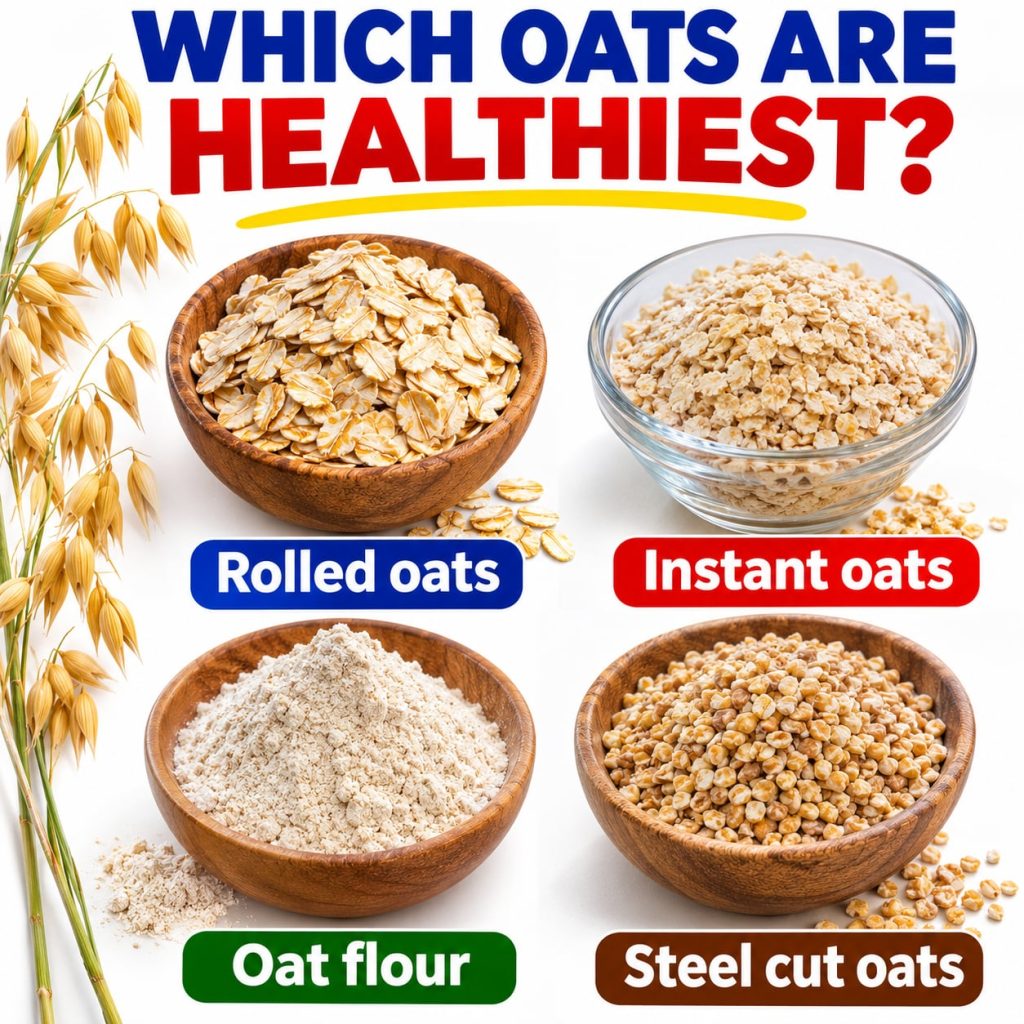
Oats are one of the most popular breakfast staples, but not all oats are the same. Rolled oats, instant oats, oat flour, and steel-cut oats differ in how they are processed, how long they take to cook, and how they feel in your bowl. Understanding these differences can help you choose the right oat type for your health goals and your daily routine.
In this guide, you will learn what sets each type apart, how to think about their benefits, and how to make a confident choice for your next healthy breakfast.
Why the Type of Oat Matters
Oats are whole grains, and the way they are processed affects texture, cooking time, and how quickly they are digested. Less processed oats generally keep more of their original structure, while more processed oats cook faster but can feel softer and less filling. Choosing an oat type is less about finding a single “best” option and more about matching the oat to your schedule, taste preferences, and nutrition goals.
Rolled Oats
Rolled oats, sometimes called old-fashioned oats, are whole oat groats that have been steamed and flattened. They keep a chewy texture and a mild, nutty flavor.
- Cooking time is typically a few minutes on the stovetop.
- They work well in overnight oats, baked goods, and warm porridge.
- Their texture holds up better than instant oats, which makes them a good everyday choice.
Instant Oats
Instant oats are cut finer and rolled thinner than rolled oats, then often pre-cooked and dried. They are the quickest option and are useful on busy mornings.
- They cook in about a minute with hot water or microwave heat.
- They have a softer, creamier texture that some people prefer.
- Check labels, as some flavored packets contain added sugar. Plain varieties let you control the sweetness yourself.
Steel-Cut Oats
Steel-cut oats, also known as Irish oats, are whole oat groats chopped into small pieces with steel blades. They are the least processed of the common oat types.
- They take longer to cook, often 20 to 30 minutes, but many people find the result satisfying.
- Their firm, hearty texture makes them a good choice for a slow, filling breakfast.
- Making a larger batch and reheating portions during the week is a practical way to save time.
Oat Flour
Oat flour is made by grinding whole oats into a fine powder. It is simple to make at home by blending rolled oats until smooth, and it is also sold in stores.
- It works well in pancakes, muffins, and smoothies.
- It can make baked goods more tender and adds a mild, toasty flavor.
- Because it is finely ground, it absorbs liquid differently, so recipes may need small adjustments.
Quick Comparison
- Rolled oats: chewy texture, moderate cooking time, versatile for overnight oats and baking.
- Instant oats: fastest to prepare, softest texture, best for very busy mornings.
- Steel-cut oats: least processed, longest cooking time, hearty and filling texture.
- Oat flour: ideal for baking and blending, a convenient way to use oats in recipes.
How to Choose the Right Oat for Your Goals
Your best choice depends on what matters most to you. If you want a satisfying breakfast that keeps you full, steel-cut or rolled oats are often a good fit. If time is limited, instant oats can still be a practical part of a balanced breakfast, especially when you choose plain varieties and add your own toppings. Oat flour is useful when you want to add oats to baking or smoothies.
Whatever type you choose, pairing oats with fruit, nuts, or yogurt can help create a more balanced meal.
Frequently Asked Questions
Are all oat types equally healthy?
All oat types come from whole oats, but they differ in processing. Less processed oats often have a firmer texture and take longer to digest, while more processed oats cook faster. The best choice is the one you will eat consistently.
Can I swap one oat type for another?
Yes, but expect changes in texture and cooking time. Rolled oats can often replace steel-cut oats in baking with minor adjustments, while instant oats may turn mushy if used in recipes that call for rolled oats.
Final Thoughts
Choosing the healthiest breakfast starts with understanding your options. Rolled oats, instant oats, oat flour, and steel-cut oats each offer a different texture, cooking experience, and use. By matching the oat type to your schedule and goals, you can build a breakfast routine that feels enjoyable and sustainable.
Medical Disclaimer
This article is for general information only and is not a substitute for professional medical advice. If you have a health condition, such as diabetes or digestive concerns, or follow a specific diet, consult a qualified healthcare professional before making changes to your diet.