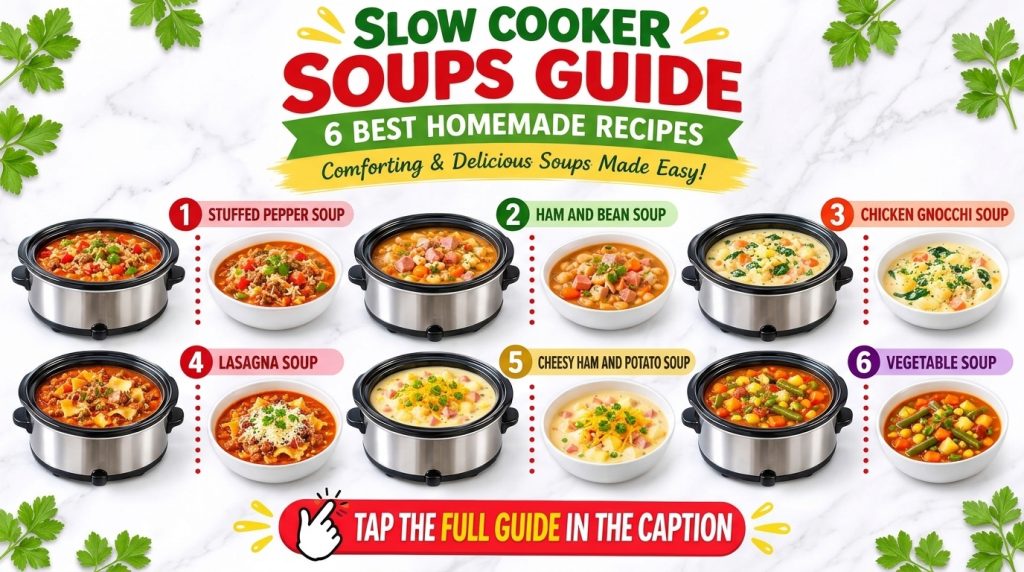
Why Slow Cooker Soups Are So Easy to Love
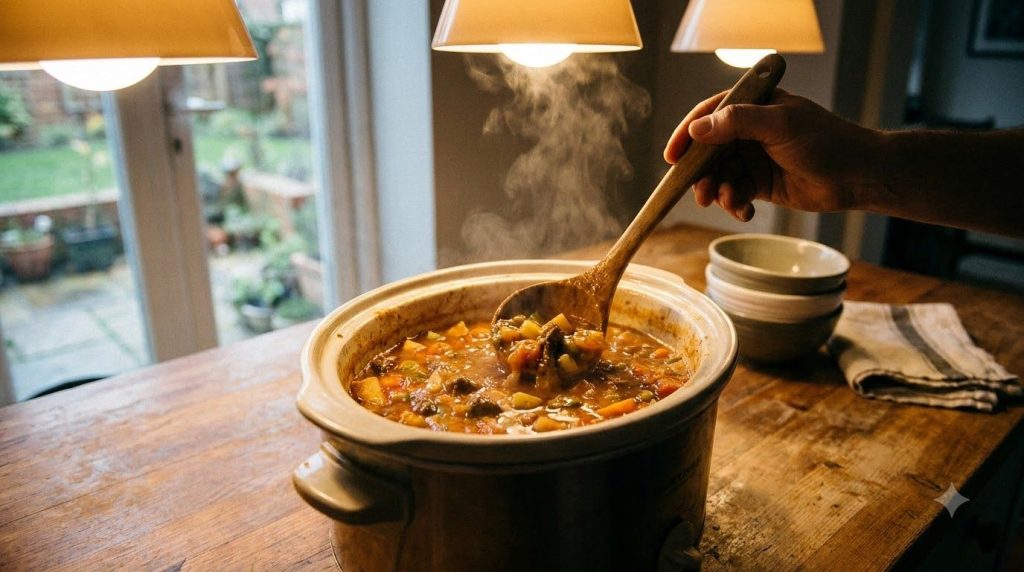
Slow cooker soups are one of the simplest ways to get a warm, filling dinner on the table. You add your ingredients in the morning, go about your day, and come home to a house that smells ready for dinner.
This guide covers the basic method behind most slow cooker soups, along with tips to help your first batch turn out rich, balanced, and full of flavor.
Basic Ingredients for Slow Cooker Soup
Most slow cooker soups share a simple structure. Once you understand it, you can use the same approach for many different recipes.
- Liquid: Broth, stock, or water forms the base. Low-sodium broth gives you more control over the final salt level.
- Aromatics: Onion, garlic, celery, and carrot build the foundation of flavor.
- Protein or beans: Chicken, beef, sausage, lentils, or white beans make the soup filling.
- Vegetables: Potatoes, tomatoes, squash, spinach, or green beans add texture and nutrition.
- Finishing touches: Fresh herbs, a squeeze of lemon, or a little grated cheese brighten the soup before serving.
How to Make a Slow Cooker Soup
The exact steps vary by recipe, but this general method works well for most slow cooker soups.
- Prep your ingredients. Chop vegetables into even pieces so they cook at the same rate. Cut meat into bite-sized chunks if the recipe calls for it.
- Brown the meat, if needed. For beef or sausage, cook the meat in a skillet over medium-high heat until browned on the outside, about 5 to 8 minutes. This step adds deeper flavor, but you can skip it for a faster version.
- Layer the ingredients. Place the root vegetables and aromatics on the bottom of the slow cooker, then add the meat or beans, and pour in the broth. Keep the liquid below the top of the pot to avoid overflow.
- Cook on low or high. Most soups cook well on low for about 6 to 8 hours or on high for about 3 to 4 hours. Cooking times depend on your slow cooker and ingredient sizes, so check the soup near the end of the suggested time.
- Check for doneness. Vegetables should be fork-tender, and meat should be tender enough to shred or pull apart. Chicken should reach a safe internal temperature of 165°F (74°C).
- Finish the soup. Stir in delicate ingredients such as spinach, cooked pasta, or fresh herbs during the last 15 to 30 minutes. Taste and adjust the salt, pepper, and acid before serving.
Pro Tips for Better Slow Cooker Soup
- Add dairy such as cream, milk, or sour cream during the last 20 to 30 minutes, or stir it in just before serving so it does not curdle.
- Use less liquid than you would for stovetop soup, since the lid traps moisture and the volume will not reduce as much.
- Cut potatoes into larger pieces if you want them to hold their shape after many hours of cooking.
- Add fresh herbs at the end to keep their color and flavor bright.
- Taste the soup before serving, because long cooking can mute seasonings and change the balance of salt.
Common Mistakes to Avoid
Most problems with slow cooker soup are easy to prevent once you know what to watch for.
- Overcooked pasta or rice: Add these during the last 30 minutes, or cook them separately and add them to each bowl.
- Watery soup: Remove the lid for the last 30 minutes on high to let some liquid evaporate, or mash a few cooked potatoes into the broth to thicken it.
- Bland flavor: Season in stages and finish with lemon juice, vinegar, or a sprinkle of fresh herbs.
- Overfilled pot: Fill the slow cooker no more than two-thirds full to allow the soup to heat evenly.
Variations to Try
Once you have a basic recipe you like, you can change it in many ways. Swap chicken for turkey, use lentils in place of meat for a vegetarian version, or add a can of diced tomatoes and a pinch of smoked paprika for a richer flavor. You can also cook the soup in a different style by adding extra spices, coconut milk, or a handful of fresh greens at the end.
Serving Suggestions
Slow cooker soups pair well with crusty bread, a simple green salad, or a grilled cheese sandwich. Top bowls with shredded cheese, chopped parsley, sour cream, or a few croutons for extra texture.
Storage and Reheating
Let the soup cool for no more than about 2 hours at room temperature, then transfer it to airtight containers. Refrigerate leftovers and eat them within 3 to 4 days. Most soups also freeze well for up to 3 months in freezer-safe containers, leaving a little space at the top for expansion. Reheat soup on the stovetop over medium heat, stirring often, until it is steaming hot throughout. If the soup has thickened, add a splash of broth or water to loosen it.
Frequently Asked Questions
Can I leave slow cooker soup on warm all day?
It is best to avoid this. Keeping soup warm for long periods can allow bacteria to grow, so turn the cooker off or refrigerate leftovers once the soup is done.
Do I need to brown the meat before adding it?
No, but browning adds deeper flavor. If you skip it, the soup will still be tasty, though it may have a milder, less roasted flavor.
Can I make slow cooker soup ahead of time?
Yes. Many soups taste even better the next day. Cook the soup, cool it, refrigerate it, and reheat it when ready to serve.
Why is my soup too thin?
Slow cookers hold moisture well, so soup can stay thinner than expected. Mash some of the cooked vegetables, simmer uncovered for a short time, or stir in a small amount of cornstarch mixed with cold water.
Can I use frozen vegetables?
Yes. Add frozen vegetables near the end of cooking, since they soften quickly and can become mushy if cooked for hours.
Which slow cooker soup are you trying first? Share your choice in the comments and let us know how it turns out.