Mold along a bathtub corner is one of the most common cleaning headaches in a bathroom. Moisture collects in the grout and caulk line, and over time the dark staining seems to settle in for good. The good news is that many light to moderate cases respond well to a simple cleaning routine that lets the solution sit long enough to work.
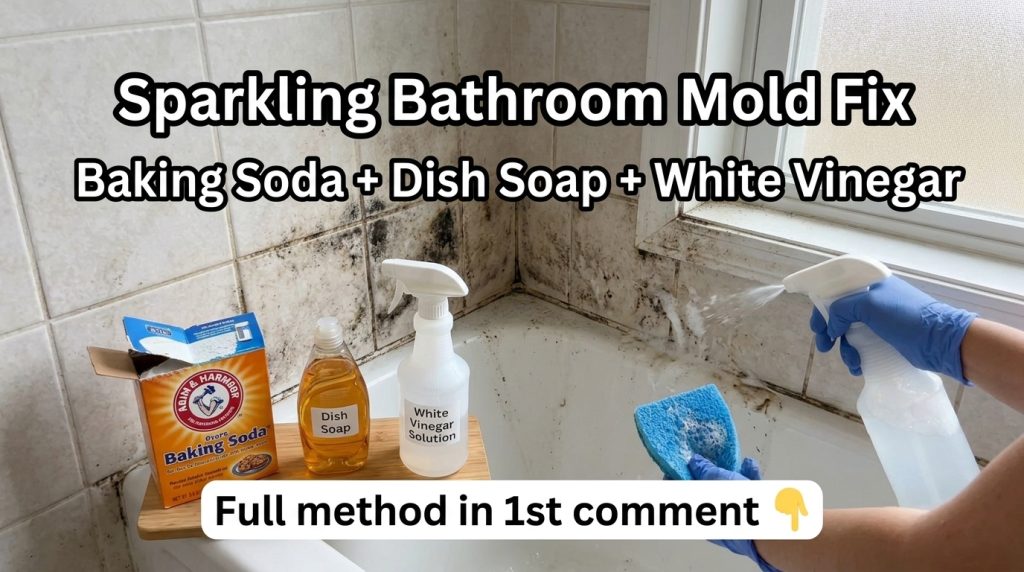
The photo shows the first moments of treatment, when the solution starts to soak into the dirt. Before you start, know that the real results come from patience and a little scrubbing, not from spraying once and walking away.
What You’ll Need
- White distilled vinegar, about 1 cup
- Warm water, about 1 cup
- Baking soda, 2 tablespoons (optional, for scrubbing)
- A clean spray bottle
- An old toothbrush or grout brush
- A non-scratch scrub pad or sponge
- Rubber gloves and a mask if the area is heavily moldy
- Microfiber cloths or old towels
Why This Method Helps
White vinegar is mildly acidic, which makes it useful for loosening soap scum, hard water residue, and surface mold. Baking soda adds gentle abrasion, so it helps lift grime from grout without the harshness of heavier products. Together they are a practical option for routine cleaning, though they will not remove deep staining that has been ignored for years.
How to Make It
- Pour the white vinegar and warm water into the spray bottle and shake gently to combine.
- If you plan to scrub, mix the baking soda with a small amount of water until it forms a thick paste, about the consistency of toothpaste.
- Test the solution on a small hidden spot of grout or caulk first to make sure the surface does not discolor.
How to Use It
- Open the bathroom window or run the exhaust fan before you start.
- Spray the vinegar solution generously over the moldy grout, corner seam, and nearby caulk line.
- Let it sit for 10 to 15 minutes so it can soften the grime.
- Apply the baking soda paste to the worst spots if needed, then scrub gently with the toothbrush or grout brush in small circles.
- Wipe the area with a damp microfiber cloth to lift loosened dirt.
- Rinse the surface with clean water and dry it completely with a towel.
- Repeat the process if dark staining remains, rather than scrubbing harder, which can damage grout.
What to Expect
On light surface mold and everyday grime, you should notice a visible difference after one or two rounds. Deeper stains in porous grout may lighten rather than disappear completely. Mold can return quickly in a damp bathroom, so improving airflow and drying the tub area after each shower will help the results last.
Helpful Tips
- Scrub in one direction along the seam instead of sweeping back and forth, which can push dirt deeper.
- Keep a cloth or towel in the tub corner after showering to reduce standing moisture.
- Clean the area weekly with a light spray to prevent heavy buildup.
- Use a caulk brush or old toothbrush for tight corners where a sponge cannot reach.
Important Notes and Safety
- Never mix vinegar with bleach or bleach-based cleaners. The combination can release harmful fumes.
- Wear gloves and avoid breathing in spray mist, especially in a small bathroom.
- Check the caulk and grout manufacturer’s instructions before using acidic cleaners on natural stone or sensitive surfaces.
- Label your spray bottle clearly and keep it away from children and pets.
- If mold covers a large area, returns quickly, or is linked to a leak or water damage, consider calling a professional for an inspection.
Taking these steps regularly will keep your bathroom corner cleaner and make the next deep clean much easier.