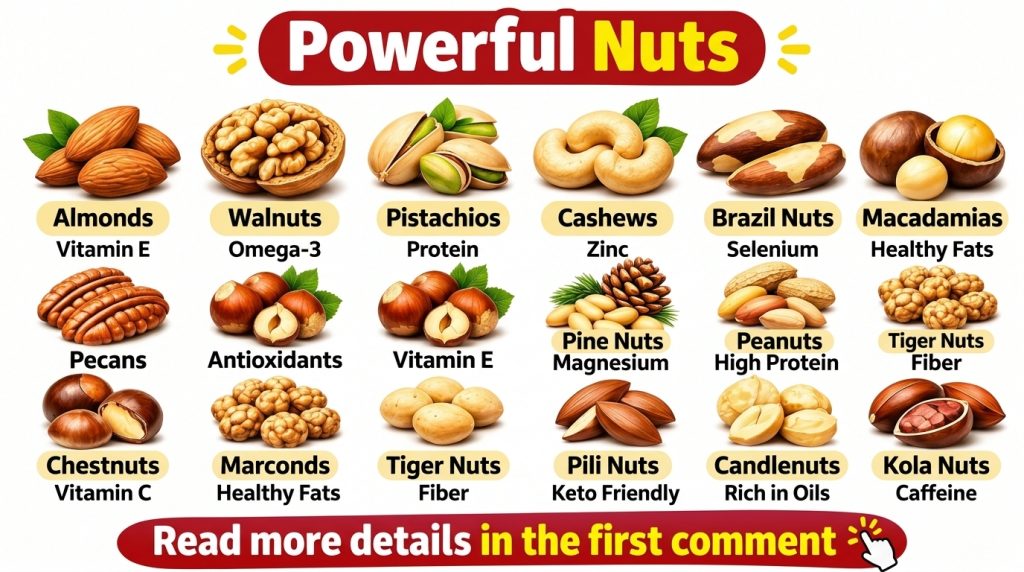
Which nut is your ultimate favorite? Nuts are one of the easiest ways to add flavor, crunch, and nutrition to your day. Whether you prefer almonds on your oatmeal or walnuts in a salad, each variety brings something special to the table.
In this guide, you will learn why nuts are so popular with healthy eaters, how different types compare, and simple ways to enjoy them every day.
Why Nuts Deserve a Spot on Your Plate
Nuts are naturally rich in healthy unsaturated fats, plant protein, fiber, and a range of vitamins and minerals. They are also a satisfying snack, which can help you feel full between meals.
Research has linked regular nut eating with heart health and overall diet quality. Nuts are best seen as one part of a balanced eating pattern, not a magic fix.
Popular Nuts and Their Standout Benefits
Every nut has its own strengths. Here is a simple comparison based on typical values for a one-ounce serving, which is about a small handful.
| Nut (1 oz) | Approx. Calories | Approx. Protein | Approx. Fiber | Standout Benefit |
|---|---|---|---|---|
| Almonds | 165 | 6 g | 3.5 g | Good source of vitamin E and magnesium |
| Walnuts | 185 | 4 g | 2 g | Provides plant-based omega-3 fats |
| Pistachios | 160 | 6 g | 3 g | Contains potassium and B vitamins |
| Cashews | 155 | 5 g | 1 g | Offers copper and magnesium |
| Brazil nuts | 185 | 4 g | 2 g | One of the best natural sources of selenium |
Values are approximate and can vary by brand and preparation method.
How to Enjoy Nuts Every Day
Nuts are versatile, so you can work them into almost any meal. Try these easy ideas:
- Sprinkle chopped walnuts over yogurt or oatmeal.
- Toss almonds into a grain bowl or green salad.
- Blend cashews into a creamy sauce for pasta or vegetables.
- Keep a small container of pistachios at your desk for a snack.
Simple Tips for Buying and Storing Nuts
- Choose unsalted or lightly salted options to keep sodium low.
- Check the ingredient list for added sugar or oils.
- Store nuts in an airtight container in a cool, dark place.
- Keep them in the refrigerator or freezer if you buy in bulk, since nuts can go rancid over time.
Watch Your Portions
Nuts are nutrient-dense but also calorie-dense. A small handful is usually enough. If you are tracking calories or managing your weight, measuring your portion can help you enjoy nuts without overdoing it.
People with nut allergies should avoid nuts completely and speak with a healthcare professional about safe alternatives.
Frequently Asked Questions
Which nut is the healthiest?
There is no single healthiest nut. Each variety offers different nutrients, so mixing a few types through the week is a smart approach.
How many nuts should I eat in a day?
Many people enjoy about one ounce, or a small handful, per day as part of a balanced diet. Your needs may vary based on your goals and health status.
Are roasted nuts as healthy as raw nuts?
Plain dry-roasted nuts are still nutritious. Nuts roasted in lots of oil or coated in sugar and salt add extra calories and sodium, so check labels.
Can nuts help with weight loss?
Nuts can fit into a weight management plan because they are filling. Portion control matters, since nuts are calorie-dense.
Is peanut butter a nut?
Peanuts are technically legumes, but they are commonly grouped with nuts in the kitchen. Choose natural peanut butter with few added ingredients.
Can I eat nuts if I have digestive concerns?
Some people find nuts harder to digest in large amounts. Start with small servings and see how you feel, and talk with a healthcare professional if you have ongoing concerns.
Conclusion
Nuts are a delicious, practical way to add healthy fats, fiber, and nutrients to your meals. Try a few different varieties, enjoy them in controlled portions, and find the favorites that fit your routine. If you want more ideas, explore our guides on high protein breakfast ideas, healthy snack recipes, and foods for heart health.
This content is for educational purposes only and should not be considered medical advice. Consult a qualified healthcare professional for personalized dietary recommendations.