Calcium is one of the most talked-about minerals when it comes to bone health, and for good reason. Your body uses it to build and maintain bones and teeth, and it also helps your muscles and nerves do their jobs. The good news is that many tasty, familiar foods can help you meet your needs.
In this guide, you will learn why calcium matters, which foods are good sources, and simple ways to add more of them to your meals. Whether you are planning family dinners or looking for a easy breakfast boost, these ideas can help.
Why Calcium Matters for Your Bones
Your bones are living tissue that is constantly being renewed. Calcium is the main mineral that gives bones their strength. Getting enough calcium throughout life is associated with healthier bones over time.
Most adults need about 1,000 to 1,200 milligrams of calcium per day, depending on age and sex. Your body cannot make calcium on its own, so food is the main source.
Everyday Calcium-Rich Foods
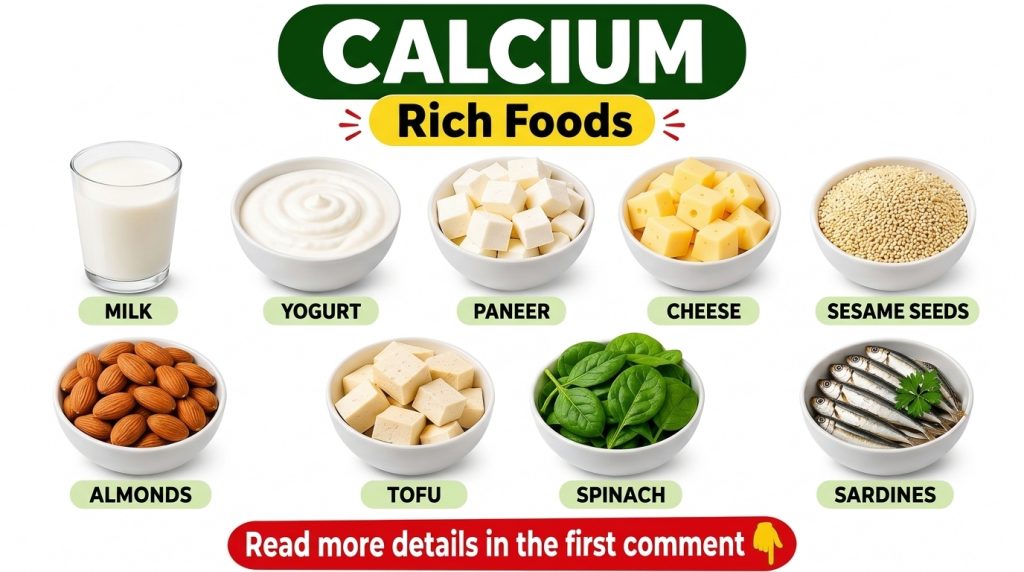
Many of the foods in the infographic are easy to find at any grocery store. The amounts below are approximate and can vary by brand and preparation.
| Food | Serving | Approx. Calcium | Main Benefit |
|---|---|---|---|
| Plain nonfat yogurt | 1 cup | About 450 mg | Calcium and protein |
| Calcium-set tofu | 1/2 cup | About 430 mg | Plant-based calcium |
| Cooked spinach | 1 cup | About 245 mg | Vitamins and fiber |
| Milk (cow’s milk) | 1 cup | About 300 mg | Calcium and vitamin D when fortified |
| Fortified orange juice | 1 cup | About 350 mg | Easy daily calcium |
| Canned sardines with bones | 3 ounces | About 325 mg | Calcium and omega-3 fats |
| Cooked kale | 1 cup | About 180 mg | Vitamin K and fiber |
| Chia seeds | 1 ounce | About 180 mg | Fiber and plant omega-3s |
| Almonds | 1 ounce | About 75 mg | Healthy fats and vitamin E |
Spinach contains calcium, but it also contains compounds that limit how much your body absorbs. Kale and bok choy are often considered better choices for absorbing calcium from plants.
Easy Ways to Add More Calcium
You do not need to overhaul your diet to get more calcium. Small, consistent changes often work best.
- Start your day with yogurt. Top plain yogurt with berries and a sprinkle of chia seeds.
- Blend a smoothie. Use milk or fortified soy milk, a handful of spinach, and a spoonful of almond butter.
- Add tofu to dinner. Choose calcium-set tofu and stir-fry it with vegetables.
- Snack smarter. A small handful of almonds or a cheese stick can add calcium between meals.
- Sprinkle seeds. Toasted sesame seeds or tahini can boost salads, roasted vegetables, and grain bowls.
- Sip fortified drinks. Look for orange juice or plant milks labeled as calcium-fortified.
Who Should Pay Extra Attention to Calcium?
Calcium needs change over time. Teens who are still building bone mass, women after menopause, and older adults often benefit from paying closer attention to their intake. People who avoid dairy or follow vegan diets can still get enough calcium by choosing a variety of fortified and plant-based foods.
Pairing calcium-rich foods with vitamin D and regular physical activity, such as walking or strength training, is also linked with better bone health.
Practical Tips for Getting Enough Calcium
- Check nutrition labels, since fortified foods can contain a surprising amount of calcium.
- Spread calcium across the day rather than eating a large amount at once.
- Keep canned fish, tofu, and almonds on hand for quick meals.
- Track your intake for a few days to see where you can add more.
- Talk with your healthcare provider before starting calcium supplements, since they are not right for everyone.
Frequently Asked Questions
Is it better to get calcium from food or supplements?
Food is usually the best starting point because it also provides other nutrients. Supplements can help some people, but they should be discussed with a healthcare professional.
Can I get enough calcium without dairy?
Yes. Calcium-set tofu, fortified plant milks, kale, sardines with bones, and chia seeds can all contribute to your daily needs.
Does vitamin D matter for calcium?
Vitamin D helps your body absorb calcium. Many people get some vitamin D from sunlight, fortified foods, and fatty fish, but needs vary.
How much calcium is too much?
Very high intakes, especially from supplements, may cause issues for some people. Speak with a healthcare provider about the right amount for you.
Is spinach a good source of calcium?
Spinach contains calcium, but your body absorbs less of it than from many other foods. It is still a nutritious green worth enjoying.
Can children eat these foods too?
Yes. Yogurt, milk, cheese, and fortified foods are popular options for kids. Offer a variety of textures and flavors to keep meals fun.
Conclusion
Calcium plays an important role in keeping your bones strong, and many everyday foods can help you get enough. Start with one or two ideas from this guide, like yogurt at breakfast or tofu at dinner, and build from there. For more healthy eating ideas, explore our other nutrition guides and easy recipes.
This content is for educational purposes only and should not be considered medical advice. Consult a qualified healthcare professional for personalized dietary recommendations.