Magnesium is a mineral your body uses for energy production, muscle function, nerve signaling, and many other everyday processes. Many people do not get as much as they need, so adding magnesium-rich foods to your meals is a simple step worth taking.
In this guide, you will learn which foods are especially rich in magnesium, how to work them into your meals, and a few easy ways to boost your intake without overthinking it.
Why Magnesium Matters
Magnesium helps support healthy muscles, steady energy levels, and normal nerve function. It also plays a role in bone health. Research suggests that eating a varied diet full of whole foods is one of the best ways to meet your needs.
Five Magnesium-Rich Foods
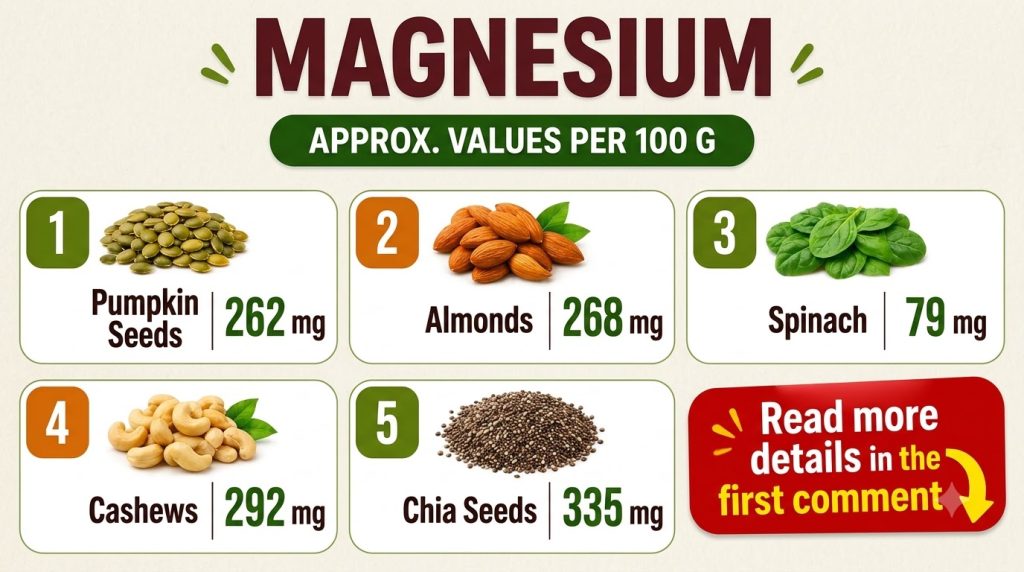
Here are five popular foods that bring a good amount of magnesium to the table. Values are approximate and can vary by brand, variety, and preparation.
| Food (per 100g) | Approx. Magnesium | Main Benefit |
|---|---|---|
| Pumpkin seeds | About 500 mg or more | Very high in magnesium and zinc |
| Chia seeds | About 300 to 350 mg | Adds fiber and omega-3 fats |
| Cashews | About 250 to 290 mg | Creamy texture for snacks and sauces |
| Almonds | About 250 to 270 mg | Easy snack with healthy fats and vitamin E |
| Spinach (cooked) | About 80 to 90 mg | Low calorie with iron and folate |
Pumpkin Seeds
Pumpkin seeds are one of the richest plant sources of magnesium. Toss a handful into salads, oatmeal, or roasted vegetable bowls for a satisfying crunch.
Chia Seeds
Chia seeds are small but mighty. Stir them into yogurt or overnight oats, or use them to make a simple chia pudding.
Cashews and Almonds
Both nuts make a convenient snack. A small handful is a good portion, since nuts are also calorie dense. Try almonds sliced over oatmeal or cashews blended into a creamy dressing.
Spinach
Spinach offers a lot of nutrients for very few calories. Wilt it into soups, eggs, pasta sauces, or smoothies.
Other Sources to Consider
Black beans, edamame, whole grains like quinoa and brown rice, and dark chocolate with a high cocoa content also contribute magnesium. Mixing several of these into your week helps you cover your needs naturally.
Practical Tips for Eating More Magnesium
- Keep a jar of pumpkin seeds or almonds on your counter for quick snacks.
- Add a spoonful of chia seeds to breakfast foods you already enjoy.
- Sneak a big handful of spinach into smoothies or sauces.
- Swap white rice for brown rice or quinoa a few times a week.
- Choose beans and lentils as a base for soups, salads, and bowls.
Potential Considerations
Most healthy adults get enough magnesium from food. Nuts and seeds are calorie dense, so measure portions if you are managing your weight. If you take medications or have a health condition affecting your kidneys or digestion, talk with your doctor before adding supplements.
Frequently Asked Questions
Which food has the most magnesium?
Pumpkin seeds are among the highest magnesium foods per serving, followed by chia seeds and nuts.
Can I get enough magnesium without supplements?
Many people can meet their needs through a varied diet that includes seeds, nuts, beans, leafy greens, and whole grains.
Is spinach a good source of magnesium?
Yes, cooked spinach provides a useful amount of magnesium, especially when eaten regularly in larger portions.
How much nuts or seeds should I eat in a day?
A common serving is about one ounce, which is roughly a small handful. Adjust based on your overall calorie needs.
Does cooking reduce magnesium in foods?
Some minerals can leach into cooking water, so steaming or using the cooking liquid in soups can help keep more nutrients.
Are black beans high in magnesium?
Black beans contain a moderate amount of magnesium along with fiber and plant protein, making them a helpful addition to meals.
Conclusion
Magnesium-rich foods are easy to enjoy every day. Seeds, nuts, leafy greens, and beans can fit into snacks, breakfasts, and dinners. Start with one or two ideas this week and build from there. For more ideas, explore our guides on high-fiber breakfasts, healthy snacks, and plant-based protein meals.
This content is for educational purposes only and should not be considered medical advice. Consult a qualified healthcare professional for personalized dietary recommendations.