Have you ever wondered whether you are getting enough of the vitamins and minerals your body needs? Most people do not need a complicated plan to get them. A varied diet built around everyday foods can cover a lot of ground.
This guide is for anyone who wants to eat a little more intentionally, whether you cook for yourself, a busy family, or simply want to make smarter grocery choices. You will learn where to find six key nutrients, how they help your body, and simple ways to add them to your meals.
Why Vitamins and Minerals Matter
Vitamins and minerals are small nutrients with big jobs. They help your body make energy, build and repair tissue, support your immune system, and keep bones and muscles working well. Your body cannot make most of them on its own, so food is the main way to get them.
Balance matters more than perfection. Eating a range of colorful produce, protein foods, whole grains, and dairy or fortified alternatives usually provides a broad mix of nutrients.
Where to Find Six Essential Nutrients
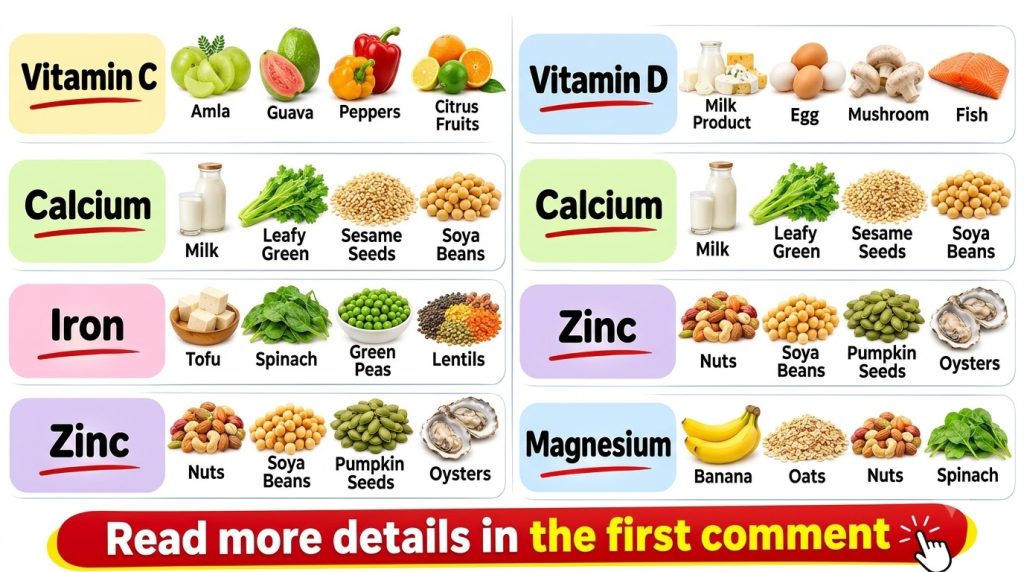
Here is a quick overview of common food sources. Amounts vary by brand, portion, and preparation, so treat these as general guides rather than exact values.
| Nutrient | Everyday Food Sources | Why It Matters |
|---|---|---|
| Vitamin C | Oranges, strawberries, bell peppers, kiwi, broccoli | Supports immune function and helps your body absorb plant-based iron |
| Vitamin D | Salmon, sardines, fortified milk, eggs, fortified cereals | Helps your body absorb calcium and supports bone health |
| Calcium | Milk, yogurt, cheese, fortified soy milk, canned salmon with bones, kale | Builds and maintains strong bones and teeth |
| Iron | Lentils, beans, spinach, lean red meat, tofu, fortified cereals | Helps carry oxygen in the blood and supports energy levels |
| Zinc | Beef, pork, chickpeas, pumpkin seeds, oats, cashews | Supports immune health, wound healing, and normal taste and smell |
| Magnesium | Spinach, almonds, black beans, avocado, whole grains, dark chocolate | Plays a role in muscle and nerve function and hundreds of body processes |
Simple Ways to Work These Foods Into Your Day
Pair Iron With Vitamin C
Plant-based iron, found in beans, lentils, and spinach, is absorbed more easily when you eat it with vitamin C. Try adding sliced bell peppers to a lentil salad or squeezing lemon juice over sautéed spinach.
Choose Fortified Dairy or Alternatives
Milk, yogurt, and fortified plant milks often provide calcium and vitamin D together. Look for labels that list both nutrients if you do not eat dairy.
Add Seeds and Nuts to Snacks
A small handful of pumpkin seeds or almonds can add zinc and magnesium to your day. Sprinkle seeds over oatmeal or yogurt, or keep a portioned bag handy for busy afternoons.
Include Fish Twice a Week
Fatty fish like salmon and sardines are a convenient source of vitamin D. Canned options are budget-friendly and work well in sandwiches, wraps, or pasta dishes.
Practical Tips for Everyday Eating
- Fill half your plate with vegetables and fruit at most meals.
- Keep canned beans, lentils, and frozen spinach in your pantry for quick additions.
- Choose whole grains like oats, brown rice, and whole wheat bread when possible.
- Rotate protein sources so you get a mix of plant and animal foods.
- Read labels on fortified foods to see which nutrients they actually provide.
- Talk with a healthcare professional before starting supplements, especially for children, pregnant people, or anyone with a medical condition.
Common Mistakes to Avoid
Many people assume that more is always better. Taking high doses of vitamins or minerals without guidance can cause problems, and some nutrients can interact with medications. Food-first habits are usually the safest and most enjoyable approach.
Another common mistake is relying on one food for everything. A single smoothie or salad rarely covers every nutrient, so variety remains the best strategy.
Frequently Asked Questions
Can I get all these nutrients without eating meat?
Yes, many of these nutrients are available in plant foods. Beans, lentils, tofu, nuts, seeds, fortified products, and leafy greens can all contribute, though planning and variety become more important.
Why does vitamin C matter for iron?
Vitamin C helps your body absorb non-heme iron, the type found in plant foods. Pairing the two at the same meal is an easy way to get more benefit from your food.
Is sunlight a source of vitamin D?
Sunlight helps your skin make vitamin D, but factors like season, latitude, skin tone, and sunscreen use all affect how much you produce. Many people still rely on food or supplements for part of their intake.
Do spinach and kale provide calcium?
Both contain some calcium, but spinach binds to calcium in a way that limits absorption. Kale and broccoli are often better choices for calcium from vegetables.
How can I tell if I am missing certain nutrients?
Symptoms like persistent fatigue, hair changes, or frequent illness can have many causes. A healthcare professional can check your diet and recommend blood tests if needed.
Are supplements necessary if I eat well?
Many people with varied diets do not need supplements, but some do. Ask a qualified professional whether a supplement makes sense for your situation.
Conclusion
Getting enough vitamins and minerals does not require exotic ingredients. Citrus, leafy greens, beans, nuts, seeds, dairy or fortified alternatives, and fish can cover most of your needs when you eat them regularly. Start with one or two small changes this week and build from there.
Looking for more ideas? Explore these related reads:
- High Protein Breakfast Ideas
- Best Foods for Gut Health
- Healthy Snacks for Busy Days
- Iron-Rich Plant Foods to Try
This content is for educational purposes only and should not be considered medical advice. Consult a qualified healthcare professional for personalized dietary recommendations.