When it comes to building muscle, understanding your protein intake is paramount. While many healthy foods contribute to overall well-being, not all are equally effective when your goal is to maximize protein for muscle growth. It’s easy to assume that if a food is nutritious, it automatically provides a substantial amount of protein. However, this isn’t always the case.
This guide will help you navigate common misconceptions about protein content in everyday healthy foods and direct your focus toward the truly high-protein sources that effectively support muscle development. Discover which items to enjoy for their general health benefits, and which to prioritize when you’re specifically targeting those gains.
Let’s dive into the protein perception gap and uncover the best choices for your muscle-building journey.
The Protein Perception Gap: Foods That Aren’t As High As You Think
Many foods are celebrated for their health benefits, offering fiber, vitamins, and minerals. Yet, when it comes to a concentrated protein punch for muscle repair and growth, some fall short. Understanding their actual protein contributions can help you refine your meal planning.
Dal: The Everyday Staple
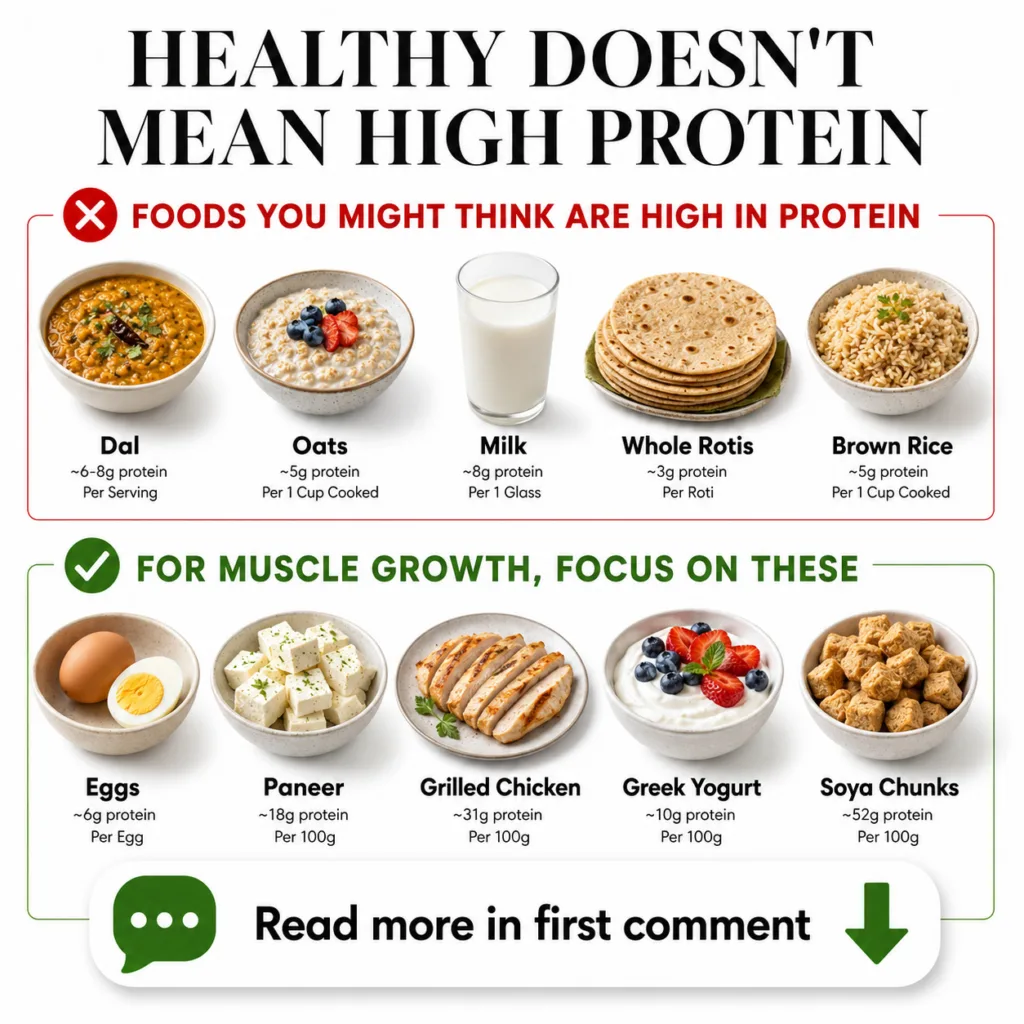
Dal, a cornerstone of many cuisines, is a fantastic source of plant-based protein and fiber. It’s incredibly healthy and plays a vital role in a balanced diet. However, for serious muscle building, its protein density isn’t as high as some might assume.
- Protein Content: Approximately 9g of protein per 100g.
While excellent for daily nutrition, relying solely on dal for high protein intake for muscle growth might mean consuming very large portions, which could lead to an excess of carbohydrates or calories if not carefully managed.
Oats: More Than Just Breakfast Fiber
Oats are renowned for their heart-healthy fiber, sustained energy release, and versatility as a breakfast food. They are undoubtedly a healthy choice, especially for starting your day. But are they a protein powerhouse?
- Protein Content: Approximately 13g of protein per 100g.
While 13g per 100g is respectable for a grain, a typical serving of cooked oats is much less than 100g of dry oats, and its primary role is to provide complex carbohydrates and fiber, not concentrated protein for muscle synthesis.
Milk: A Good Start, But Not a Powerhouse
Milk is often associated with strong bones and is a source of calcium, vitamin D, and protein. It’s a healthy beverage that can contribute to your daily nutrient intake.
- Protein Content: Approximately 3.4g of protein per 100ml.
For significant muscle growth, the protein density in milk means you’d need to consume large volumes, which may not be practical or desirable for everyone, especially if you’re mindful of calorie intake.
Whole Rotis & Brown Rice: Fueling Carbs, Not Protein
Whole wheat rotis and brown rice are excellent sources of complex carbohydrates, providing sustained energy and fiber. They are far healthier choices than their refined counterparts and are essential for fueling workouts and recovery.
- Whole Rotis: Approximately 3g of protein per roti.
- Brown Rice: Approximately 2.5g of protein per 100g.
While these are foundational elements of a balanced diet, their protein content is minimal compared to dedicated protein sources. They primarily serve as carbohydrate fuel, not a primary driver for muscle protein synthesis.
Power Up: Top Protein Sources for Optimal Muscle Building
When your primary goal is muscle growth, focusing on protein-dense foods is key. These selections offer a higher concentration of protein per serving, making it easier to hit your daily targets without excessive calories.
Eggs: The Complete Protein Package
Eggs are often called nature’s perfect protein. They contain all nine essential amino acids, making them a complete protein source vital for muscle repair and growth. They are versatile, affordable, and easy to prepare.
- Protein Content: Approximately 6g of protein per large egg.
Start your day with an omelet, add a hard-boiled egg to your salad, or enjoy them as a quick snack. Eggs are a foundational food for anyone looking to increase their protein intake for muscle building.
Paneer: The Vegetarian Muscle Builder
Paneer, a fresh cheese common in Indian cuisine, is an excellent high-protein option for vegetarians. It’s also a good source of calcium and healthy fats.
- Protein Content: Approximately 18g of protein per 100g.
Incorporate paneer into curries, scrambles, or grill it for a satisfying meal. Its mild flavor makes it adaptable to various dishes, providing a substantial protein boost.
Grilled Chicken: Lean Protein King
Grilled chicken breast is a go-to for bodybuilders and fitness enthusiasts for good reason. It’s incredibly lean, high in protein, and provides a full spectrum of amino acids necessary for muscle repair and growth.
- Protein Content: Approximately 25g of protein per 100g.
Whether in salads, stir-fries, or as a standalone main course, grilled chicken offers a robust protein punch with minimal fat, making it an ideal choice for lean muscle mass.
Greek Yogurt: Creamy, Tangy, and Protein-Packed
Greek yogurt stands out from regular yogurt due to its thicker consistency and significantly higher protein content. It’s also a good source of probiotics for gut health and calcium.
- Protein Content: Approximately 10g of protein per 100g.
Enjoy Greek yogurt with berries, a drizzle of honey, or a handful of nuts for a high-protein breakfast or snack. It can also be a healthy substitute for sour cream or mayonnaise in recipes.
Soya Chunks: The Plant-Based Champion
For those following a plant-based diet or looking to reduce meat consumption, soya chunks are an incredibly protein-dense option. Made from defatted soy flour, they absorb flavors well and can be used in a variety of dishes.
- Protein Content: Approximately 52g of protein per 100g.
Soya chunks can be marinated and added to curries, stir-fries, or even made into cutlets, offering a powerful protein boost that rivals and often surpasses many meat options.
Maximizing Your Protein Intake for Muscle Growth
Knowing which foods are protein-dense is the first step. The next is effectively incorporating them into your diet to optimize muscle building.
Focus on Protein Density
When selecting your meals, prioritize foods that offer a high amount of protein per calorie. This ensures you’re getting sufficient protein without overconsuming calories, which is crucial for lean muscle gain.
Distribute Protein Throughout Your Day
Instead of consuming all your protein in one large meal, aim to spread your intake across multiple meals and snacks. This consistent supply of amino acids supports continuous muscle protein synthesis, aiding recovery and growth.
Combine for Completeness
While animal proteins are naturally complete, plant-based proteins can be combined to achieve a full amino acid profile. For example, pairing soya chunks with a small serving of dal or incorporating a variety of nuts and seeds throughout your day can enhance the protein quality of your meals.
Beyond the Plate: Protein Timing and Portions
While the infographic highlights specific protein values per typical serving, remember that individual protein needs vary based on activity level, body weight, and muscle-building goals. Consulting a nutritionist or healthcare professional can help you determine your ideal daily protein intake.
Moreover, timing can play a role. Consuming protein post-workout is widely recognized for aiding muscle repair, but consistent intake throughout the day is equally important for sustained muscle growth.
Final Thoughts
Building muscle is a journey that requires consistent effort in both training and nutrition. By making informed choices about your protein sources, you can ensure your body has the essential building blocks it needs to repair, grow, and strengthen. Remember, healthy doesn’t always mean high protein for specific goals like muscle growth. Prioritize the protein powerhouses to truly fuel your fitness ambitions.
Medical Disclaimer
The information provided in this article is for general knowledge and informational purposes only, and does not constitute medical advice. It is essential to consult with a qualified healthcare professional or a registered dietitian before making any significant changes to your diet or exercise routine, especially if you have underlying health conditions or specific dietary needs.