Chia seeds are one of those pantry staples that seem simple until you actually try to use them. Drop them into a glass of water and they can clump, float, or sit at the bottom looking unchanged. Many people wonder whether leaving them in water longer makes any real difference, and the answer is yes. Soaking time changes how chia seeds look, feel, and fit into your daily meals.
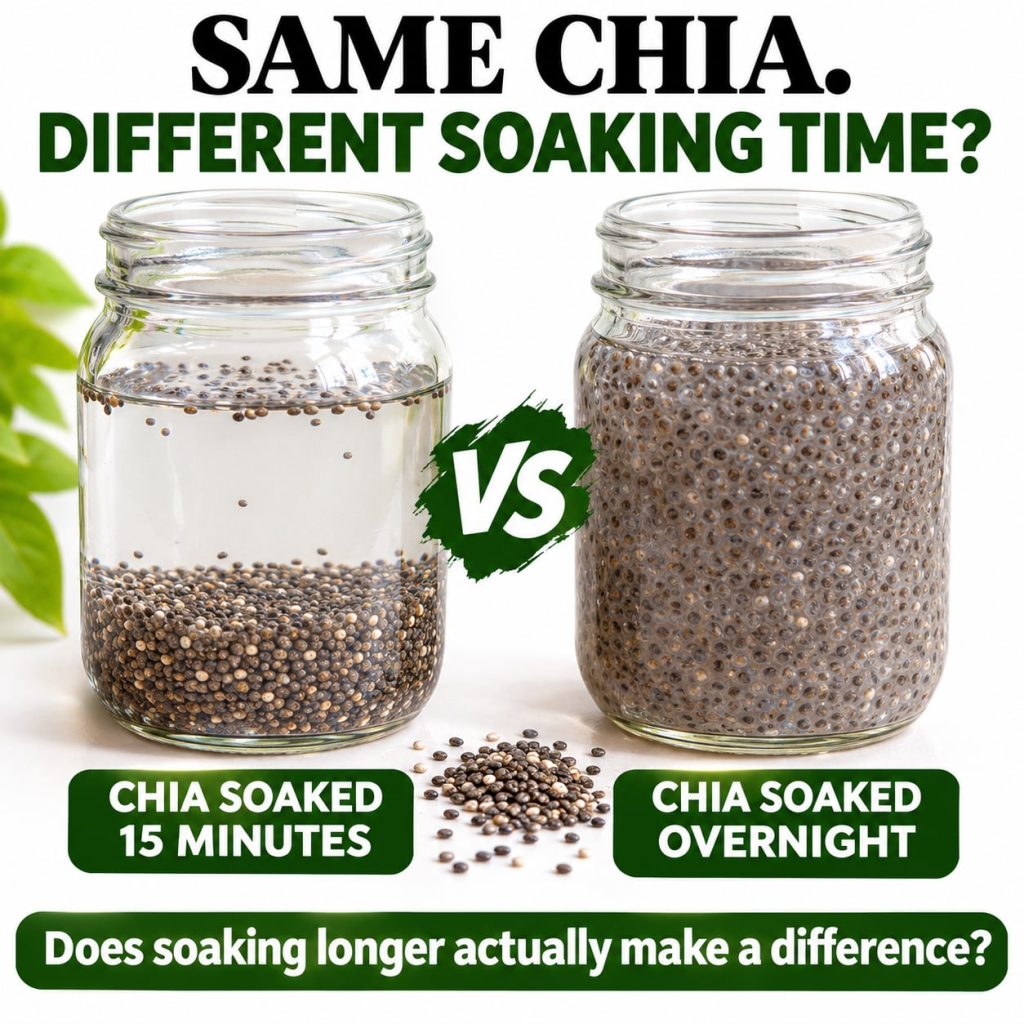
This guide expands on the visual comparison of chia seeds at different soaking times. You will see how texture develops, why consistency matters for everyday recipes, and how a little preparation can make chia easier to enjoy.
Why Soaking Chia Seeds Matters
Chia seeds have a natural outer coating that absorbs liquid and forms a gel. When they are dry and added straight to food, they can feel gritty or stay separate. Giving them time in liquid lets that gel form fully, so the seeds blend more smoothly into puddings, drinks, and oats.
Preparation also affects consistency. A batch soaked for a few minutes may still look a little loose, while a batch given more time often becomes thick and evenly textured. Consistency is the main reason many home cooks prefer to soak chia before using it.
How Soaking Time Changes the Results
Short Soak: Around 10 to 15 Minutes
A short soak is enough to start the gelling process. The seeds will look partly swollen, and the liquid may still be thin. This works well if you need chia quickly, such as for a smoothie or a quick topping that you plan to eat right away.
Longer Soak: Several Hours or Overnight
Soaking for several hours or overnight allows the seeds to fully hydrate. The result is a thicker, more uniform gel that is ideal for chia pudding and overnight oats. Longer soaking is also convenient for meal prep, since the mixture can rest in the refrigerator until morning.
A Simple Way to Soak Chia Seeds
- Measure 2 tablespoons of chia seeds for a single serving.
- Add them to 1/2 cup of liquid such as milk, water, or a plant-based milk.
- Stir well for about 30 seconds so the seeds do not clump together.
- Wait 2 minutes, then stir again to break up any clusters.
- Cover and refrigerate for at least 2 hours, or overnight for the fullest texture.
Store soaked chia in a sealed container in the refrigerator and use it within a few days for the best quality.
Common Mistakes to Avoid
- Adding dry seeds to a finished recipe without soaking them first, which can leave a gritty feel.
- Skipping the second stir, which often leaves clumps at the bottom.
- Using too little liquid, which can result in a stiff, dry texture.
- Assuming a few minutes is enough when you want a smooth, pudding-like consistency.
Tips for Using Soaked Chia in Everyday Meals
Soaked chia works well in breakfast bowls, smoothies, and overnight oats. Try mixing it into yogurt with fresh fruit for a simple morning meal, or spoon it into small jars for easy meal prep during the week. Adjust the liquid slightly if you prefer a thinner or thicker texture.
Frequently Asked Questions
Does soaking chia seeds longer change their texture?
Yes. Longer soaking usually produces a thicker and more even gel, while short soaking leaves the seeds partly swollen and the liquid thinner.
Is it necessary to soak chia seeds before eating them?
It is not required, but soaking often makes chia easier to chew and blend into recipes. Many people prefer the smoother texture that soaking provides.
Final Thoughts
Soaking time is a small detail that makes a noticeable difference in how chia seeds feel and how well they fit into your meals. A short soak works for quick uses, while an overnight soak gives the smoothest, most consistent results. With a little planning, chia can become a reliable part of your breakfast and meal prep routine.
Medical disclaimer: This article is for general information only and is not medical advice. If you have a health condition or dietary concerns, please speak with a qualified healthcare professional before changing your diet.