Sun spots and age spots are one of the most common skin concerns people bring up when they look in the mirror. They often show up on the face, hands, and shoulders after years of sun exposure. Many readers search for a simple, affordable way to care for these areas at home, and that is where DIY creams often come into the picture.
In this article, you will learn how to make a simple cornstarch and coconut oil cream, how to use it gently, and how to store it safely. We will also be honest about what a homemade cream can and cannot do. It can be a comfortable moisturizing step in your routine, but it is not a treatment for sun spots and it does not replace sunscreen or medical advice.
DIY Cornstarch and Coconut Oil Cream: Recipe Overview
- Recipe name: Simple Cornstarch and Coconut Oil Moisturizing Cream
- Beauty category: Face and body moisturizer
- Suitable for: Normal to dry skin that tolerates coconut oil
- Preparation time: 5 minutes
- Application time: 1 to 2 minutes, plus a few minutes to absorb
- Total time: About 10 minutes
- Difficulty: Very easy
- Yield: About 2 tablespoons, enough for 4 to 6 applications
- Recommended frequency: Once daily at night, or every other night when you first start
- Storage: Small batches in a clean, covered jar; use within 1 week
Why You May Like This Recipe
- It uses just two main ingredients you may already have.
- It takes only a few minutes to prepare.
- It is budget-friendly compared with many specialty creams.
- The texture is simple and easy to spread.
- It can be a comforting part of an evening self-care routine.
Complete Ingredients
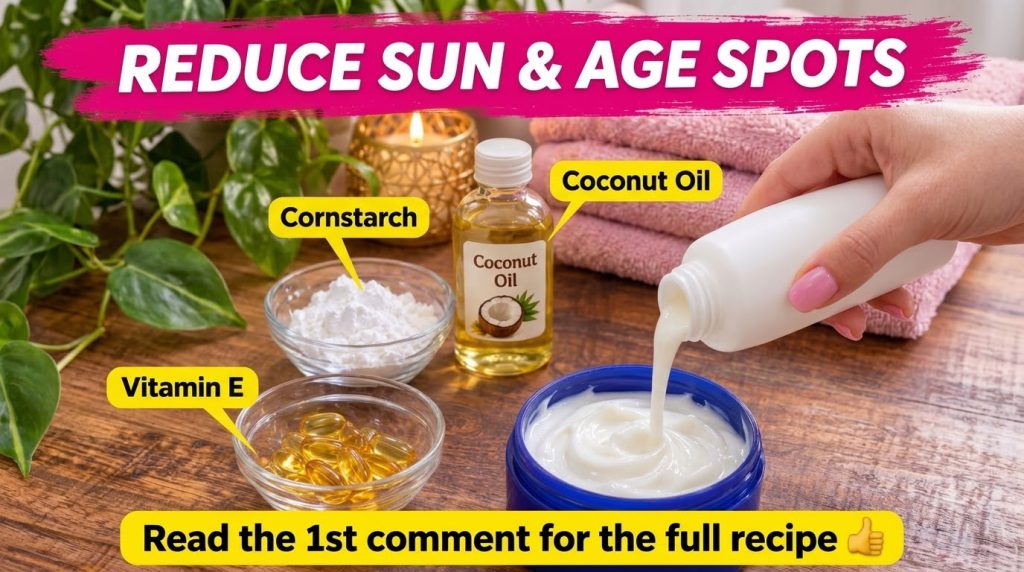
- 1 tablespoon virgin coconut oil, softened or melted until liquid (use a clean spoon)
- 1 teaspoon cornstarch (food-grade or cosmetic-grade)
- Optional: contents of 1 vitamin E capsule (about 1/4 teaspoon oil), only if you have no sensitivity to vitamin E
Substitutions: If you do not have coconut oil, use 1 tablespoon sweet almond oil or jojoba oil. These are also gentle plant oils, but the texture and feel will differ. Skip the vitamin E if it causes any stinging or redness.
Equipment
- Small clean mixing bowl
- Clean measuring spoons
- Small clean spatula or spoon
- Small airtight glass jar with a lid
Step-by-Step Preparation
- Clean your tools. Wash the bowl, spoon, and jar with warm soapy water, rinse well, and let them dry completely. Moisture can cause spoilage.
- Measure the coconut oil. Scoop 1 tablespoon into the bowl. If it is solid, let it sit in a warm room for a few minutes or set the jar in warm water until it softens. Do not overheat it.
- Add the cornstarch. Sprinkle 1 teaspoon cornstarch over the oil.
- Mix gently. Stir for about 1 to 2 minutes until the mixture looks smooth and evenly combined. It will be thick, slightly grainy, and more like a soft paste than a rich cream.
- Adjust the texture. If it feels too stiff, add a few drops more oil. If it feels too loose, add a small pinch more cornstarch. Make changes slowly.
- Add vitamin E if using. Squeeze in the contents of one capsule, stir well, and check that the mixture is evenly combined.
- Transfer and store. Spoon the mixture into the clean jar, close the lid, and label it with the date.
How to Apply the Cream
Use this cream on clean, dry skin. It is best suited to the face, neck, or hands. Wash your skin with a gentle cleanser, pat it dry, and wait a few minutes.
Use a pea-sized amount, about a small pea for the face or a little more for hands. Warm it between your fingertips and gently press it onto the skin in small circles. Do not rub hard or pull on the skin.
Avoid your eyes, eyelids, lips, nostrils, and any cuts, cracks, or broken skin. If you get the cream in your eyes, rinse with plain water. Leave the cream on for a few minutes to absorb, or rinse with lukewarm water and a soft cloth if it feels too heavy. Use it at night, and apply sunscreen during the day.
Ingredient Benefits
Coconut oil is a plant oil that can help soften the feel of dry skin by forming a light layer on the surface. It may help reduce the look of dryness, but it can clog pores or irritate some people, especially those with acne-prone skin.
Cornstarch is a fine powder that can help the mixture feel smoother and less greasy. It is a texture ingredient, not a treatment for pigment changes.
Vitamin E is an antioxidant ingredient that is often used in skincare for conditioning. Some people react to it, so patch testing is important. Research on vitamin E for sun spots is limited, and homemade use cannot be expected to fade spots.
Recommended Frequency
Start with one application every other night for the first week. If your skin feels comfortable and shows no redness, you may use it once daily at night. Stop or reduce use if your skin feels tight, itchy, or irritated. Avoid using the cream on the same area several times a day, since this can increase the chance of irritation.
Expert Beauty Tips
- Always apply a broad-spectrum sunscreen during the day. Sun protection matters more than any night cream.
- Patch test the cream on a small area of inner forearm for 24 to 48 hours before using it on your face.
- Use a clean spoon each time you take some cream from the jar to reduce contamination.
- Apply in thin layers. A little goes a long way.
- Keep your routine simple. Too many new products at once make it hard to notice irritation.
- If you have oily or acne-prone skin, use this cream only on dry areas like hands or elbows.
Safe Variations
- Sweet almond oil instead of coconut oil: This may feel lighter for some people. Still patch test, since nut-derived oils are not suitable for everyone with nut allergies.
- Jojoba oil instead of coconut oil: This may suit skin that feels oily or prone to clogged pores. It is still an oil, so keep the amount small.
- Skipping vitamin E: This keeps the recipe simpler and reduces the chance of reaction to added ingredients.
Storage and Shelf Life
This cream contains no water, which makes it less likely to grow microbes than water-based products. However, cornstarch and any fingertip contact can still introduce bacteria, and the mixture has no preservative. Make only what you need for about one week. Store the jar in a cool, dry place away from direct sunlight, with the lid closed. Do not keep it in a hot bathroom or car.
Discard the cream if it smells sour, changes color, develops mold, or separates into an unusual texture. Do not add water, fruit, or other fresh ingredients, because they shorten shelf life and raise the risk of spoilage. Essential oils and refrigeration do not make a homemade cosmetic safe for long storage.
Safety Precautions
Stop using the cream and rinse your skin if you notice burning, itching, swelling, rash, or worsening redness. Check ingredient allergies before you begin, especially for coconut, nuts, or vitamin E. Keep the jar out of reach of children and pets.
Patch testing can help you spot a reaction, but it does not guarantee that your face will react the same way. Do not use this cream on open wounds, sunburn, or irritated skin.
Sun spots can look similar to other skin changes. See a doctor or dermatologist if a spot is new, grows, changes shape or color, bleeds, itches, or does not look like your other spots. A professional can check whether a spot needs evaluation. This recipe is not a medical treatment.
Common Mistakes to Avoid
- Expecting the cream to fade spots: Homemade moisturizers do not remove sun damage. Focus on sun protection and professional advice for concerning spots.
- Using too much product: Thick layers can feel greasy and may trap dirt. Use a small amount.
- Storing it too long: Make a fresh small batch each week instead of keeping leftovers for months.
- Skipping the patch test: Natural ingredients can still cause allergic reactions.
- Applying it to broken skin: Wait until the skin has healed before using any homemade product.
Frequently Asked Questions
Can this cream reduce sun spots?
No homemade cream has been shown to reliably fade sun spots. This recipe is a simple moisturizer. For concerns about spots, see a dermatologist.
Is this suitable for sensitive skin?
It may not be. Coconut oil and vitamin E can irritate some people, so patch test first and consider skipping the vitamin E.
Can I prepare it in advance?
Yes, but only for about one week. Store it in a clean, covered jar at cool room temperature.
Should I refrigerate leftovers?
Refrigeration can slow some changes, but it does not make a homemade cream sterile. Still, discard it after about one week and whenever it looks or smells different.
Can I replace one of the ingredients?
You can try sweet almond oil or jojoba oil instead of coconut oil. Keep the substitution simple and patch test first.
Can this replace my regular skincare products?
It can be an extra moisturizing step, but it should not replace sunscreen or any prescribed treatment.
Conclusion
This simple cornstarch and coconut oil cream is easy to prepare, affordable, and comfortable to use as a basic moisturizer. Its best role is as a gentle part of a nightly routine, paired with daily sunscreen and realistic expectations.
Keep your routine gentle and consistent, and check with a professional about any spot that worries you. Taking care of your skin one calm step at a time is a great place to start!