A clean refrigerator makes a real difference. Spills, drips, and forgotten produce leave sticky residue on shelves and sour smells that linger in door bins. A regular deep clean keeps your food fresher, helps you spot expired items sooner, and makes the whole kitchen feel more organized. This simple vinegar and baking soda method is an easy way to refresh the inside of your fridge without a shelf of harsh products.
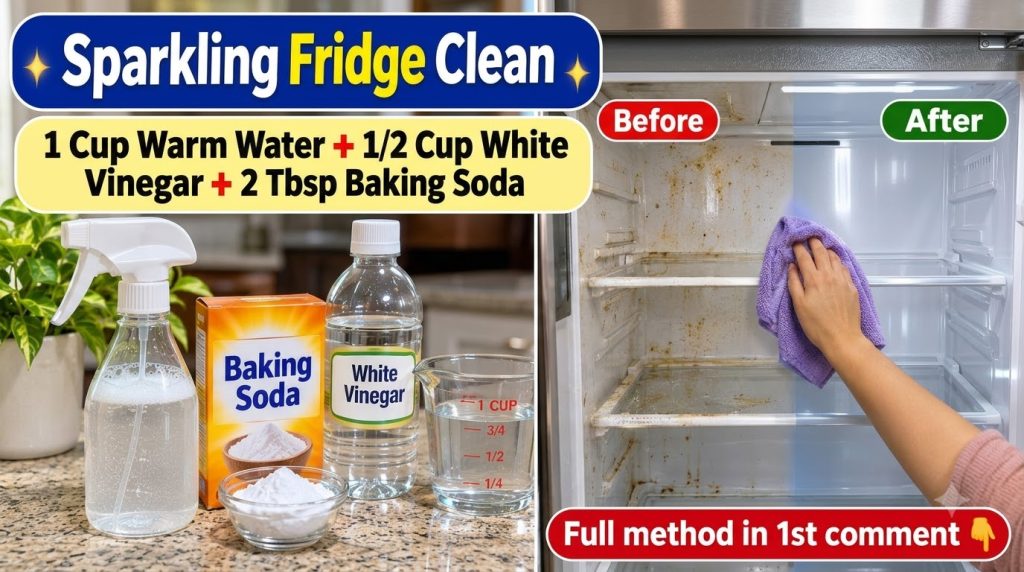
What You’ll Need
Cleaning Solution Ingredients
- 1 cup warm water
- 1/2 cup white vinegar
- 2 tablespoons baking soda
Tools
- A clean spray bottle or a container with a loose lid
- A measuring cup and measuring spoons
- A soft, damp microfiber cloth
- A second dry cloth for finishing
- A small bowl or sponge for scrubbing stubborn spots
Why This Mixture Works
Baking soda is a mild abrasive that lifts food residue and grime without scratching most fridge surfaces. White vinegar helps cut through greasy film and light odors. Warm water helps loosen dried spills and lets the baking soda dissolve more easily. Together, they make a gentle, inexpensive cleaner that suits the kind of dirt you usually find inside a refrigerator.
How to Make It
- Fill your measuring cup with 1 cup of warm water and pour it into the spray bottle or a container.
- Add 2 tablespoons of baking soda and stir or swirl until it is mostly dissolved.
- Pour in 1/2 cup of white vinegar slowly. The mixture will fizz as the two ingredients react.
- Let the fizzing settle for a minute before doing anything else. If you are using a spray bottle, leave the cap loose or vented until the bubbling stops, since a tightly sealed bottle can build pressure.
- Once the fizzing has calmed down, tighten the cap and label the bottle clearly.
Make only as much as you need for one cleaning session. The solution works best when it is fresh.
How to Use It
- Take out everything you can, including shelves, drawers, and door bins if they are removable. Set food aside in a cooler or on the counter, and check for expired items as you go.
- Unplug the fridge if you plan to clean the back panel or the inside walls thoroughly, or at least turn the temperature setting down while you work.
- Lightly spray the solution onto the shelves and interior walls, starting with the top and working down so drips land on surfaces you have not cleaned yet.
- Let it sit for about 5 minutes to loosen dried spills. Do not let it dry on the surface.
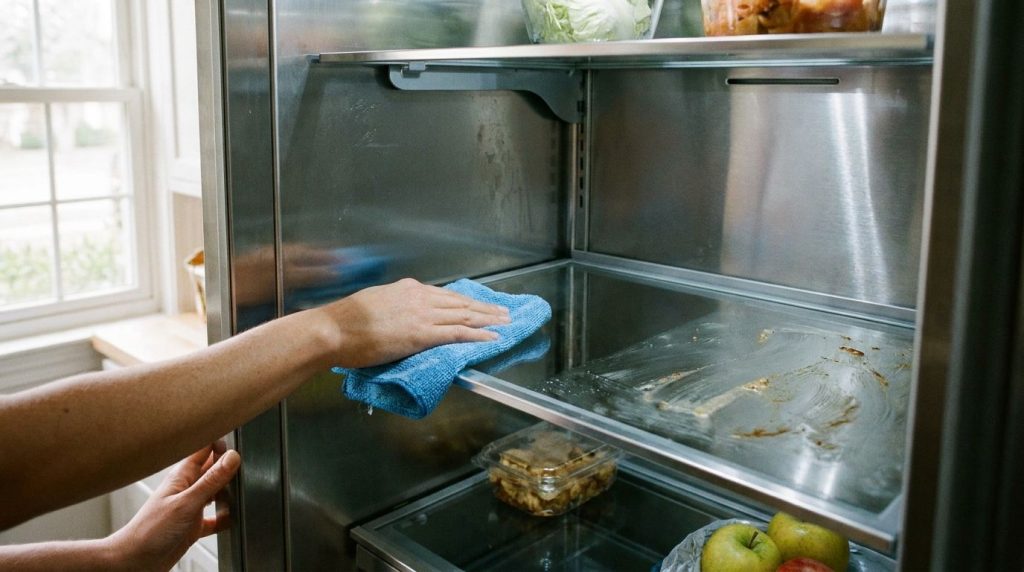
- Wipe with a damp microfiber cloth using gentle, overlapping strokes. For stubborn spots, use a soft sponge dipped in the solution and scrub lightly.
- Rinse your cloth often in clean water and wring it out well so you are removing residue rather than spreading it around.
- Dry all surfaces with a clean, dry cloth so no moisture is left behind.
- Wipe removable shelves and bins separately, then put everything back once they are fully dry.
What to Expect
Most fridges will look noticeably cleaner after one session, especially shelves and door bins with light to moderate buildup. Very old or heavily stained spots may need a second pass or some extra scrubbing. The fridge will not smell like a brand-new appliance overnight, but a fresh, neutral scent is a realistic goal. Plan to clean your fridge this way every few months, and wipe up spills as they happen to keep the job easier.
Helpful Tips
- Work in small sections so the solution does not dry before you wipe it.
- Clean the door gaskets gently with the solution and a soft cloth, then dry them thoroughly to prevent mildew.
- Use a cotton swab or old toothbrush to reach the corners of door bins and shelf edges.
- Keep a small box of baking soda in the fridge between cleanings to help absorb odors.
Important Notes and Safety
- Do not mix this solution with bleach or any other cleaning product. Mixing cleaners can release harmful fumes.
- Do not spray the solution directly onto food, electrical controls, light covers, or the fan area.
- Test on a small hidden area first if your fridge has a painted, plastic, or special-finish interior.
- Stainless steel exteriors can be wiped with the solution, but always wipe in the direction of the grain and dry right away to avoid streaks.
- Make a fresh batch each time you clean. Discard any leftover mixture rather than storing it for weeks.
- Ventilate the kitchen a little while cleaning, especially if the vinegar smell is strong to you.
With a little preparation and a few minutes of steady wiping, this simple method can leave your refrigerator looking fresh and ready for the week ahead.