Why Your Home Feels Damp All the Time
That persistent, clammy feeling in the air is more than just uncomfortable. Excess humidity can make rooms smell musty, cause condensation on windows, and encourage black mold to grow on walls, window frames, and behind furniture. Bathrooms, laundry rooms, basements, and bedrooms with poor airflow are the most common trouble spots.
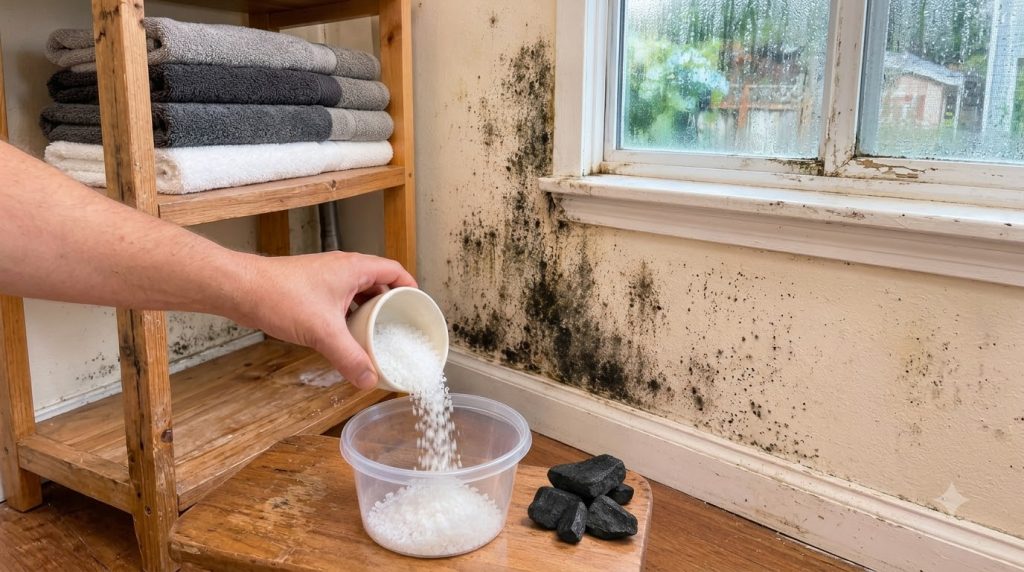
A simple, inexpensive DIY moisture absorber made from salt and charcoal can help pull excess moisture out of the air in small enclosed spaces. It is a practical starting point for homeowners who want a low-cost way to support a drier, healthier home.
What You Need
- Coarse rock salt or non-iodized salt
- Activated or natural charcoal chunks
- A clear plastic container with a lid or a shallow dish with drainage holes
- Cheesecloth, a coffee filter, or an old sock for lining (optional)
- Gloves and a dust mask if you are handling mold-affected areas
What Each Ingredient Does
Salt is hygroscopic, which means it attracts and holds water molecules from the surrounding air. As humidity rises, salt absorbs moisture and gradually becomes damp or dissolves into a brine that collects at the bottom of the container.
Charcoal has a porous structure that traps odors and some airborne moisture. Placing charcoal alongside salt helps reduce the musty smell that often accompanies damp rooms, while the salt does most of the moisture work.
Step-by-Step: Making a Basic Moisture Absorber
- Choose a clear plastic container that you can check easily, and make sure it has a shallow base so the collected liquid stays separate from the granules.
- Pour a layer of coarse rock salt into the bottom of the container. Keep the layer thick enough to absorb moisture but not so deep that it becomes hard to empty.
- Place a few chunks of charcoal on top of the salt, or in a separate small bag next to it, so they can help with odor control.
- Set the container in the affected room, away from direct contact with walls or fabrics, and out of reach of children and pets.
- Check the container every few days. When the salt has fully dissolved or the liquid level is high, pour the brine down a drain or toilet and refill with fresh salt.
Where to Place Your Absorber
- Closets and under-sink cabinets
- Bathrooms without good ventilation
- Basements and storage rooms
- Near window areas that show condensation
- Behind large furniture pieces placed against exterior walls
Important Safety Notes
Salt brine can be corrosive to some metals and can damage wood or painted surfaces if it spills, so place the container on a tray or towel. Keep all salt and charcoal away from children and pets, because ingestion can be harmful. Wear gloves when handling damp materials, and wash your hands afterward.
If you see black mold covering a large area, such as more than about three feet across, or if anyone in your home has breathing problems or allergies, consult a qualified mold remediation professional. A small absorber cannot fix an active mold problem, and the source of the moisture, such as a leak, poor ventilation, or failing seals, must be corrected first.
Other Ways to Support a Drier Home
- Run exhaust fans during showers and for at least 20 minutes afterward.
- Open windows for short periods when outdoor air is dry.
- Keep indoor humidity below about 50 percent with a hygrometer to monitor levels.
- Fix dripping faucets, leaking pipes, and worn window seals promptly.
- Avoid drying laundry indoors without ventilation.
Final Thoughts
A homemade salt and charcoal absorber is a budget-friendly way to help control everyday humidity and reduce musty odors in small spaces. Combined with good ventilation and regular checks for leaks, it can make a noticeable difference in how your home feels. What humidity-fighting tips have worked best in your home? Share them in the comments so other readers can benefit.