Tired of tiny fruit flies hovering over your bananas, apples, and countertop? You are not alone. Fruit flies multiply quickly in warm kitchens, and once they find ripe produce, they can take over in just a few days. The good news is that you can build an effective homemade fruit fly trap using two things you probably already have: apple cider vinegar and a few drops of dish soap.
Why Fruit Flies Appear in Your Kitchen
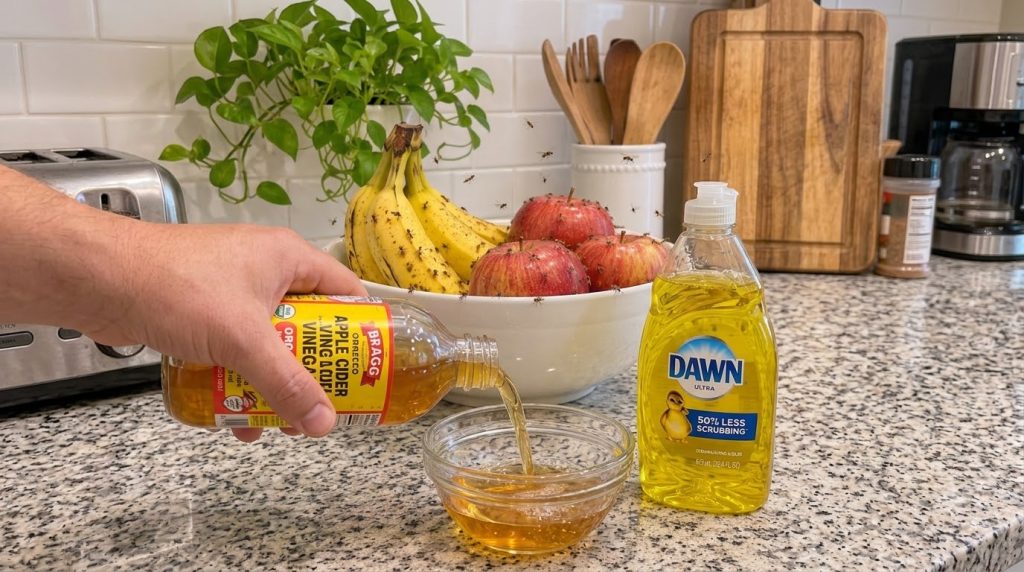
Fruit flies, also called vinegar flies, are attracted to the sweet scent of overripe fruit and fermenting produce. They often arrive as tiny eggs hidden on fruit bought from the store, so even a clean kitchen can host them. Once they settle in, they lay more eggs in drains, trash cans, and damp rags, which is why the problem can seem to return after you throw away the fruit.
What You Need
- About 1/4 cup of apple cider vinegar
- 1 to 2 drops of dish soap (a standard yellow dish soap works well)
- A small glass bowl or jar
- Optional: plastic wrap and a toothpick for a fly-catching version
Step-by-Step: Making the Apple Cider Vinegar Trap
- Pour about 1/4 cup of apple cider vinegar into a small glass bowl or jar.
- Add just one or two drops of dish soap. Stir gently so the soap mixes in without creating a large layer of foam.
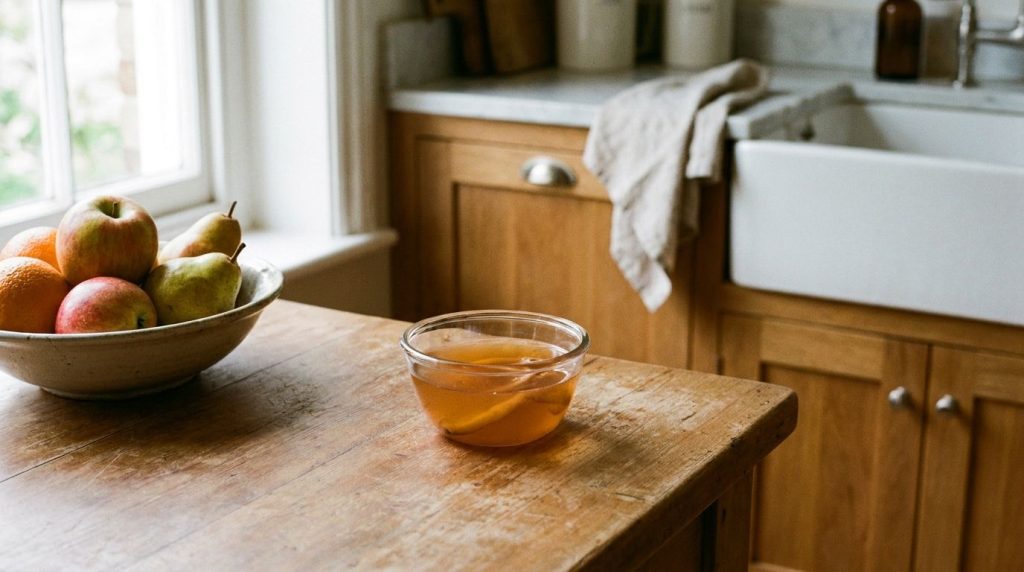
- Place the bowl near the fruit fly activity, such as beside the fruit bowl or near the sink.
- Check the trap daily. Most flies should be trapped within a day or two.
- Replace the mixture every few days, or sooner if it becomes crowded with flies.
Why This Hack Works
Apple cider vinegar has a fermented scent that fruit flies find very appealing, so they fly toward the bowl. The dish soap is the key ingredient that makes the trap work. It breaks the surface tension of the liquid, so flies that land on the surface cannot take off again and sink. Without the soap, many flies can land on the vinegar and walk away unharmed.
Tips for Better Results
- Cover the bowl with plastic wrap and poke a few small holes in it with a toothpick. Flies can enter but have difficulty leaving.
- Clean up overripe fruit, spills, and standing dishes to remove the source of the problem.
- Empty the trash regularly and wipe down the sink, drain, and countertops.
- Keep fresh fruit in the refrigerator or in a closed container when possible.
Safety Notes
- Keep the trap out of reach of children and pets, and do not drink the mixture.
- Use only a few drops of soap. Too much can create a lot of foam and reduce the trap’s effectiveness.
- Do not place the bowl directly on food preparation surfaces.
- Wash your hands after handling the mixture and clean the bowl thoroughly before reuse.
When to Expect Results
Many people notice a drop in fruit flies within a day or two, but a full clean-up can take longer, especially if eggs or larvae are already present in a drain or trash bin. If the flies persist after a week of consistent cleaning and trapping, check nearby drains, garbage disposals, and recycling containers for hidden breeding spots.
This simple apple cider vinegar and dish soap trap is an inexpensive, easy home remedy that works well alongside good kitchen habits. Have you tried it in your own kitchen? Share your results in the comments and let us know what worked best for you.