Greasy stovetops, grimy sink basins, and baked-on residue on pans can make even a tidy kitchen feel dirty. This homemade kitchen cleaner paste combines four common household items into a gentle yet effective scrub that cuts grease and lifts grime without a cabinet full of harsh chemicals.
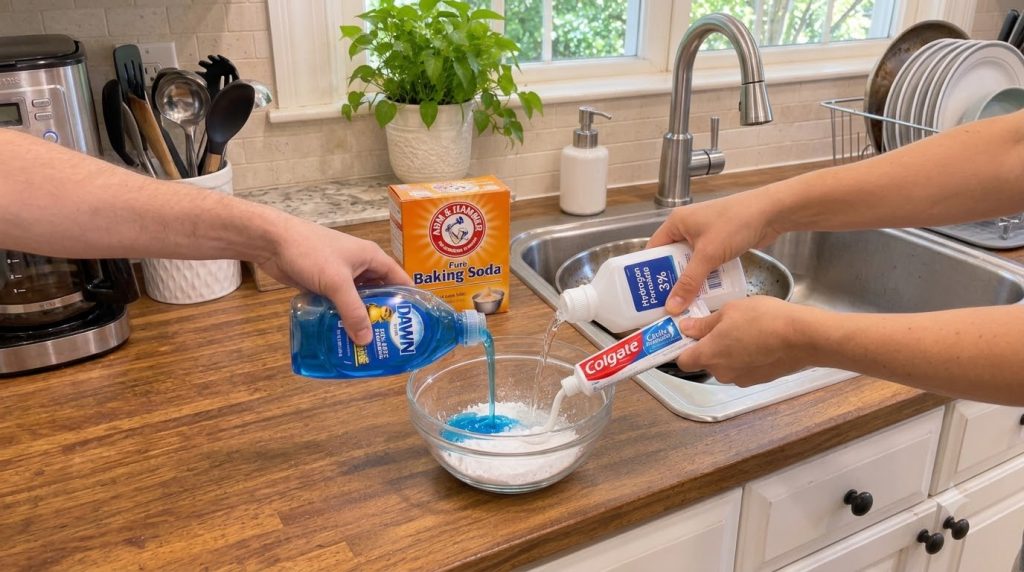
What Goes Into This DIY Kitchen Cleaner
- Baking soda: a mild abrasive that scours away grime and helps neutralize odors.
- Blue dish soap: a degreaser that breaks down oils and fats on contact.
- 3% hydrogen peroxide: helps lift stains and gives light disinfecting action on soiled surfaces.
- White toothpaste: a fine polishing agent that helps buff away film and water spots.
Step-by-Step: How to Mix the Paste
- Pour about half a cup of baking soda into a glass bowl.
- Add one tablespoon of blue dish soap.
- Add one tablespoon of plain white toothpaste.
- Slowly add hydrogen peroxide, about one teaspoon at a time, stirring until the mixture forms a spreadable paste similar in texture to frosting.
Make only as much as you need for one cleaning session. Peroxide loses strength over time, so a fresh batch works best.
How to Use the Paste
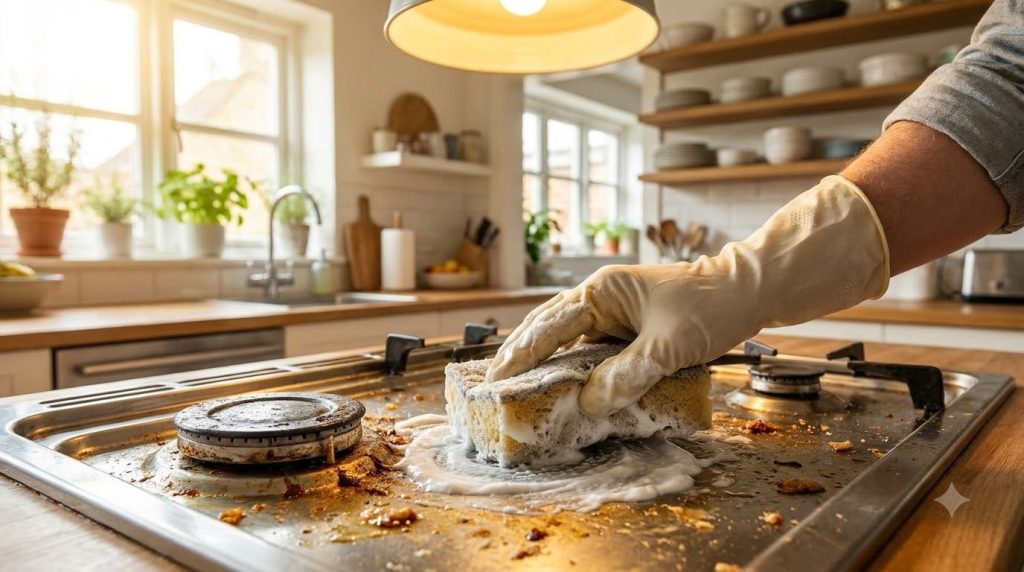
- Wear gloves and apply the paste to the greasy or stained area with a soft sponge or cloth.
- Let it sit for 5 to 10 minutes so the soap and peroxide can loosen the residue.
- Scrub gently in small circles, using extra pressure only on stubborn spots.
- Rinse thoroughly with warm water and dry with a clean microfiber towel.
Best Surfaces and Problem Areas
This paste works well on stovetops, sink basins, backsplash tile, and the outside of cookware with stuck-on grease. It can also help with light stains on a countertop. Use the same approach for cleaning the inside of a microwave or the dark ring left by a pan in a sink.
Safety Notes
- Never mix hydrogen peroxide with vinegar, ammonia, or other cleaners, as this can create harmful fumes or irritating reactions.
- Test the paste on a small hidden spot first, especially on painted, glossy, or colored surfaces, because peroxide can cause bleaching.
- Avoid using the paste on natural stone such as marble or granite, unsealed wood, and delicate finishes.
- Do not store leftover paste in a sealed container, since peroxide can release gas over time.
- Keep the mixture away from children and pets, and rinse all surfaces well after cleaning.
Final Thoughts
This budget-friendly DIY kitchen cleaner uses ingredients most homes already have, making it a practical option for regular cleaning and tough grease. What is your go-to homemade cleaning secret? Share it in the comments so others can try it too.