Eat for your organs is more than a catchy phrase. The foods you choose each day can contribute to how your heart, brain, liver, kidneys, stomach, lungs, and bones function over time. This guide expands on the key ideas from our infographic and turns them into practical, everyday eating habits.
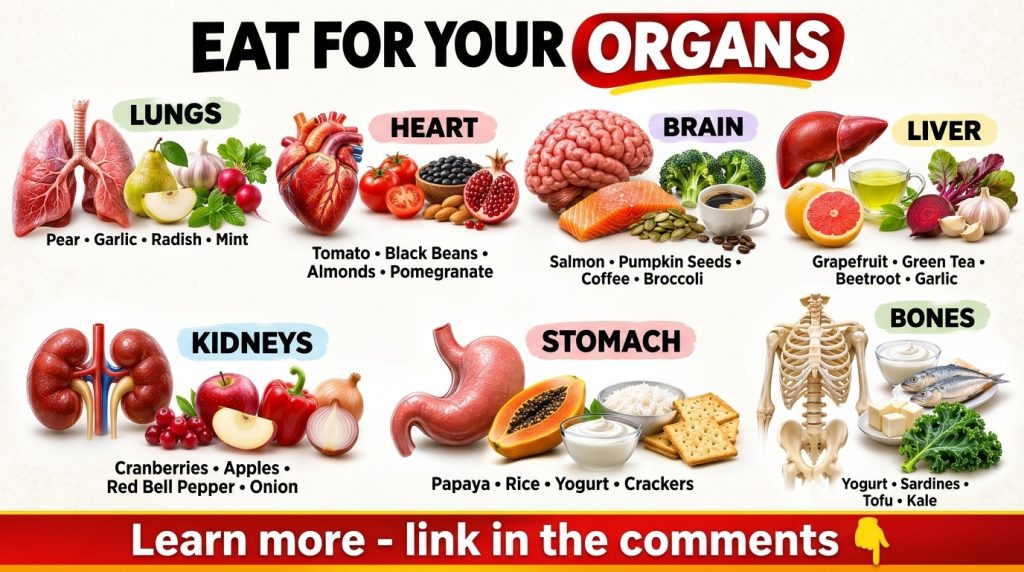
How Food Supports Your Organs
Every organ depends on a steady supply of nutrients, fluids, and fiber. Rather than relying on a single “superfood,” a balanced pattern built around whole, minimally processed foods is generally the most practical approach. Small, consistent choices tend to matter more than occasional perfect meals.
Heart and Brain
The heart and brain both benefit from eating patterns rich in vegetables, fruits, whole grains, nuts, and fish. These foods provide fiber, healthy fats, and antioxidants that are commonly associated with cardiovascular and cognitive health when included as part of a balanced diet.
- Add a serving of leafy greens or colorful vegetables to lunch and dinner.
- Choose whole grains such as oats or brown rice over refined options.
- Keep a small portion of unsalted nuts on hand for snacks.
Liver and Kidneys
The liver and kidneys work continuously to filter and process what you consume. Staying well hydrated, limiting heavily processed foods, and keeping added sugars and alcohol in check can help these organs do their work with less strain.
Simple Habits for Filtering Organs
- Drink water throughout the day rather than relying only on sugary drinks.
- Build meals around vegetables, legumes, and lean proteins.
- Read labels to spot hidden sodium and added sugars.
Stomach, Lungs, and Bones
Digestive comfort, respiratory health, and strong bones each depend on different nutrients. Yogurt and other fermented foods are often included in discussions of digestive health, while colorful fruits and vegetables supply vitamins that support the body’s overall defenses. Calcium and vitamin D, found in dairy or fortified foods and sunlight exposure, are commonly linked to bone health.
Beverages: Green Tea, Coffee, and Yogurt
Green tea and coffee are two of the most common daily drinks. Green tea contains natural compounds called catechins, which are being studied for their antioxidant properties. Coffee can be enjoyed in moderation, but adding large amounts of sugar or cream can reduce its nutritional value. Plain yogurt offers protein and calcium and can be a convenient base for breakfast or snacks.

Practical Tips for Eating for Your Organs
- Fill half your plate with vegetables at lunch and dinner.
- Choose water or unsweetened tea as your main drink.
- Pick plain yogurt and add fresh fruit instead of flavored versions with added sugar.
- Plan simple meals ahead of time to reduce reliance on takeaway food.
Who Should Be Careful
People with kidney disease, heart conditions, liver problems, digestive disorders, or those who take medications should speak with a qualified healthcare professional before making major changes to their diet. Caffeine sensitivity, dairy intolerance, and dietary restrictions also call for individual guidance.
Final Thoughts
Eat for your organs is best understood as a long-term habit rather than a quick fix. By focusing on vegetables, whole grains, healthy fats, fiber-rich foods, and mindful drinks, you can support your body from the inside out in a practical, sustainable way.
Medical Disclaimer: This article is for general educational purposes only and is not a substitute for professional medical advice, diagnosis, or treatment. Always consult a qualified healthcare professional before changing your diet, especially if you have an existing health condition.