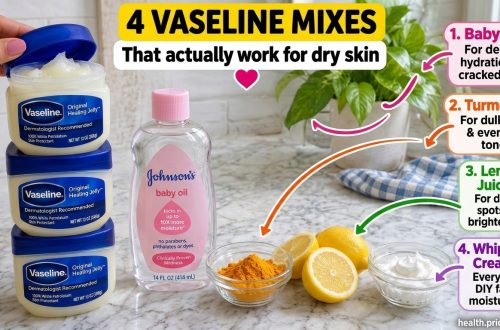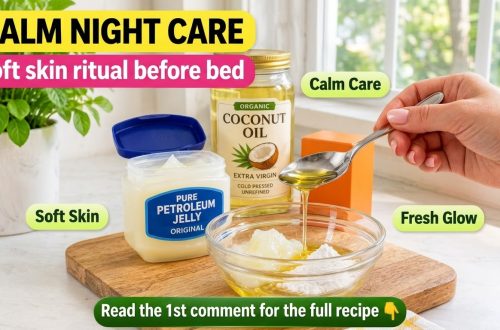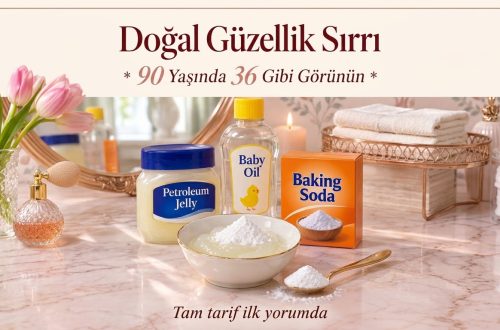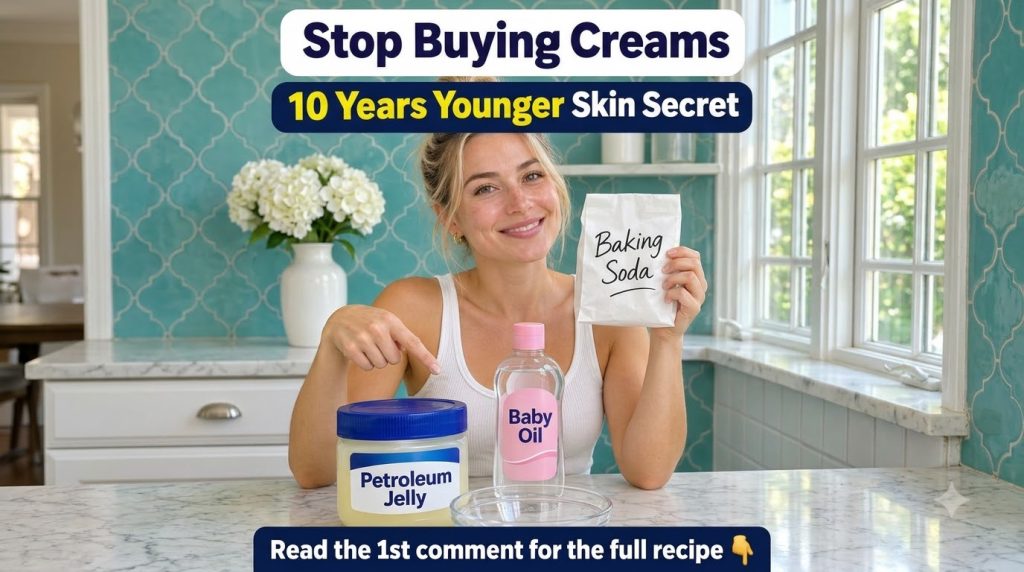
If you have spent time on Facebook, Instagram, or Pinterest lately, you have probably seen a bold headline promising a ’10 Years Younger Skin Secret’ made from three everyday items: petroleum jelly, baby oil, and baking soda. The idea is simple and appealing. Why spend a lot of money on creams when you may already have what you need in your bathroom cabinet?
In this guide, we will look at what this viral idea is really about, what each ingredient does for the skin, where the claims go too far, and how you can try a gentler, safer version at home. Our goal is to help you make informed choices, not to promise miracles.
Why This Viral Beauty Idea Is So Popular
Before-and-after content and budget-friendly beauty hacks are hugely popular right now. Many readers are looking for affordable ways to care for their skin, especially those who want to soften the look of fine lines, dullness, and uneven texture. A homemade mix that uses familiar products feels approachable and low-risk, which is a big part of its appeal.
It is also worth remembering that the words ‘years younger’ are a marketing hook. No household mixture can reverse the natural aging process. What a simple routine can do is help skin feel softer, look more hydrated, and appear smoother for a while.
What Each Ingredient Actually Does
Petroleum Jelly (Vaseline)
Petroleum jelly is an occlusive. It forms a thin layer on the skin that helps reduce water loss, which can make dry areas feel more comfortable. It is well known for supporting the skin barrier while it heals minor dryness and roughness.
Baby Oil
Most baby oils are mineral oil based and are designed to lock in moisture on the surface of the skin. They can leave skin feeling soft and supple, but they are heavy for some people and may clog pores on oily or acne-prone skin.
Baking Soda
Baking soda is alkaline, and that is exactly why it needs caution. Skin is naturally slightly acidic, and strong alkaline products can irritate or disrupt the protective barrier. Using it on the face, especially as a scrub, can cause redness, stinging, and dryness for many people. This is the part of the viral trend we recommend skipping.
A Gentler Home Version You Can Try
If you would like to experiment with a simple oil-based night treatment, a basic blend without baking soda is a much safer starting point. Here is a straightforward approach:
- Wash your face with a mild cleanser and pat it dry so that skin is still slightly damp.
- Place a small amount of petroleum jelly, about a pea-sized portion, into a clean glass bowl.
- Add a few drops of baby oil and stir gently until the mixture feels smooth and spreadable.
- Apply a thin layer to the areas that feel driest, avoiding the delicate eye area unless your product is labeled for it.
- Leave it on overnight or for at least 30 minutes, then gently blot away any excess with a soft tissue.
Use this treatment two to three times a week rather than every night, especially at first. Always store your mixture with a clean spatula or spoon to avoid introducing bacteria.
Important Safety Tips
- Do a patch test on your inner arm for 24 hours before applying any new mixture to your face.
- Stop using the blend if you notice burning, itching, redness, or breakouts.
- Choose clean, unused containers and make small batches so the mixture stays fresh.
- If you have sensitive skin, rosacea, eczema, or an active skin condition, speak with a dermatologist before trying new home treatments.
- Remember that oil-based products can be heavy, so use them sparingly on oily or acne-prone areas.
Realistic Expectations for Younger-Looking Skin
Healthy, youthful-looking skin usually comes from consistent habits rather than a single trick. Daily sunscreen, gentle cleansing, adequate sleep, hydration, and a balanced diet all play a major role in how skin ages. A simple moisturizing routine can make your skin feel more comfortable and help it look plumper and more refreshed in the short term.
If you are looking for a more targeted approach to fine lines, dark spots, or texture, a dermatologist can recommend proven ingredients such as retinoids, vitamin C, or niacinamide that have been studied for these concerns.
The Bottom Line
The viral ’10 Years Younger Skin Secret’ is an eye-catching idea, but the most useful takeaway is simpler: a basic, gentle moisturizing routine can be affordable and effective. Skip the baking soda on your face, test any new mixture carefully, and focus on the daily habits that truly support healthy skin. Your skin will thank you for the consistency.