Your body is a remarkable communicator, often sending subtle signs and whispers about its needs long before major issues arise. Learning to interpret these everyday signals can empower you to take proactive steps, nourishing your well-being and preventing potential problems. Don’t wait for your body to shout; let’s learn to listen to its whispers.
From dry skin to brittle nails, these common bodily cues can hint at underlying nutritional deficiencies. This guide will help you recognize these signals and discover simple, delicious dietary changes to support your health proactively. By understanding what your body is trying to tell you, you can make informed choices to boost your vitality and maintain optimal wellness.
Your Skin Speaks: Dryness and the Power of Omega-3
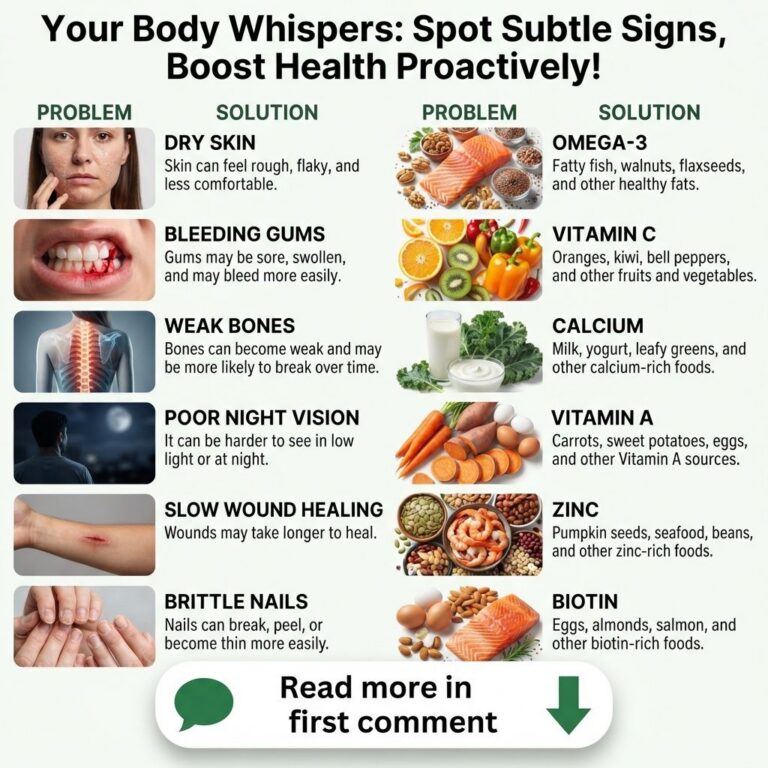
Experiencing dry, rough, or flaky skin, especially during colder months, might be more than just a weather effect. It could be one of your body’s subtle signs pointing to a need for essential fatty acids.
Recognizing Dry Skin Signals
Persistent dryness, flakiness, or a rough texture on your skin, even with regular moisturizing, can indicate a deficiency in omega-3 fatty acids. These healthy fats are crucial for maintaining the skin’s lipid barrier, which locks in moisture and keeps irritants out.
Nourishing Your Skin with Omega-3
Omega-3s play a vital role in skin health, contributing to its hydration, elasticity, and overall appearance. Increasing your intake of these fats can help soothe dry skin from within.
- Salmon: An excellent source of EPA and DHA, two potent types of omega-3s.
- Walnuts: Provide alpha-linolenic acid (ALA), a plant-based omega-3 that the body can convert.
- Chia Seeds: Tiny powerhouses packed with ALA, fiber, and protein.
- Flaxseeds: Another rich source of ALA, often used ground or as flaxseed oil.
Beyond the Brush: Bleeding Gums and Vitamin C’s Role
Do your gums bleed easily when you brush or floss? This common issue isn’t always just about your brushing technique; it can be a significant indicator of a vitamin C deficiency.
Understanding Bleeding Gums
Vitamin C is essential for collagen production, a protein that forms the structure of your gums and other connective tissues. A lack of this vitamin can weaken gum tissue, making it more susceptible to bleeding and inflammation.
Boosting Gum Health with Vitamin C
Incorporating more vitamin C into your diet can help strengthen gum tissue, promote healing, and reduce bleeding.
- Oranges: A classic source, rich in this immune-boosting vitamin.
- Bell Peppers: Especially red and yellow varieties, which contain more vitamin C than oranges.
- Strawberries: Delicious and packed with antioxidants and vitamin C.
- Broccoli: A versatile vegetable offering a good dose of vitamin C and other nutrients.
Strong Foundations: Weak Bones and Calcium Essentials
An increased risk of fractures or generally brittle bones are not merely signs of aging. These are critical signals that your body may need more calcium, the primary building block for strong bones.
Spotting Signs of Weak Bones
While bone density loss is often silent, recurrent fractures from minor falls, stooped posture, or loss of height can be serious indicators. Proactive calcium intake is key to supporting bone health throughout life.
Fueling Bone Strength with Calcium
Calcium is fundamental for maintaining bone density and strength. Adequate intake is vital for preventing osteoporosis and supporting your skeletal system.
- Milk: A traditional source, often fortified with vitamin D for better absorption.
- Yogurt: Offers calcium along with probiotics, beneficial for gut health.
- Cheese: A tasty way to boost calcium intake, with various options available.
- Kale: A leafy green vegetable that provides plant-based calcium and vitamin K.
Seeing Clearly: Poor Night Vision and Vitamin A
If you find yourself struggling to see in dimly lit environments or experiencing what feels like ‘night blindness,’ your body might be signaling a need for Vitamin A.
When Night Vision Dims
Vitamin A is crucial for the health of your eyes, particularly for the function of the retina and the ability to adapt to changes in light. Difficulty seeing at dusk or in low-light conditions is a common symptom of vitamin A deficiency.
Enhancing Vision with Vitamin A
Ensuring sufficient vitamin A intake is essential for maintaining good vision, especially in low light, and for overall eye health.
- Carrots: Famous for their beta-carotene, which the body converts to vitamin A.
- Sweet Potatoes: Another excellent source of beta-carotene, versatile in cooking.
- Spinach: A leafy green packed with vitamin A and other beneficial antioxidants.
- Eggs: Provide preformed vitamin A (retinol), easily absorbed by the body.
Healing Touch: Slow Wound Recovery and Zinc’s Importance
Do your cuts and scrapes seem to take an unusually long time to heal? This slow recovery can be a subtle but significant body signal indicating a potential zinc deficiency.
Noticing Slow Healing
Zinc plays a critical role in immune function, cell growth, and tissue repair. When your body lacks sufficient zinc, its ability to heal wounds efficiently can be compromised, leading to prolonged recovery times.
Accelerating Recovery with Zinc
Adequate zinc intake is essential for a robust immune system and efficient wound healing, helping your body repair itself effectively.
- Shrimp: A great source of lean protein and zinc.
- Pumpkin Seeds: Nutrient-dense seeds offering a good amount of zinc.
- Lentils: Plant-based protein and zinc, excellent for vegetarian diets.
- Beef: A significant source of highly bioavailable zinc.
Nail Health: Brittle Nails and the Biotin Boost
Are your nails easily broken, chipped, or prone to peeling? These brittle nails are often a common clue that your body could benefit from more biotin, a B-vitamin known for its role in strengthening hair and nails.
Understanding Brittle Nails
Biotin (Vitamin B7) is vital for the health of keratin, the primary protein that makes up your hair, skin, and nails. A deficiency can manifest as weak, fragile nails that struggle to grow or maintain their strength.
Strengthening Nails with Biotin
Incorporating biotin-rich foods can help improve nail strength, reduce breakage, and promote healthier growth.
- Eggs: Particularly the yolk, which is rich in biotin.
- Almonds: A convenient snack providing biotin and other beneficial nutrients.
- Avocados: Offer a good amount of biotin, healthy fats, and vitamins.
- Sweet Potatoes: (Also a source of Vitamin A) These tubers contribute biotin to your diet.