Did you know pickling isn’t just for cucumbers? A jar of tangy, crunchy vegetables can bring a lively kick to breakfast, lunch, or dinner, and many of the best pickle ideas use ingredients already sitting in your kitchen.
Why Pickling Is Worth Trying at Home
Pickling is one of the oldest ways to enjoy vegetables and fruit. The process uses a seasoned brine of vinegar, water, salt, and spices to create bright flavors and a satisfying crunch. It is also a simple, budget-friendly way to make more of the produce you buy, especially when the farmers market is overflowing.
Homemade pickles also let you control the ingredients. You can choose lower salt, use organic produce, or experiment with herbs and spices your family enjoys. For many home cooks, that flexibility is the biggest appeal.
Simple Ideas to Start With
If you are new to pickling, begin with small batches and recipes that need few ingredients. Here are a few easy directions to explore:
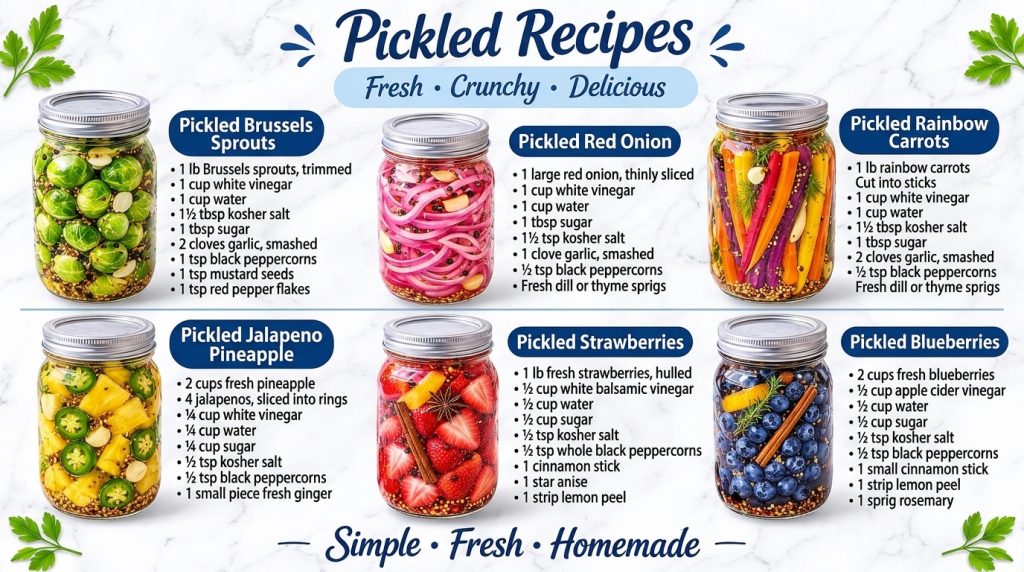
- Quick dill cucumbers: Fresh dill, garlic, and a light vinegar brine make a classic snack that is ready in a short time.
- Pickled red onions: Thin slices soaked in warm vinegar and a pinch of sugar add color and zing to salads, tacos, and grain bowls.
- Carrot and ginger pickles: Thin carrot sticks with fresh ginger and a touch of honey make a bright side dish.
- Spiced cauliflower or green beans: Whole spices such as mustard seed, peppercorns, and bay leaves add depth to crisp vegetables.
- Fruit-based pickles: Peach or pear slices in a lightly sweet, spiced brine can complement cheese boards and roasted meats.
Tips for Crisp, Flavorful Results
Crunch depends on fresh produce and clean technique. Choose firm vegetables, trim the ends, and pack them snugly into sterilized glass jars. Keep the brine at the right temperature for your recipe, and let the jars rest in a cool, dark spot so the flavors can develop.
Label each jar with the date. Most refrigerator pickles are best enjoyed within a few weeks, and you should always follow a trusted, tested recipe for any shelf-stable canning method.
How Pickles Fit a Healthy Eating Routine
Pickled vegetables can add variety to meals without many extra calories. They pair well with fresh greens, lean proteins, and whole grains, making it easier to enjoy more plant foods throughout the week. Some people also enjoy the tangy taste as a way to eat more vegetables on busy days.
Fermented and vinegar-based foods are a popular part of many traditional diets. Still, pickles can be high in sodium, so it helps to taste as you go, use measured salt, and balance them with fresh, low-sodium ingredients.
Ready to Try Your First Batch?
Which recipe are you most excited to try first? Start with one jar, take notes on what you like, and build your own favorite combinations over time. If you would like a full step-by-step guide with ingredient measurements, leave a comment on the original post and our team will share more details.