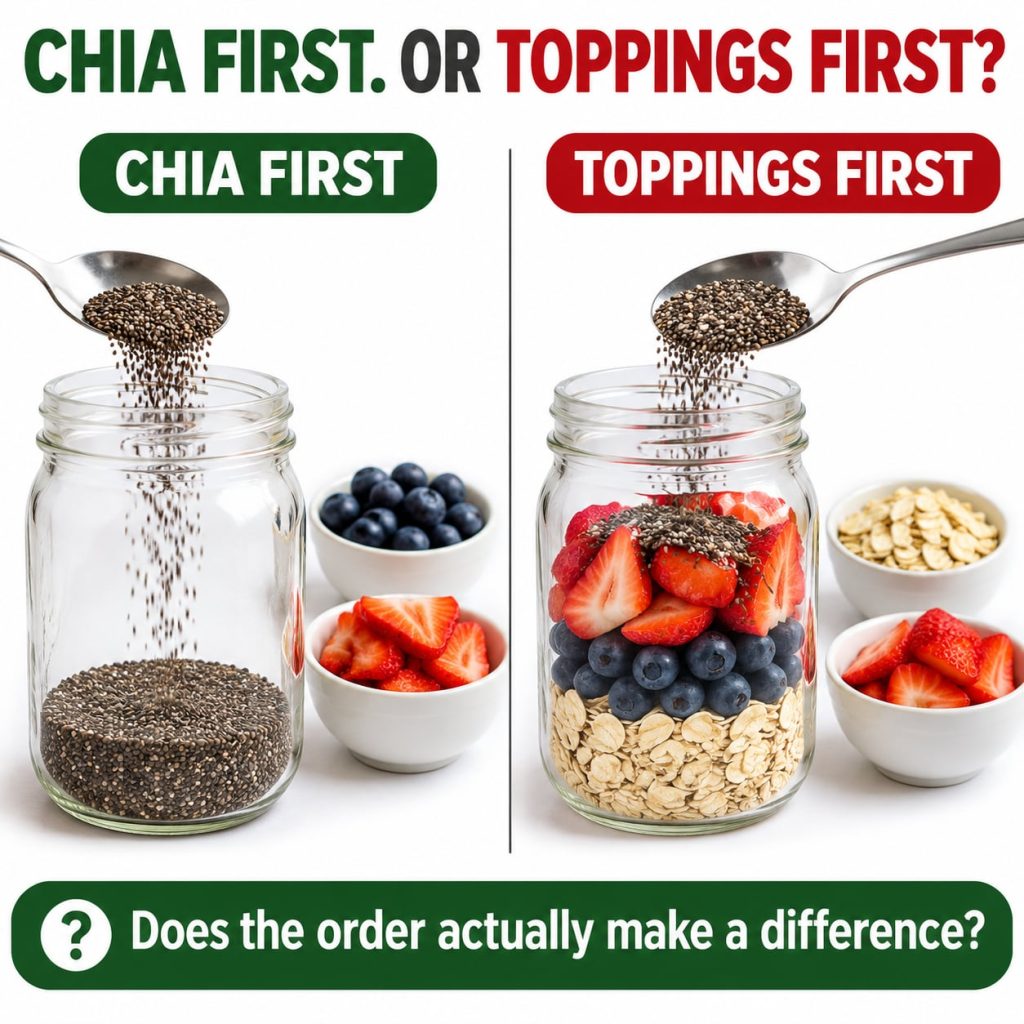
Overnight oats and chia pudding are two of the easiest make-ahead breakfasts, but many people notice that their results vary from jar to jar. The difference is often not the ingredients themselves. It is the order in which they go into the container and how they are mixed.
This guide breaks down why ingredient order matters, how oats and chia seeds take up liquid differently, and a simple layering approach that may help you get a more consistent texture and flavor every time.
Why Ingredient Order Matters in Overnight Oats
Overnight oats and chia pudding rely on slow soaking rather than cooking. Over several hours in the fridge, the oats or chia seeds absorb liquid and soften. Because the process is gradual, the way ingredients are added at the start can influence how evenly the mixture hydrates and how the sweetener and flavorings spread through the jar.
When everything is dumped in at once without stirring, some parts may stay dry while others become overly soft. Thoughtful layering helps the liquid reach every component, which can lead to a smoother, more balanced result.
How Oats and Chia Seeds Absorb Liquid
Rolled oats soften steadily and become creamy as they soak. Chia seeds behave differently. They form a gel-like coating when they meet liquid, which is why chia pudding has a thick, spoonable body. If chia seeds sit in a dry pocket at the bottom of the jar or clump together, the texture can turn uneven.
Understanding this difference is the key to getting the best of both. Oats need time to soften, while chia seeds need enough liquid and a good stir to spread out before they set.
A Simple Layering Order That Works
The following order is a practical way to build your jar. It is designed to support even hydration and a balanced flavor in each bite.
- Liquid base first. Pour in milk, yogurt, or your preferred liquid so every dry ingredient has something to absorb.
- Oats or chia seeds next. Add them to the liquid and stir well so they do not clump at the bottom.
- Sweeteners and flavorings. Mix in honey, vanilla, cinnamon, or other flavorings so they blend into the base rather than sitting on top.
- Fruit and toppings last. Add fresh fruit, nuts, or seeds just before serving to keep their texture fresh and distinct.
Common Mistakes to Avoid
- Skipping the stir. Chia seeds in particular may clump if they are not mixed well after adding the liquid.
- Adding delicate toppings too early. Soft fruit may release moisture and blend into the base over time, which can change the texture you intended.
- Using too little liquid. Without enough liquid, oats can stay firm and chia pudding may not set properly.
Tips for Better Meal Prep
If you prepare several jars at once, label each one and keep the toppings in a separate container until the morning. This simple habit helps your breakfast taste fresh from the first spoonful to the last. Overnight oats and chia pudding are generally best enjoyed within a few days when stored in the refrigerator in sealed containers.
Results can vary depending on the type of oats, the liquid used, and personal preference, so it may help to adjust the amounts after trying a few batches.
Final Thoughts on Overnight Oats
Ingredient order is a small detail with a noticeable impact. By starting with liquid, stirring in oats or chia seeds thoroughly, blending in flavorings, and adding toppings last, you can make overnight oats with a more consistent texture and a more balanced taste. It is an easy change that can make your make-ahead breakfast far more enjoyable.
Medical disclaimer: This article is for general information only and is not a substitute for advice from a qualified healthcare professional. If you have dietary restrictions, allergies, or specific nutritional needs, consult a healthcare provider or registered dietitian.