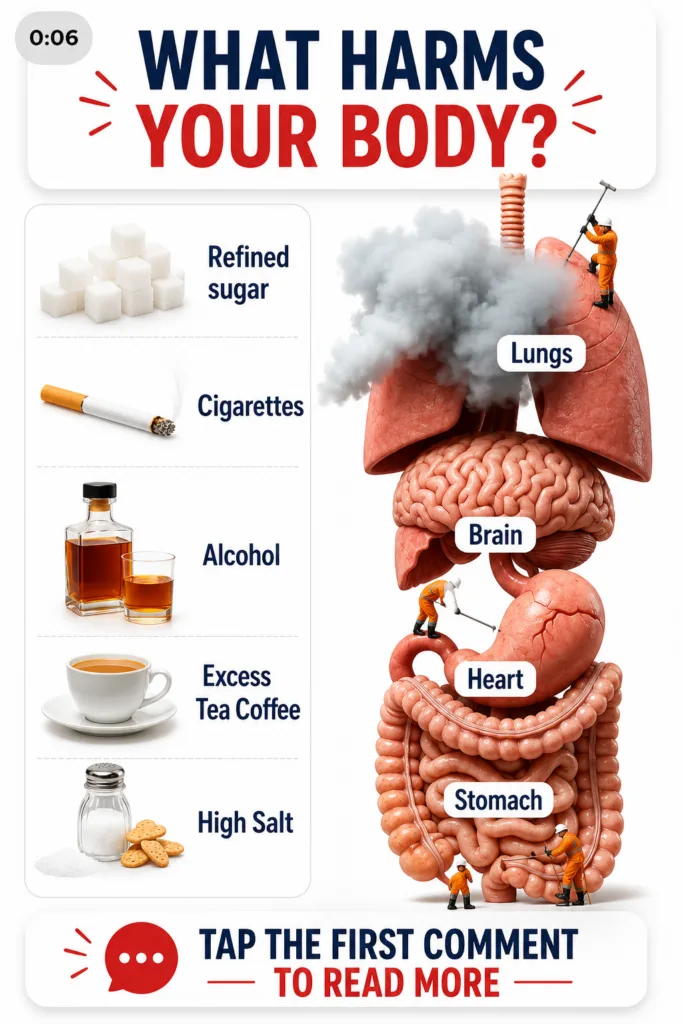
Every day, we make dozens of choices about what we eat, drink, and do. While no single food or habit determines your health overnight, consistently unhealthy choices can gradually increase the risk of chronic diseases over time.
The infographic highlights several common lifestyle factors that may affect different parts of the body. Here’s what science tells us about each one.
🍬 Refined Sugar
Refined sugar is found in many soft drinks, desserts, candies, and processed snacks. Eating large amounts regularly can contribute to:
- Weight gain
- Type 2 diabetes
- Tooth decay
- Increased risk of heart disease
- Fatty liver disease
Your brain naturally enjoys sweet foods because they provide quick energy. However, frequent spikes in blood sugar can eventually affect insulin regulation and overall metabolic health.
Healthier tip: Choose whole fruits, plain yogurt, or naturally sweet foods more often instead of sugary snacks.
🚬 Cigarettes
Smoking remains one of the leading preventable causes of disease worldwide.
It damages nearly every organ in the body, especially:
- Lungs
- Heart
- Blood vessels
- Brain
Smoking greatly increases the risk of:
- Lung cancer
- Chronic obstructive pulmonary disease (COPD)
- Stroke
- Heart attack
Even secondhand smoke can negatively affect the health of people nearby.
Healthier tip: Quitting smoking at any age provides significant health benefits, and many improvements begin within weeks.
🥃 Alcohol
Moderate alcohol consumption may fit into some adults’ lifestyles, but excessive drinking can seriously affect health.
Heavy alcohol use can increase the risk of:
- Liver disease
- High blood pressure
- Heart rhythm problems
- Certain cancers
- Memory and cognitive issues
Alcohol also affects sleep quality and judgment, even when consumed in amounts that don’t cause obvious intoxication.
Healthier tip: If you drink, stay within recommended guidelines and include alcohol-free days each week.
☕ Too Much Tea or Coffee
Coffee and tea can be part of a healthy diet and even provide antioxidants. However, consuming too much caffeine may cause:
- Anxiety
- Difficulty sleeping
- Rapid heartbeat
- Digestive discomfort
- Increased blood pressure in sensitive individuals
Most healthy adults can safely consume up to about 400 mg of caffeine per day, roughly equivalent to four small cups of brewed coffee, though individual tolerance varies.
Healthier tip: Avoid caffeine late in the day if it interferes with your sleep.
🧂 Too Much Salt
Sodium is essential for the body, but most people consume far more than recommended.
A high-salt diet is associated with:
- High blood pressure
- Increased risk of stroke
- Heart disease
- Kidney problems
Many packaged and restaurant foods contain surprisingly high amounts of sodium, even if they don’t taste particularly salty.
Healthier tip: Flavor meals with herbs, garlic, lemon juice, or spices instead of relying heavily on salt.
Small Choices Make a Big Difference
Good health isn’t about eliminating every treat or following a perfect diet. It’s about building sustainable habits over time.
Simple daily improvements can have a meaningful impact:
- Eat more fruits and vegetables.
- Choose whole foods whenever possible.
- Stay physically active.
- Get enough sleep.
- Drink plenty of water.
- Avoid smoking.
- Limit alcohol intake.
- Enjoy sugary foods and salty snacks in moderation.
Remember, lasting health comes from consistent healthy habits—not quick fixes. Every positive choice you make today is an investment in your future well-being.