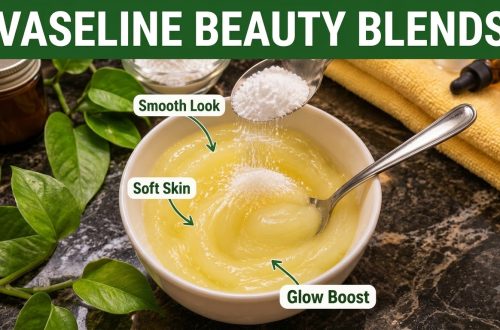
If you have seen a bowl of glossy, pale yellow petroleum jelly with a few whole cloves beside it, you are probably curious about what is going on. Let’s take a friendly, honest look at this popular DIY idea, what it can and cannot do, and how to try it safely.
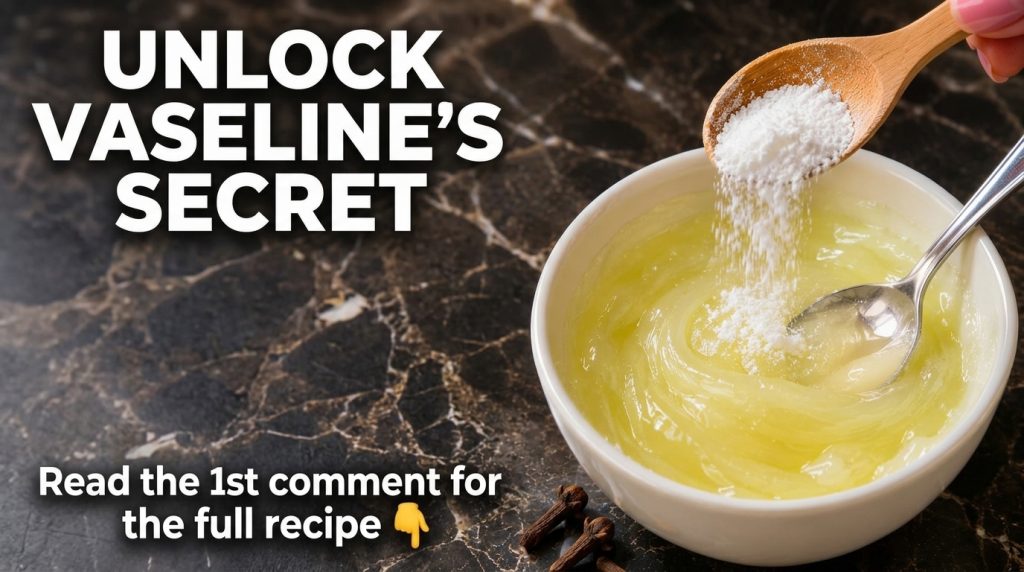
What the Picture Shows
The image is designed to spark curiosity. It shows a bowl of petroleum jelly, a spoon, a few whole cloves, and a white powder being added to the mixture. The full ingredient list and method are not revealed in the photo, so it is best to treat the idea as a playful home experiment rather than a proven treatment.
What Petroleum Jelly Is Good For
Petroleum jelly, often sold under the Vaseline name, is an occlusive. That simply means it forms a light barrier on the skin that helps hold in moisture. Many people use it on dry elbows, heels, and lips, especially in cold or dry weather. It is affordable, easy to find, and gentle for most skin types, which is why it has become a classic in many beauty routines.
About the Cloves and the White Powder
Cloves are very strong and aromatic, and they can irritate sensitive skin. The white powder shown in the image is not named, and it could be many different things, so it is not wise to guess what it is or how it will affect your skin. If you come across a recipe that uses cloves or unknown powders, take extra care and think twice before applying it to your face.
Safety First Before You Try Any DIY Mix
- Always do a patch test on a small area, such as your inner arm, and wait at least 24 hours.
- Avoid applying strong spices or any mixture to broken, sunburned, or freshly waxed skin.
- Keep mixtures away from your eyes, nose, and mouth.
- Use clean hands, clean bowls, and clean spoons every time.
- Make small batches and store them in a clean, sealed container.
- Stop right away if you notice redness, itching, burning, or swelling.
A Gentle Routine You Can Try Today
If you love the idea of a simple petroleum jelly treatment, a calm and easy option is to use plain petroleum jelly on its own. After cleansing and applying your regular moisturizer, press a thin layer onto dry spots like elbows, knees, heels, or lips at night. This helps lock in hydration while you sleep, and it keeps your routine simple and budget friendly.
Common Mistakes to Avoid
- Using too much product, which can feel heavy and may trap dirt on the skin.
- Applying petroleum jelly over oily or acne-prone areas, where it may clog pores for some people.
- Trusting viral recipes without checking the ingredients and how they may affect your skin.
- Skipping sunscreen during the day, since hydration alone does not protect against sun damage.
Final Thoughts
Simple beauty ideas can be fun, affordable, and satisfying to try at home, as long as we stay curious and careful. Plain petroleum jelly can be a helpful everyday moisturizer, while mixtures with cloves or unknown powders deserve extra caution. If you have tried a home beauty hack like this, we would love to hear how it went, so share your experience in the comments.