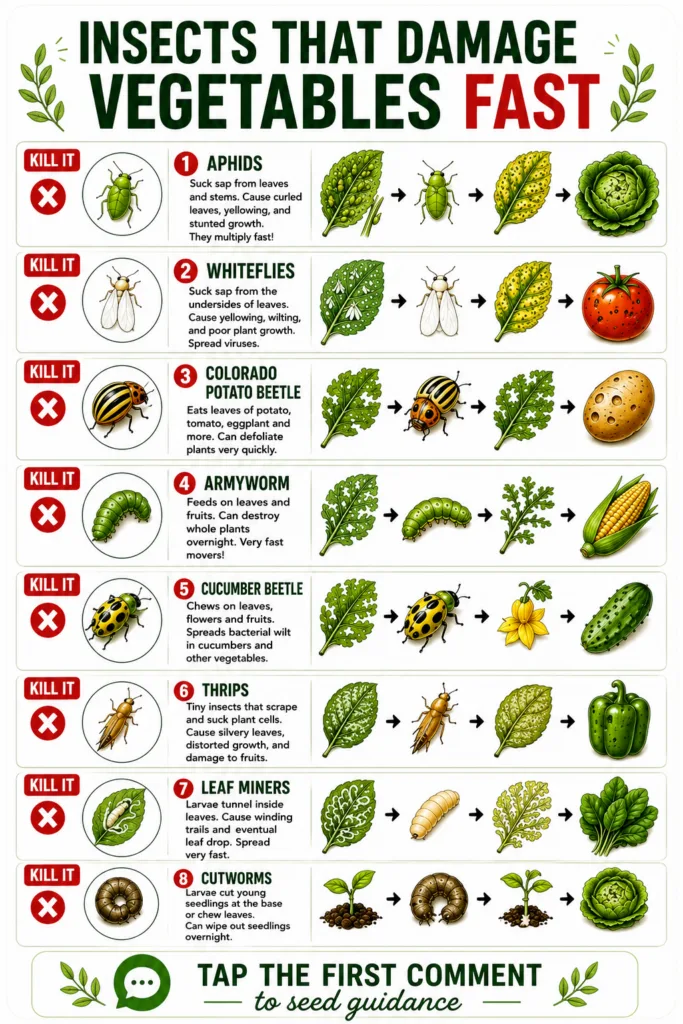
A healthy vegetable garden can quickly become damaged if harmful insects are left unchecked. Many of the most destructive garden pests feed on leaves, stems, roots, or fruit, reducing plant growth and harvest quality. Learning to identify these insects early is one of the best ways to protect your crops naturally.
In this guide, we’ll introduce eight common vegetable pests, explain the damage they cause, and share practical tips to help keep your garden healthy.
1. Aphids
Aphids are tiny, soft-bodied insects that gather on young stems and the undersides of leaves. They feed by sucking plant sap, causing curled leaves, yellowing, and stunted growth. They also reproduce rapidly, allowing small infestations to become major problems in just a few days.
How to manage aphids
- Spray plants with a strong stream of water.
- Encourage beneficial insects such as ladybugs and lacewings.
- Remove heavily infested leaves.
- Use insecticidal soap when necessary.
2. Whiteflies
Whiteflies resemble tiny white moths and hide beneath leaves. They feed on plant sap, weakening vegetables while producing sticky honeydew that encourages mold growth. Some species can also spread plant viruses.
Prevention tips
- Install yellow sticky traps.
- Improve airflow between plants.
- Remove heavily infested foliage.
- Inspect new plants before adding them to your garden.
3. Colorado Potato Beetle
This striped beetle is a major pest of potatoes but also feeds on tomatoes, peppers, and eggplants. Both adults and larvae consume large amounts of foliage and can quickly strip entire plants.
Best control methods
- Hand-pick beetles and eggs.
- Rotate crops yearly.
- Cover young plants with row covers.
- Encourage natural predators.
4. Armyworms
Armyworms are caterpillars known for feeding aggressively on leaves and tender stems. Large outbreaks can destroy vegetable beds almost overnight.
How to reduce damage
- Inspect plants frequently.
- Remove caterpillars by hand.
- Encourage birds and beneficial insects.
- Apply biological controls like Bacillus thuringiensis (Bt) when appropriate.
5. Cucumber Beetles
These spotted or striped beetles attack cucumbers, squash, melons, pumpkins, and other cucurbit crops. Besides chewing leaves and flowers, they may spread bacterial wilt.
Garden protection
- Use floating row covers early in the season.
- Remove weeds that attract beetles.
- Rotate crops annually.
- Monitor plants regularly for early signs of damage.
6. Thrips
Thrips are extremely small insects that scrape and suck plant cells. Their feeding often leaves silvery streaks, distorted leaves, and damaged flowers.
Control tips
- Remove weeds around the garden.
- Increase beneficial insect populations.
- Use blue or yellow sticky traps.
- Keep plants healthy to reduce stress.
7. Leaf Miners
Leaf miner larvae tunnel inside leaves, creating winding white trails. Although the insects remain hidden, severe infestations reduce photosynthesis and weaken plants.
Prevention
- Remove damaged leaves promptly.
- Avoid excessive nitrogen fertilizer.
- Encourage parasitic wasps and other natural enemies.
8. Cutworms
Cutworms live in the soil and feed at night, often cutting young seedlings at ground level. A single night of feeding can destroy newly planted vegetables.
How to protect seedlings
- Place collars around young plants.
- Remove plant debris before planting.
- Cultivate the soil before transplanting.
- Inspect gardens in the evening for active larvae.
Tips to Prevent Garden Pest Problems
The healthiest gardens are usually those that focus on prevention rather than treatment.
Some simple habits include:
- Inspect plants every few days.
- Remove weeds regularly.
- Water consistently without overwatering.
- Rotate crops each season.
- Grow flowers that attract beneficial insects.
- Keep garden tools clean.
- Remove diseased or heavily damaged plants promptly.
Healthy plants are naturally more resilient against many insect pests.
Final Thoughts
No garden is completely free from insects, but early detection and proper care can prevent small pest problems from becoming major infestations. By learning to recognize aphids, whiteflies, armyworms, cucumber beetles, leaf miners, cutworms, and other common pests, you’ll be better prepared to protect your vegetables and enjoy healthier harvests throughout the growing season.
🌱 Tap the first comment to discover more gardening tips, natural pest control methods, and practical plant care guides for a thriving vegetable garden!