You will wish you had known this sooner! Making your own all-purpose cleaner is quick, inexpensive, and uses ingredients most people already keep in the pantry or under the sink. It is a great way to freshen up your kitchen, bathroom, and everyday surfaces without relying on harsh store-bought chemicals.
This guide is for busy homeowners, renters, and anyone who wants a gentle, eco-friendly cleaning routine. You will learn what goes into a basic all-purpose cleaner, how to mix it step by step, which surfaces it works well on, and which ones to avoid. You will also learn how to store it safely.
Quick Summary
- Preparation Time: 5 minutes
- Application Time: Spray and wipe in about 1 to 2 minutes per surface
- Difficulty Level: Easy
- Best Uses: Everyday dusting, grease, sticky spots, and general wipe-downs
- Suitable Surfaces: Sealed countertops, sealed tile, glass, and stainless steel
- Storage Time: Up to 1 month in a labeled spray bottle
Why You’ll Love This DIY Solution
- Easy to make in just a few minutes
- Budget-friendly compared with many commercial cleaners
- Uses common household ingredients
- Beginner-friendly with no special tools
- Works on many everyday surfaces
- Leaves a fresh, light citrus scent
- Reduces the need for harsh chemicals
Ingredients and Materials
- 1 cup distilled white vinegar
- 1 cup water (distilled water is best if your tap water is hard)
- 1 teaspoon mild liquid dish soap (any brand)
- 10 drops lemon essential oil (optional)
- Substitution: 1 tablespoon fresh lemon juice can replace the essential oil for a light citrus scent, but it will not keep as long
A Quick Note on Hydrogen Peroxide
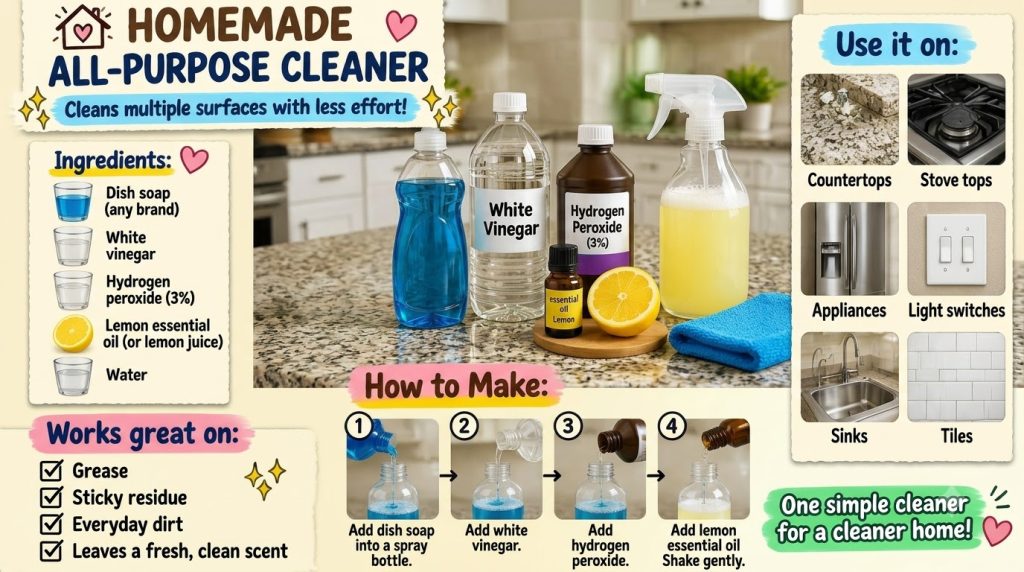
Many versions of this cleaner, including the one shown in the original video, add hydrogen peroxide to the same bottle as vinegar. We do not recommend this. Mixing vinegar and hydrogen peroxide can form peracetic acid, which is a skin, eye, and lungs irritant. For that reason, this recipe leaves hydrogen peroxide out entirely. If you want to use hydrogen peroxide, store it separately and use it on its own on a clean surface, rinsing well between uses.
Equipment Needed
- 16-ounce clean spray bottle with a trigger sprayer
- Measuring cup
- Measuring spoons
- Small funnel
- Label and marker
- Clean microfiber cloths
- Rubber or nitrile gloves (recommended)
Step-by-Step Instructions
-
Start with a clean bottle. Wash your spray bottle with warm, soapy water, rinse it thoroughly, and let it air dry. This takes about 5 minutes and helps prevent cloudiness or odd smells.
-
Add the vinegar. Use the funnel to pour 1 cup of distilled white vinegar into the bottle. The vinegar is the base of the cleaner and helps cut through grime and mineral buildup.
-
Add the water. Pour in 1 cup of water. This dilutes the vinegar so it is gentler on surfaces and less pungent to breathe in.
-
Add the dish soap. Add 1 teaspoon of mild liquid dish soap. Soap helps lift grease and sticky residue. Avoid adding more, because too much soap can leave a film on surfaces.
-
Add the lemon essential oil. Add 10 drops of lemon essential oil if you like a fresh scent. You can skip this step or use 1 tablespoon of fresh lemon juice instead.
-
Mix gently. Screw on the trigger top and swirl the bottle slowly. Avoid shaking it hard, because that creates foam and makes spraying harder. The mixture should look clear with a light, even tint.
-
Label and test. Write the name and date on the bottle. Before using it widely, spray a small, hidden spot on the surface and wipe it dry to make sure there is no dulling or discoloration.
Best Uses
This cleaner works well for everyday tasks such as wiping kitchen counters, cutting through light grease on stove tops and appliances, cleaning light switches and door handles, and freshening sinks and tiled walls. It also helps remove sticky residue from glass and stainless steel when you wipe with a microfiber cloth.
Use caution on certain surfaces. Avoid natural stone such as granite, marble, and limestone, because vinegar can etch or dull the finish over time. This is important for speckled granite counters, even though the cleaner looks gentle. Do not use it on waxed wood, unsealed grout, cast iron, or electronics. Keep it away from hardwood floors and anything you have not tested first.
Safety Notes
- Wear gloves if you have sensitive skin or if you clean for a long time.
- Test on a small, hidden area before using the cleaner on a new surface.
- Keep the bottle away from children and pets, and store it out of reach.
- Never mix this cleaner with bleach, ammonia, or any other cleaning product. Vinegar combined with bleach releases harmful gases.
- Do not mix it with hydrogen peroxide in the same container.
- Ensure good ventilation by opening a window while you clean.
- Label the bottle clearly so no one mistakes it for a drink.
Expert Tips
- Use distilled water if your tap water leaves spots or mineral deposits on glass.
- Spray a cloth rather than the surface when cleaning electronics or screens.
- Wipe with a damp cloth afterward to remove any leftover residue.
- Use a fresh microfiber cloth for each area to avoid spreading grease around.
- For tougher grime, let the cleaner sit for one to two minutes before wiping.
- Keep a small bottle in each bathroom or kitchen for quick touch-ups.
- Do not expect perfect or instant results on heavy buildup. Pre-treat stubborn spots and repeat if needed.
Storage Instructions
Shelf life: This cleaner keeps for about one month when stored properly. If you use fresh lemon juice instead of essential oil, use it within one to two weeks.
Best container: Use a clean, labeled spray bottle made of plastic or glass with a secure trigger top.
Storage location: Keep it in a cool, dry place away from direct sunlight, such as under the sink, but out of reach of children and pets.
Discard it if: The liquid becomes cloudy, develops mold, smells unusual, or separates in a way that does not recover after a gentle swirl.
Frequently Asked Questions
Can I store this cleaner?
Yes. Store it in a labeled spray bottle in a cool, dry place and check it before each use.
How long does it last?
It is best used within about one month. Versions made with lemon juice should be used sooner.
Can I use it on marble?
No. Vinegar can etch and dull marble, granite, and other natural stone. Choose a pH-neutral cleaner made for stone instead.
Can I replace an ingredient?
You can replace the lemon essential oil with lemon juice or skip it. You can also swap the dish soap for another mild liquid soap, but avoid heavy degreasing soaps that leave a residue.
Is this safe around pets?
It is generally gentler than many commercial cleaners, but keep pets out of the room while cleaning and until surfaces are dry. Be careful with cats, because some essential oils can be harmful to them. Skip the essential oil if you have cats.
Can I add hydrogen peroxide?
Not to the same bottle. Vinegar and hydrogen peroxide should never be mixed together. If you want to use peroxide, use it separately and rinse surfaces between uses.
Will this cleaner disinfect surfaces?
No. This recipe is designed for everyday cleaning and is not a registered disinfectant. Use an approved disinfectant when you need to kill germs.
Conclusion
A homemade all-purpose cleaner is a simple way to keep your home fresh, clean, and free of harsh chemicals. With just vinegar, water, a little dish soap, and optional lemon oil, you can make an effective everyday cleaner in minutes. Remember to test it first, avoid natural stone, and never mix it with bleach or hydrogen peroxide. Give this recipe a try and enjoy a cleaner home that smells wonderfully fresh!