Tired of stubborn grease building up on your stove, range hood, and kitchen sink? You are not alone. Kitchen grime tends to sneak up on us, leaving a sticky film that regular wiping never fully removes. This simple homemade coffee scrub is a handy way to tackle those tough spots using ingredients you probably already have at home.
This guide is for anyone who wants a practical, budget-friendly kitchen cleaner that feels a little more natural. Whether you are a beginner or someone who has tried a dozen homemade recipes, you will find an easy method here. You will learn what goes into the scrub, how to mix it into a thick paste, where it works best, which surfaces to avoid, and how to store leftovers safely.
Quick Summary
- Preparation Time: About 5 minutes
- Application Time: 5 to 10 minutes of scrubbing, plus a short rest for heavy grime
- Difficulty Level: Easy
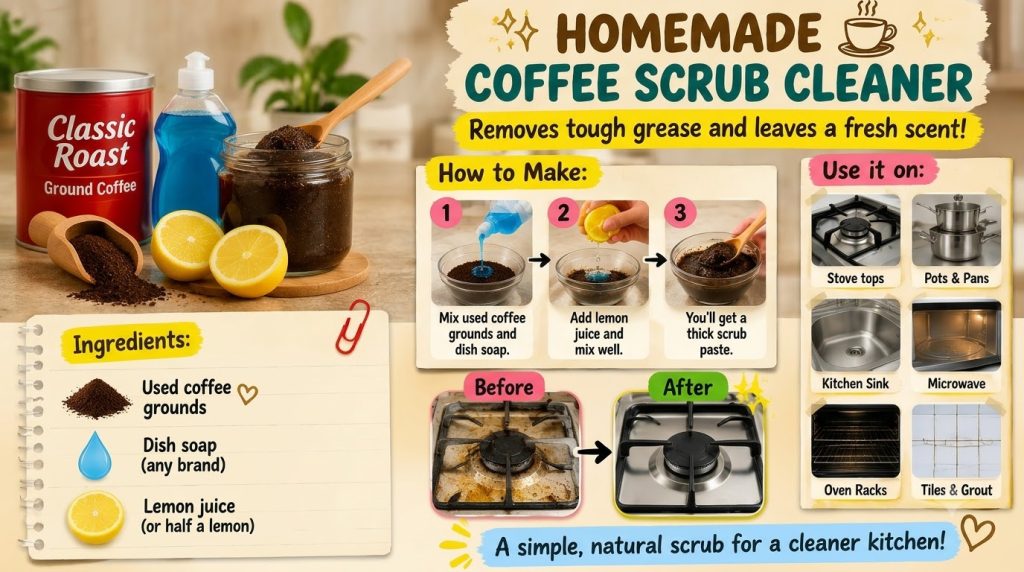
- Best Uses: Greasy stove tops, pots and pans, the kitchen sink, microwave interiors, and oven racks
- Suitable Surfaces: Stainless steel, sealed ceramic cooktops, glass, and most sealed tile and grout
- Storage Time: Best used within 2 to 3 days when kept in a sealed container
Why You Will Love This DIY Solution
- Made with common kitchen ingredients
- Budget-friendly, since it uses used coffee grounds you might otherwise throw away
- Beginner-friendly with no special tools required
- Gentle, fine grit helps lift grease without heavy scratching
- Leaves a pleasant, fresh scent behind
- Quick to mix up whenever you need it
- Works on several areas of the kitchen
Ingredients and Materials
- 1 cup used coffee grounds, dried slightly (unbrewed grounds also work, but used grounds are more gentle)
- 1 tablespoon liquid dish soap of any brand
- Juice of half a lemon, about 1 tablespoon (optional substitute: 1 tablespoon white vinegar, for surfaces where lemon is not recommended)
Equipment Needed
- Small mixing bowl
- Measuring cups and spoons
- Small spoon or spatula
- Lemon squeezer or fork
- Soft sponge or non-scratch scrubbing pad
- Microfiber cloths
- Rubber gloves
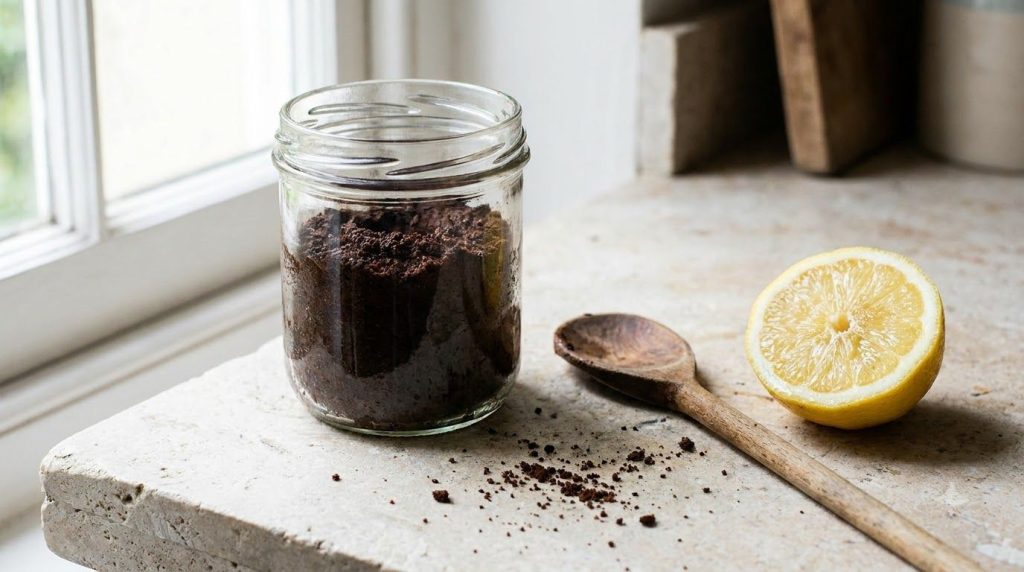
- Glass jar with a tight lid for storage
Step-by-Step Instructions
Step 1: Gather and Dry Your Coffee Grounds
Spread used coffee grounds on a paper towel or small plate and let them sit for about 10 minutes. Slightly drier grounds are easier to mix into a paste and are less likely to clump. Expected result: a loose, crumbly texture. Time: about 10 minutes.
Step 2: Combine the Grounds and Dish Soap
Place 1 cup of coffee grounds in your mixing bowl. Add 1 tablespoon of dish soap and stir until the grounds are evenly coated. The soap helps cut through oily residue. Expected result: a damp, dark mixture that holds together lightly. Time: about 1 minute.
Step 3: Add the Lemon Juice
Squeeze in the juice from half a lemon, about 1 tablespoon, and stir well. Lemon adds a fresh scent and some mild acidity to help loosen grime. Expected result: a thick, scoopable paste. If it feels too dry, add a few drops of water. If it is too wet, add a few more grounds. Time: about 1 minute.
Step 4: Test on a Small Area
Before using the scrub across a surface, dab a small amount in a hidden spot and wipe it off after a minute. Check that the finish looks the same. Expected result: confidence that the surface can handle the scrub. Time: about 2 minutes.
Step 5: Apply and Scrub
Dampen your sponge or cloth, pick up a small amount of paste, and rub it onto the greasy area using small circles. Work in small sections so the paste does not dry out. Expected result: grease begins to loosen and lift. Time: about 3 to 5 minutes per section.
Step 6: Let It Rest for Heavy Grime
For thick buildup, let the paste sit on the surface for 5 to 10 minutes. Do not let it dry completely. Expected result: softer grime that is easier to wipe away. Time: 5 to 10 minutes.
Step 7: Rinse and Dry
Wipe away the paste with a damp cloth, then rinse the surface with clean water. Dry with a microfiber cloth to prevent water spots. Expected result: a clean, fresh-smelling surface. Time: about 2 minutes.
Best Uses
This scrub works well on stainless steel stove tops and pots, the inside of the microwave, kitchen sink basins, oven racks with light to moderate grease, and tiles and grout that are sealed. Use it on the greasy grate or burner area of your stove after the surface cools.
Avoid using it on natural stone such as granite, marble, or limestone, since lemon juice can dull or etch the finish. Skip delicate surfaces like unsealed wood, soft plastics, and nonstick coatings, which can be scratched by grounds. Be gentle with painted cabinets and anything with a glossy finish.
Safety Notes
- Wear rubber gloves to protect your hands from the lemon juice and dish soap.
- Test on a small, hidden area first.
- Keep the paste away from children and pets, and do not let them eat it.
- Never mix this scrub with bleach, ammonia, or any other cleaning product. Rinse surfaces thoroughly between different cleaners.
- Work in a ventilated kitchen and open a window if the lemon scent feels strong.
- Do not use this scrub on hot surfaces. Let the stove or oven cool first.
Expert Tips
- Use slightly dried grounds for a paste that is easier to control.
- Scrub in the direction of the grain on stainless steel to avoid visible marks.
- Add a little extra soap for heavier grease, but avoid making the paste too runny.
- Keep a spray bottle of water nearby to lightly mist the surface if the paste dries out.
- Rinse thoroughly after use so no grounds stay trapped in corners or grates.
- Use a soft toothbrush to reach crevices around knobs and burner grates.
- Dry the surface well to prevent water spots, especially on stainless steel.
- Clean your scrub tools after each use so they do not develop an odor.
Storage Instructions
Shelf life: Store leftover paste for up to 2 to 3 days. Coffee grounds and lemon can begin to develop an off smell over time, so it is best to make fresh batches as needed.
Best container: Use a clean glass jar with a tight-fitting lid.
Storage location: Keep the jar in a cool, dry cabinet away from heat sources and out of reach of children and pets.
Signs to discard: Throw the paste away if it develops mold, a sour or unpleasant smell, or a slimy texture.
Frequently Asked Questions
Can I store this coffee scrub?
Yes, you can store it in a sealed glass jar for up to 2 to 3 days. Fresh is always better, so only make what you expect to use.
Can I use fresh coffee grounds instead of used ones?
Yes, unbrewed grounds will work. Used grounds are gentler and softer, so they are often the better choice for everyday cleaning.
Can I use this on granite or marble?
It is best to avoid natural stone. The lemon juice can dull or etch the surface over time. Use a stone-safe cleaner recommended by the manufacturer instead.
Can I replace the lemon juice?
Yes, you can use about 1 tablespoon of white vinegar as a substitute. Keep in mind that vinegar also should not be used on natural stone.
Is this safe around pets?
The ingredients are mild, but the paste should still be kept out of reach. Rinse surfaces well and let them dry before pets walk on them.
Will this scrub stain my cookware?
Coffee can leave light staining on some lighter materials. Always test a hidden spot first, and rinse thoroughly after scrubbing.
Can I use this on nonstick pans?
It is not recommended. Coffee grounds can scratch nonstick coatings, so use a soft sponge with warm soapy water instead.
Does this remove all grease?
It works well on light to moderate grease, but very heavy buildup may need several rounds or a stronger degreaser. Results can vary depending on the surface and how long the grime has been there.
Conclusion
This homemade coffee scrub is a simple, budget-friendly way to tackle everyday kitchen grease. With just used coffee grounds, dish soap, and a little lemon juice, you can mix a thick paste that works on stove tops, pots, sinks, and more. Remember to test first, avoid natural stone, and keep the paste away from children and pets. Give this recipe a try, and enjoy a fresh, sparkling kitchen that smells wonderful.