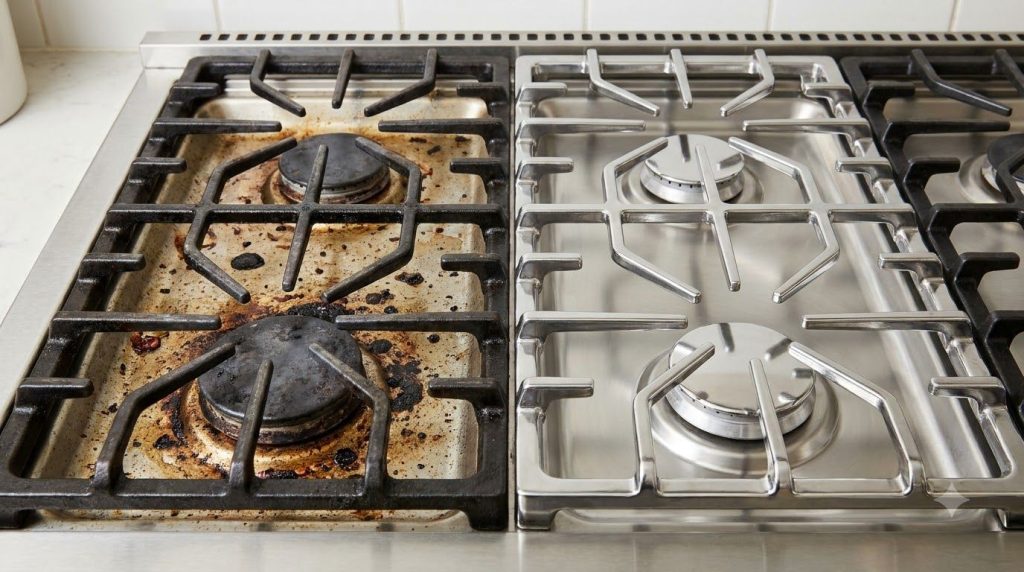
Cleaning your stove can feel like a chore you keep putting off. Grease splatters build up around the burners, and a few days of cooking can leave burnt-on spots that seem to stick forever. You may have wished your stovetop could look this sparkling clean with a lot less scrubbing.
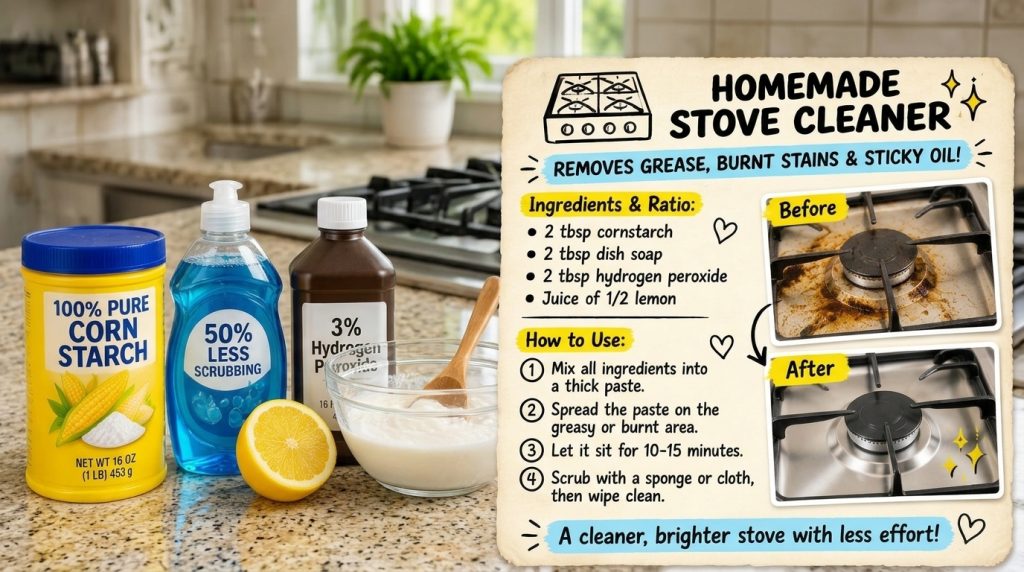
This simple homemade stove cleaner uses ingredients most kitchens already have. Cornstarch, dish soap, hydrogen peroxide, and fresh lemon juice combine into a thick paste that clings to greasy and burnt areas, giving you a gentler way to loosen messes before you wipe them away.
This guide is for anyone who wants a practical, budget-friendly way to keep the kitchen looking fresh. You do not need special tools or harsh products. You will learn what to gather, how to make the paste, how to apply it safely, and how to store any leftovers.
Quick Summary
- Preparation Time: About 3 minutes
- Application Time: 10 to 15 minutes of sitting, plus a few minutes of scrubbing
- Difficulty Level: Easy
- Best Uses: Grease and burnt-on spots on stovetops, grates, and burner caps
- Suitable Surfaces: Sealed stainless steel and enamel-coated metal parts. Test first on other materials.
- Storage Time: Best made fresh for each use
Why You’ll Love This Homemade Stove Cleaner
- Uses common household ingredients
- Budget-friendly and easy to make
- Beginner-friendly with no special tools
- Helps loosen sticky grease before scrubbing
- Avoids harsh fumes from many commercial cleaners
- Quick to mix in a small bowl
Ingredients and Materials
- 2 tablespoons cornstarch
- 2 tablespoons liquid dish soap (any grease-cutting brand)
- 2 tablespoons hydrogen peroxide (3% from the pharmacy)
- Juice of 1/2 lemon (about 1 tablespoon)
Equipment Needed
- Small mixing bowl
- Measuring spoons
- Wooden or plastic spoon
- Soft sponge or microfiber cloth
- Non-scratch scrub pad (optional)
- Warm water and a clean rag for wiping
- Rubber gloves
Step-by-Step Instructions
-
Mix the paste
In your bowl, combine the cornstarch, dish soap, hydrogen peroxide, and lemon juice. Stir until you have a thick, spreadable paste. Add a little more cornstarch if it runs, or a few drops of peroxide if it feels too dry. This takes about 1 minute.
-
Spread it on the messy area
Turn off the burners and let the stove cool completely. Put on gloves, then apply the paste to greasy or burnt spots with your spoon or sponge. Cover the area evenly. Expect the paste to look white and thick, and to cling to vertical surfaces.
-
Let it sit
Leave the paste on the surface for 10 to 15 minutes. This gives the mixture time to soften grease and loosen crusted residue. Do not let it dry out completely. If it starts to harden, dab on a little more.
-
Scrub gently
Use a soft sponge or non-scratch pad in small circular motions. Heavier spots may need a few extra passes. Work patiently rather than pressing too hard, which can scratch some finishes. This step usually takes 3 to 5 minutes.
-
Wipe clean and dry
Wipe the surface with a damp cloth rinsed in warm water until no paste remains. Buff with a dry microfiber cloth for a shine. Your stove should look noticeably brighter with less effort.
Best Uses
This paste works well on stovetop surfaces, removable grates, and burner caps made of stainless steel or enamel. It is especially handy for sticky oil film and burnt-on spots that regular wiping misses. Avoid using it on aluminum, unsealed or natural stone, raw wood, and any surface with a delicate or special finish unless you have tested a hidden area first. Always check your appliance manual before cleaning.
Safety Notes
- Make sure the stove is turned off and fully cooled before applying anything.
- Wear rubber gloves, especially if you have sensitive skin.
- Test the paste on a small hidden area first to check for discoloration.
- Never mix hydrogen peroxide or lemon juice with bleach, and never combine this paste with vinegar or ammonia-based cleaners.
- Rinse thoroughly so no residue is left near food.
- Keep children and pets away while cleaning and during drying time.
- Ensure the kitchen has good airflow while you work.
Expert Tips
- Work on a cool stove for the best control and safety.
- Soak removable grates in warm, soapy water for extra loosening before applying the paste.
- Use a soft brush or toothpick to clean around burner holes, keeping them free of debris.
- Clean lightly after each cooking session to reduce heavy buildup.
- Do not use abrasive pads on glossy or coated finishes, as they can leave scratches.
- Dry all parts completely before placing them back on the stove.
- If a stain persists, repeat the process rather than scrubbing harder.
Storage Instructions
This paste is best made fresh because hydrogen peroxide loses strength over time and the mixture can separate. If you have leftovers, store them in a small airtight container away from heat and sunlight, and use within one day. Discard the paste if it develops a sour smell, changes color, or becomes watery and separated. Label the container clearly and keep it out of reach of children and pets.
Frequently Asked Questions
Can I make a larger batch?
You can double the recipe, but it is best to mix only what you need for one cleaning session so the peroxide stays effective.
How long does the paste last?
Use it within one day for the best results. Store any leftovers in an airtight container and discard if the texture or smell changes.
Can I use this on glass stovetops?
Many glass cooktops can handle gentle cleaning, but check your manufacturer’s guidelines first. Test on a small hidden area and avoid abrasive scrubbing.
Can I replace the lemon juice?
Yes. The lemon juice is optional and mainly adds a fresh scent. The paste will still work with the other ingredients, though you may notice a slightly different smell.
Is this safe around pets?
Keep pets out of the kitchen while you clean and until the surface is fully rinsed and dry. Rinse all residue thoroughly before letting animals near the stove.
Can I use this on other kitchen surfaces?
It can work on some sealed stainless steel surfaces, but avoid stone, unsealed wood, and aluminum. Always test first and check the material’s care instructions.
Conclusion
A clean stove does not have to mean hours of hard scrubbing. With cornstarch, dish soap, hydrogen peroxide, and a little lemon juice, you can make a simple paste that helps loosen grease and burnt-on messes. Follow the safety steps, test first, and rinse well. Give this homemade stove cleaner a try during your next kitchen cleanup, and enjoy a brighter, fresher cooking space that you can be proud of!