Dingy white sneakers can make an otherwise great outfit look tired. Dirt settles into the mesh and canvas, and over time the rubber midsoles and laces take on that stubborn yellow tint. The good news is that you can often bring them back to a fresh, bright look with a simple mixture you probably already have in your kitchen or laundry room.
This guide is for anyone who wants a gentle, budget-friendly way to refresh everyday white shoes. You will learn how to make a basic baking soda paste, how to apply it with a soft brush, and how to rinse and dry your sneakers so they look their best. Results vary depending on how old the stains are and what materials your shoes are made from, so think of this as a refresh rather than a miracle.
Quick Summary
- Preparation Time: About 5 minutes
- Application Time: About 10 to 15 minutes, plus 5 minutes of soaking
- Difficulty Level: Beginner
- Best Uses: White canvas and mesh sneakers with light dirt and yellowing
- Suitable Surfaces: Canvas, cotton, mesh and rubber soles
- Storage Time: Make only what you need; use the paste within the same day
Why You’ll Love This DIY Solution
- Uses common household ingredients
- Budget-friendly compared with specialty shoe cleaners
- Beginner-friendly with no special skills needed
- Gentle enough for most white canvas and mesh shoes when tested first
- Quick to mix and easy to clean up
- Helps lift everyday dirt and light yellowing
Ingredients and Materials
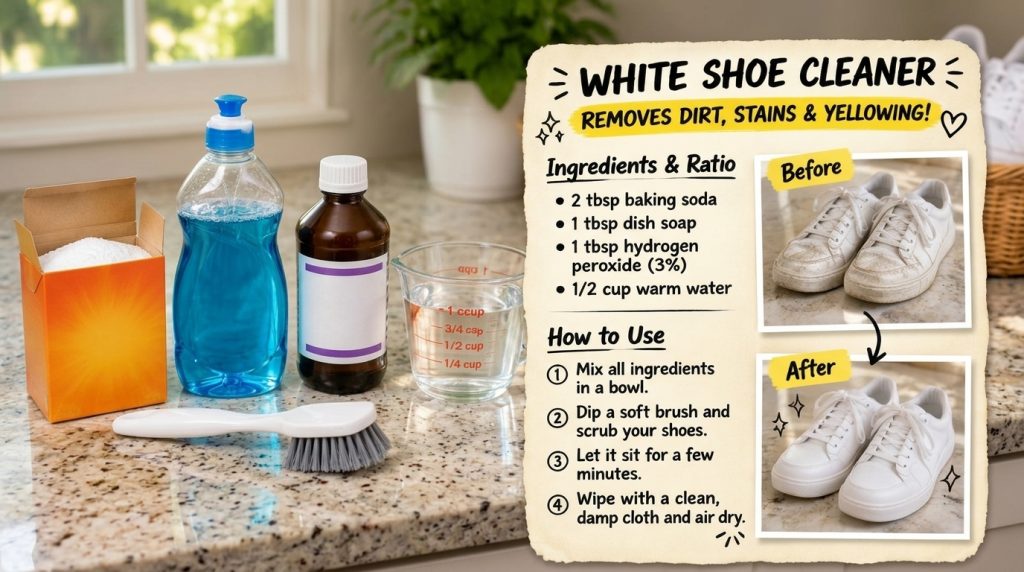
- 2 tablespoons baking soda
- 1 tablespoon mild liquid dish soap (any gentle, clear or white variety)
- 1 tablespoon 3% hydrogen peroxide
- 1/2 cup warm water
Equipment Needed
- Small mixing bowl
- Measuring spoons and a measuring cup
- Soft-bristled brush or an old toothbrush
- Two clean, lint-free cloths or microfiber towels
- Gloves (recommended)
- Old newspaper or a towel to protect your work surface
Step-by-Step Instructions
-
Remove the laces and loose dirt
Take out the laces and set them aside. Brush off any loose dust or grit from the shoes. This takes about 2 minutes and helps the paste work on stains rather than smearing dirt around.
-
Mix the cleaner
In a small bowl, combine 2 tablespoons of baking soda, 1 tablespoon of dish soap and 1/2 cup of warm water, then stir until smooth. Add the 1 tablespoon of 3% hydrogen peroxide last and stir gently. Use the mixture right away, because hydrogen peroxide loses strength over time. Expect this to take about 2 minutes.
-
Test a hidden spot
Dab a little of the mixture on the inside of the tongue or another small hidden area. Wait a few minutes and check for color change or damage. This takes about 3 minutes and protects your shoes from surprises.
-
Scrub the shoes
Dip your soft brush into the mixture and scrub the uppers, toe caps and sides in small circular motions. Focus on dirtier or yellowed areas. Scrubbing usually takes 5 to 10 minutes, and you should see grime loosen as you work.
-
Let the paste sit
Leave the paste on the shoes for about 5 minutes. This gives the mixture time to loosen stubborn dirt without letting it dry out completely on the surface.
-
Wipe away the residue
Dampen a clean cloth with plain water, wring it out well and wipe off the paste. Rinse the cloth often and repeat until no suds or grit remain. Avoid soaking the shoes, since too much water can weaken glue and stitching.
-
Dry completely
Stuff the shoes with a clean towel or paper towels to hold their shape, then let them air dry away from direct heat for several hours or overnight. Do not put them in a dryer or next to a heater. Once dry, reinsert the laces.
Best Uses
This paste works best on white canvas, cotton and mesh sneakers with surface dirt, scuffs and light yellowing. It can also help freshen white rubber soles. It is not suitable for leather, suede, nubuck, patent finishes or shoes with delicate glued decorations. Those materials can stain, dull or lose their texture. Always check the care label first, and if your shoes have special finishes, consider a product made for that material instead.
Safety Notes
- Wear gloves to protect your hands from dish soap and peroxide.
- Test on a small hidden area first and wait before deciding the results are safe.
- Keep the mixture away from children and pets, and store all cleaners out of reach.
- Never mix hydrogen peroxide or baking soda with vinegar, bleach or ammonia. Those combinations can create harmful fumes or reactions.
- Work in a well-ventilated room and rinse your hands and tools after use.
- Stop using the mixture if you notice irritation, unusual odor or fading color.
Expert Tips
- Use fresh hydrogen peroxide, since older bottles lose effectiveness.
- Work in small sections so the paste does not dry out before you wipe it.
- Use a soft brush to protect the fabric and avoid fraying the mesh.
- Clean the rubber soles with a separate brush so dirt does not transfer back to the uppers.
- Rinse your cloth frequently to avoid spreading grime onto clean areas.
- Dry shoes away from direct sunlight, which can cause yellowing over time.
- For prevention, wipe off fresh dirt right away and keep shoes out of muddy conditions when possible.
Storage Instructions
This cleaner is best made fresh each time, since the hydrogen peroxide and baking soda can lose their effect and the mixture can separate. If you must store leftovers, keep them in a small, clearly labeled airtight container in a cool, dry place for no more than one day. Discard the mixture if it smells sour, changes color, develops mold or becomes watery and separated. Store it away from children and pets.
Frequently Asked Questions
Can I store this shoe cleaner?
It is best used the same day. Hydrogen peroxide weakens over time, so mixing a fresh batch is the safest choice.
How long does the cleaner last?
Once mixed, use it within a few hours. Leftovers should be thrown away after one day.
Can I use this on leather or suede?
No. This mixture is meant for canvas, cotton and mesh. Leather and suede can be damaged by moisture and cleaning agents.
Can I replace an ingredient?
You can use a different mild, clear dish soap, but avoid adding bleach, vinegar or ammonia. Keep the baking soda and peroxide amounts as written for the best balance.
Is this safe around pets?
Keep the mixture and wet shoes away from pets while you work and while they dry. Rinse any residue thoroughly and make sure the shoes are fully dry before pets can reach them.
Will this remove every stain?
Not always. Deep, old or set-in stains may need several gentle rounds. Results depend on the fabric and the stain, so manage your expectations and be patient.
Can I use hot water instead?
Warm water is recommended. Very hot water can soften glue and may fade some materials, so it is better to stick with warm water.
Conclusion
Refreshing white sneakers at home is simple when you use a gentle, carefully measured paste and take your time. With a little baking soda, mild dish soap, fresh hydrogen peroxide and warm water, you can lift everyday dirt and light yellowing without spending much money. Always test first, protect yourself with gloves, and never mix your cleaner with bleach, vinegar or ammonia. Give this method a try on your next dingy pair, and enjoy the satisfaction of seeing your favorite shoes look bright and fresh again!