One of the biggest mistakes new gardeners make isn’t watering too much or too little—it’s choosing the wrong container.
A pot that’s too small can restrict root growth, dry out quickly, and reduce your harvest. On the other hand, the right-sized container gives roots enough space to expand, retain moisture, and absorb nutrients efficiently.
Whether you’re growing vegetables on a patio, balcony, or small backyard, this guide will help you pick the perfect container for each plant.
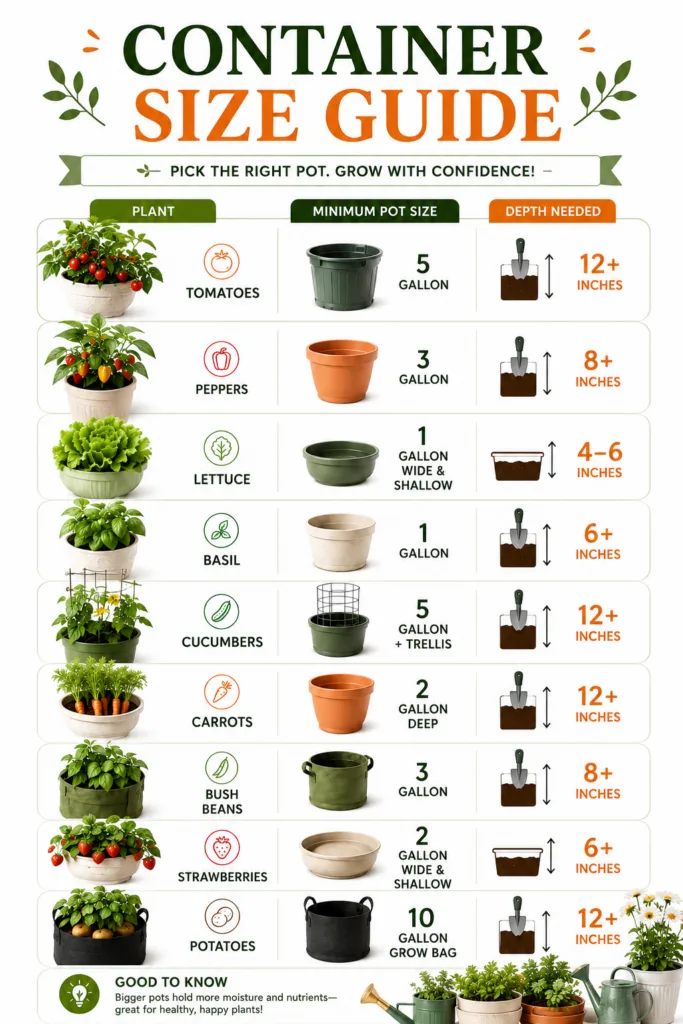
🍅 Tomatoes
Minimum Pot Size: 5 Gallons
Minimum Soil Depth: 12+ inches
Tomatoes develop deep, extensive root systems and require plenty of room to support vigorous growth and heavy fruit production. A container that’s too small often leads to stunted plants and smaller harvests.
Tips:
- Use a tomato cage or stake for support.
- Water consistently to prevent blossom end rot.
- Place in full sun for at least 6–8 hours daily.
🌶️ Peppers
Minimum Pot Size: 3 Gallons
Minimum Soil Depth: 8+ inches
Peppers have smaller root systems than tomatoes but still appreciate adequate growing space. A 3-gallon pot offers enough room for healthy roots while keeping watering manageable.
Tips:
- Keep soil evenly moist.
- Feed every 2–3 weeks during fruiting.
- Warm temperatures encourage better yields.
🥬 Lettuce
Minimum Pot Size: 1 Gallon (Wide & Shallow)
Minimum Soil Depth: 4–6 inches
Since lettuce has shallow roots, it doesn’t need a deep container. A wide, shallow planter allows multiple heads or rows to grow together.
Tips:
- Harvest outer leaves regularly.
- Grow in partial shade during hot weather.
- Keep soil consistently moist.
🌿 Basil
Minimum Pot Size: 1 Gallon
Minimum Soil Depth: 6+ inches
Basil grows surprisingly well in compact containers. Regular harvesting encourages bushier growth and more flavorful leaves.
Tips:
- Pinch off flower buds.
- Harvest often.
- Provide plenty of sunlight.
🥒 Cucumbers
Minimum Pot Size: 5 Gallons + Trellis
Minimum Soil Depth: 12+ inches
Cucumbers produce long vines that benefit from vertical support. A trellis saves space, improves airflow, and keeps fruit clean.
Tips:
- Water deeply.
- Train vines onto a trellis.
- Harvest frequently to encourage more fruit.
🥕 Carrots
Minimum Pot Size: 2 Gallons (Deep)
Minimum Soil Depth: 12+ inches
Carrots require loose, deep soil so their roots can grow straight. Shallow containers often produce short or forked carrots.
Tips:
- Use light, stone-free potting mix.
- Thin seedlings early.
- Keep soil consistently moist during germination.
🫘 Bush Beans
Minimum Pot Size: 3 Gallons
Minimum Soil Depth: 8+ inches
Bush beans are compact and productive, making them ideal for containers. They don’t require climbing supports like pole beans.
Tips:
- Harvest pods frequently.
- Avoid over-fertilizing with nitrogen.
- Plant in full sun.
🍓 Strawberries
Minimum Pot Size: 2 Gallons (Wide & Shallow)
Minimum Soil Depth: 6+ inches
Strawberries naturally spread through runners, so wider containers work better than deeper ones.
Tips:
- Remove runners if growing for fruit production.
- Keep berries off wet soil.
- Water regularly during flowering.
🥔 Potatoes
Minimum Pot Size: 10-Gallon Grow Bag
Minimum Soil Depth: 12+ inches
Potatoes need plenty of room to develop underground tubers. Fabric grow bags are especially popular because they provide excellent drainage and air circulation.
Tips:
- Hill soil around stems as plants grow.
- Harvest after foliage dies back.
- Keep soil evenly moist throughout the season.
Why Container Size Matters
Choosing the right container offers several important benefits:
✅ More room for healthy root growth
✅ Better moisture retention
✅ Improved nutrient availability
✅ Stronger, healthier plants
✅ Higher yields and better-quality vegetables
Larger containers also dry out more slowly, reducing watering frequency and helping plants stay healthier during hot weather.
Extra Tips for Successful Container Gardening
- Always use containers with drainage holes.
- Choose a high-quality potting mix rather than garden soil.
- Water deeply until excess water drains from the bottom.
- Fertilize regularly, as nutrients in containers are used up more quickly than in garden beds.
- Match the container size to the plant’s mature root system—not just its current size.
- Rotate containers occasionally so all sides of the plant receive equal sunlight.
Final Thoughts
Growing vegetables in containers is an excellent solution for balconies, patios, rooftops, and small gardens. By choosing the right pot size from the start, you’ll give your plants the best chance to develop strong roots, produce abundant harvests, and stay healthy throughout the growing season.
The next time you’re ready to plant tomatoes, peppers, lettuce, or strawberries, remember: the container is just as important as the soil, water, and sunlight. A little extra space for the roots can make a big difference in the health and productivity of your garden. 🌱🍅