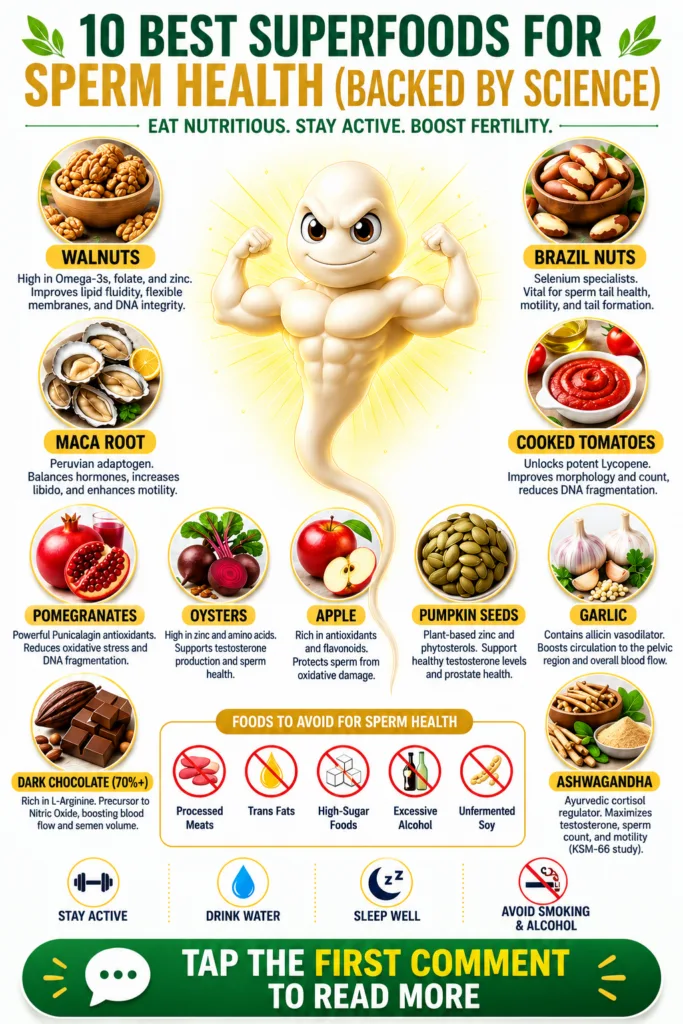
When it comes to male fertility, lifestyle choices matter more than many people realize. Factors such as nutrition, physical activity, sleep quality, stress management, and avoiding smoking can all influence sperm health.
While no single food can guarantee improved fertility, research suggests that diets rich in antioxidants, healthy fats, vitamins, and minerals may help support healthy sperm production, motility, and overall reproductive health.
Here are ten nutrient-rich foods that deserve a place on your plate.
🌰 1. Walnuts
Walnuts are packed with omega-3 fatty acids, antioxidants, folate, and zinc—all nutrients that play important roles in reproductive health.
Several studies have found that regular walnut consumption may improve certain sperm parameters, including vitality and motility, likely by reducing oxidative stress.
Benefits
- Rich in omega-3 fats
- Provides antioxidants
- Supports cell membrane health
🌰 2. Brazil Nuts
Brazil nuts are one of the richest natural sources of selenium, a mineral essential for normal sperm development and function.
Because selenium is highly concentrated in Brazil nuts, eating just one or two per day is usually enough.
Benefits
- Excellent source of selenium
- Supports healthy sperm development
- Helps protect cells from oxidative damage
🍅 3. Cooked Tomatoes
Cooking tomatoes increases the availability of lycopene, a powerful antioxidant associated with improved sperm quality in some studies.
Lycopene may help reduce oxidative stress, which is one of the major contributors to sperm damage.
Benefits
- High in lycopene
- Supports antioxidant defenses
- May help protect sperm DNA
🦪 4. Oysters
Oysters are famous for their exceptionally high zinc content.
Zinc plays an important role in testosterone production, sperm formation, and immune function. A zinc deficiency has been linked to reduced sperm quality.
Benefits
- Extremely rich in zinc
- Supports normal testosterone production
- Helps maintain healthy sperm production
🎃 5. Pumpkin Seeds
Pumpkin seeds provide zinc, magnesium, healthy fats, and plant protein.
These nutrients support hormone production and overall reproductive health.
Benefits
- Rich in zinc
- Contains healthy fats
- Supports prostate health
🍎 6. Apples
Apples contain vitamin C, quercetin, and other antioxidants that help fight free radicals.
Including antioxidant-rich fruits in your diet may contribute to healthier reproductive cells.
Benefits
- Rich in antioxidants
- Supports immune health
- Helps reduce oxidative stress
🍇 7. Pomegranates
Pomegranates are loaded with polyphenols and powerful antioxidants.
Some research suggests that pomegranate juice may improve antioxidant status and help reduce oxidative damage, which is important for reproductive health.
Benefits
- Powerful antioxidant source
- Supports cardiovascular health
- Helps protect cells from oxidative stress
🧄 8. Garlic
Garlic contains sulfur compounds and antioxidants that support circulation and overall cardiovascular health.
Good blood flow is essential for many aspects of reproductive health.
Benefits
- Supports healthy circulation
- Rich in antioxidants
- Promotes overall cardiovascular wellness
🍫 9. Dark Chocolate (70% Cocoa or Higher)
Dark chocolate contains flavonoids and L-arginine, nutrients associated with improved blood vessel function.
Choose varieties containing at least 70% cocoa and consume them in moderation due to their calorie content.
Benefits
- Rich in antioxidants
- Supports nitric oxide production
- May promote healthy circulation
🌿 10. Maca Root & Ashwagandha
These herbs have been traditionally used for centuries.
Some studies suggest they may support libido, energy, or aspects of reproductive health, but evidence remains mixed and more high-quality research is needed.
Because herbal supplements may interact with medications or medical conditions, it’s best to consult a healthcare professional before using them.
Foods to Limit
A healthy fertility-friendly diet also means reducing foods associated with poorer overall health.
Consider limiting:
❌ Highly processed meats
❌ Foods high in trans fats
❌ Excess sugary foods and beverages
❌ Excessive alcohol consumption
❌ Smoking and tobacco products
A balanced dietary pattern is generally more important than avoiding any single food.
Lifestyle Habits That Matter
Nutrition is only one piece of the puzzle.
Healthy habits that can support reproductive health include:
✅ Exercising regularly
✅ Maintaining a healthy weight
✅ Drinking enough water
✅ Sleeping 7–9 hours each night
✅ Managing stress
✅ Avoiding smoking and excessive alcohol
These habits contribute not only to fertility but also to overall long-term health.
Final Thoughts
There is no “magic food” that can instantly improve fertility. However, consistently eating a nutrient-rich diet filled with whole foods, healthy fats, fruits, vegetables, nuts, seeds, and seafood can help support overall reproductive health.
If you and your partner have been trying to conceive without success for an extended period—typically 12 months (or 6 months if the female partner is over age 35)—it’s a good idea to consult a healthcare professional for a full fertility evaluation.
A healthy diet, active lifestyle, adequate sleep, and regular medical care remain the most evidence-based approach to supporting male fertility and overall well-being.