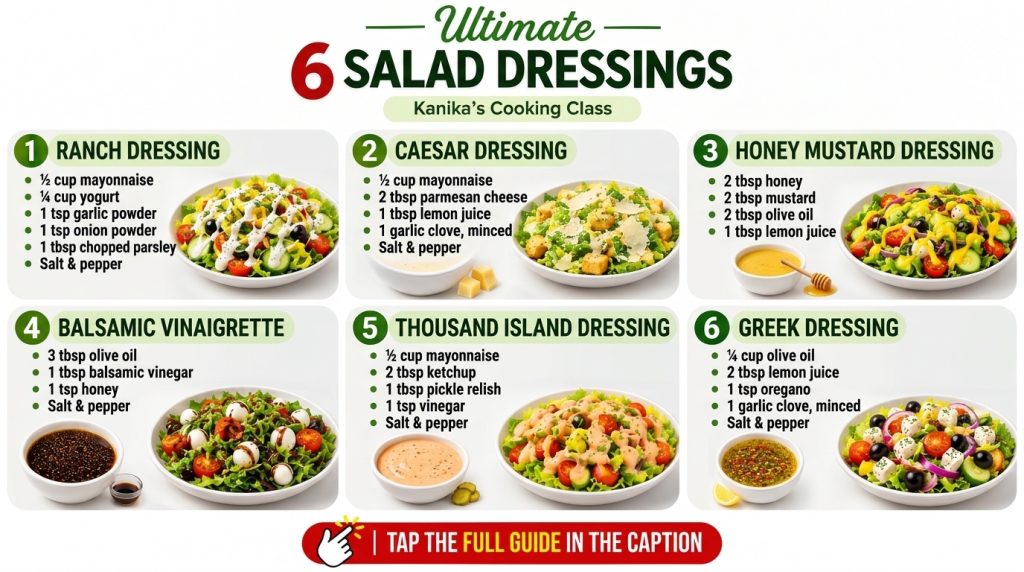
Store-bought dressings are convenient, but a homemade dressing takes only a few minutes and tastes brighter, fresher, and more balanced. Once you know the basic ratios, you can whip up a new dressing almost any night of the week. This guide covers six easy homemade salad dressings, from a classic lemon vinaigrette to a creamy herb yogurt dressing.
Why Make Your Own Salad Dressing?
- Most homemade dressings take 5 to 10 minutes.
- You control the salt, sugar, and oil.
- Basic pantry ingredients work for most recipes.
- One batch can dress several salads during the week.
Ingredients for the Six Dressings
1. Lemon Vinaigrette
- 1/4 cup (60 ml) extra-virgin olive oil
- 2 tbsp (30 ml) fresh lemon juice
- 1 tsp Dijon mustard
- 1 small garlic clove, finely grated
- 1/4 tsp salt and a pinch of black pepper
2. Honey Mustard Dressing
- 3 tbsp (45 g) Dijon mustard
- 2 tbsp (30 ml) honey
- 2 tbsp (30 ml) apple cider vinegar
- 1/3 cup (80 ml) olive oil
- Pinch of salt
3. Parmesan Caesar-Style Dressing
- 1/3 cup (80 g) mayonnaise
- 1/4 cup (25 g) finely grated Parmesan
- 1 tbsp (15 ml) lemon juice
- 1 tsp Dijon mustard
- 1 small garlic clove, finely grated
- 1 to 2 tbsp (15 to 30 ml) water, to thin
4. Balsamic Vinaigrette
- 3 tbsp (45 ml) balsamic vinegar
- 1 tbsp (15 g) Dijon mustard
- 1 tsp honey
- 1/2 cup (120 ml) olive oil
- Salt and pepper to taste
5. Creamy Herb Yogurt Dressing
- 1/2 cup (120 g) plain Greek yogurt
- 2 tbsp (8 g) finely chopped fresh herbs, such as parsley, dill, or chives
- 1 tbsp (15 ml) lemon juice
- 1 small garlic clove, finely grated
- 1 to 2 tbsp (15 to 30 ml) milk or water, to thin
6. Ginger Sesame Dressing
- 2 tbsp (30 ml) rice vinegar
- 1 tbsp (15 ml) soy sauce
- 1 tbsp (15 ml) honey
- 1 tsp finely grated fresh ginger
- 1 tsp (5 ml) toasted sesame oil
- 3 tbsp (45 ml) neutral oil, such as canola or vegetable
How to Make Each Dressing
Lemon Vinaigrette
- Add the lemon juice, Dijon, garlic, salt, and pepper to a small jar.
- Shake or whisk for about 30 seconds until the mustard dissolves.
- Slowly add the olive oil while shaking or whisking. The dressing should look smooth and slightly cloudy.
- Taste on a piece of lettuce and adjust the salt or lemon as needed.
Honey Mustard Dressing
- Whisk the mustard, honey, and vinegar together in a bowl until smooth.
- Slowly drizzle in the olive oil while whisking. The dressing should thicken slightly and look glossy.
- Season with salt and taste for balance. Add a little more honey if you prefer it sweeter.
Parmesan Caesar-Style Dressing
- Whisk the mayonnaise, lemon juice, Dijon, and garlic in a bowl until smooth.
- Stir in the Parmesan until evenly combined.
- Add water one teaspoon at a time until the dressing reaches a pourable consistency.
Balsamic Vinaigrette
- Whisk the balsamic, Dijon, and honey together in a bowl.
- Slowly add the olive oil while whisking until the dressing looks emulsified and slightly thickened.
- Season with salt and pepper, then taste and adjust the sweetness or acidity.
Creamy Herb Yogurt Dressing
- Stir the yogurt, lemon juice, garlic, and salt together in a bowl.
- Fold in the chopped herbs.
- Add milk or water a little at a time until the dressing drizzles from a spoon.
Ginger Sesame Dressing
- Whisk the rice vinegar, soy sauce, honey, and ginger together in a bowl.
- Add the sesame oil and neutral oil in a slow stream while whisking.
- Taste and adjust the balance of sweet, salty, and tangy flavors.
Pro Tips for Better Dressings
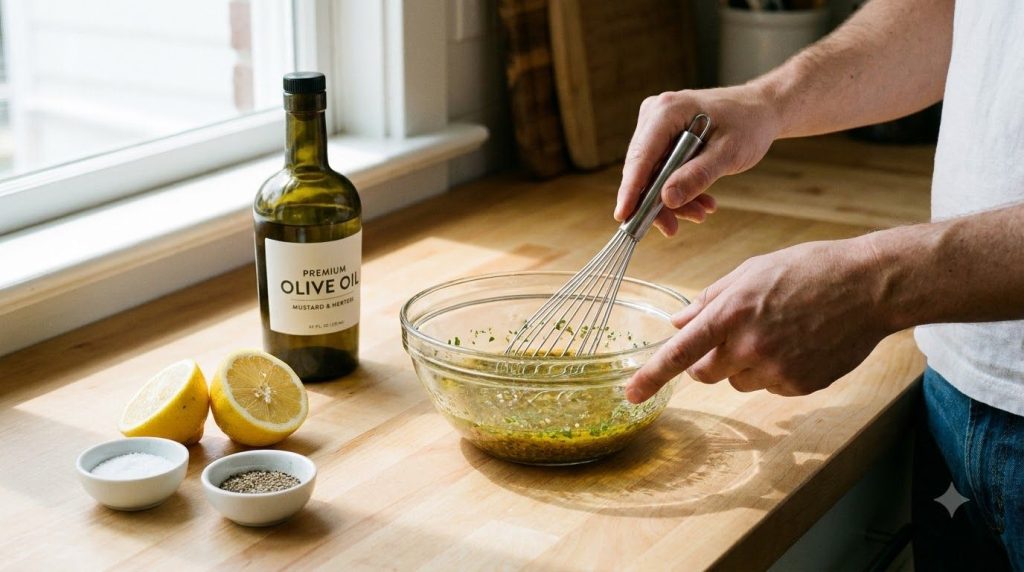
- Use a small jar with a lid for vinaigrettes. Shaking it builds a smooth emulsion quickly.
- Add the oil slowly. This helps the dressing hold together instead of separating right away.
- Taste dressings on a leaf of lettuce, not on a spoon, to judge the seasoning as it will taste on the salad.
- Grate garlic finely or use a microplane so it blends evenly.
- Balance sweet, sour, salty, and rich flavors. Add a little more acid if the dressing tastes flat.
- Dress greens just before serving to keep them crisp.
Common Mistakes to Avoid
- Dressing that separates: Vinaigrettes naturally separate as they sit. Shake or whisk again before serving.
- Too much garlic: Raw garlic gets stronger over time. Start with a small amount and adjust after chilling.
- Overdressing: Start with about 2 tablespoons per large salad and add more as needed.
- Thick yogurt dressing: Thin it with a little milk or water so it coats the leaves without clumping.
Variations and Substitutions
- Swap lemon juice for lime juice in the lemon vinaigrette for a slightly different flavor.
- Use red wine vinegar in place of balsamic for a sharper, lighter dressing.
- Replace Parmesan with a finely grated aged cheese like Pecorino Romano for a saltier finish.
- Use Greek yogurt in place of mayonnaise in the Caesar-style dressing for a lighter version.
Serving Suggestions
Lemon vinaigrette and balsamic dressings work well on mixed greens, cucumber salads, and grain bowls. Honey mustard is a good match for chicken salads and roasted vegetables. The Parmesan Caesar-style dressing pairs well with romaine and crunchy croutons, and the ginger sesame dressing is a natural fit for cabbage slaw and noodle salads.
Storage and Reheating
Keep vinaigrettes and mustard-based dressings in a sealed jar in the refrigerator. Most oil-based dressings keep for about one week, but check for changes in smell or appearance before using. Dressings made with yogurt, mayonnaise, or fresh garlic should be refrigerated and used within 3 to 5 days. Never leave dressings with fresh garlic or herbs at room temperature for long periods. Dressings do not need reheating. Let chilled dressing sit out for a few minutes or shake it well to loosen it before serving.
Frequently Asked Questions
Can I make salad dressing ahead of time?
Yes. Most dressings can be made a day or two ahead. Vinaigrettes may solidify slightly in the refrigerator, so let them sit at room temperature for a few minutes and shake well before using.
Why does my vinaigrette separate?
Oil and vinegar naturally separate. Adding Dijon mustard or honey helps them stay blended longer, but a quick shake before serving is normal.
Can I freeze homemade dressing?
Vinaigrettes can be frozen, but they may separate after thawing. Yogurt and mayonnaise-based dressings do not freeze well, so it is better to refrigerate them.
What is the easiest dressing for beginners?
The lemon vinaigrette is the simplest. It uses just a few ingredients and requires only a jar and a minute of shaking.
Recipe Card
Recipe Name: Six Homemade Salad Dressings
Short Description: Six easy homemade salad dressings, including lemon vinaigrette, honey mustard, Parmesan Caesar-style, balsamic, creamy herb yogurt, and ginger sesame.
Prep Time: 10 minutes per dressing
Cook Time: None
Total Time: About 10 minutes per dressing
Servings: Each recipe makes about 1/2 to 3/4 cup (120 to 180 ml), enough for 4 to 6 side salads
Course: Side dish, Sauce
Cuisine: American
Cooking Method: No-cook, whisked or shaken
Notes: Measurements are approximate. Adjust salt, acid, and sweetness to taste.
Storage: Refrigerate in sealed jars. Oil-based dressings keep about one week; yogurt, mayonnaise, or garlic-based dressings keep 3 to 5 days.
Nutrition information is an estimate and may vary depending on the ingredients and brands used.
Tell us in the comments: which dressing will you try first?