Chicken wings are one of the most popular homemade dinners because they are simple, flexible, and easy to customize. With a few basic techniques, you can turn one package of wings into a crispy, flavorful meal that works for game day, a weeknight dinner, or a casual get-together.
This guide covers the core steps for crispy wings and a range of flavor ideas, from classic buffalo to bright lemon pepper. Pick the style you like most and start there.
Why You’ll Love Homemade Chicken Wings
- Simple ingredients you likely already have in the pantry.
- Easy to scale up for a crowd or down for two people.
- Flavors can be changed with sauces, rubs, or seasonings.
- Crispy skin is achievable with simple dry-prep steps.
- Works well for family dinners, parties, and meal prep.
Basic Equipment and Ingredients
Most wing recipes start with the same foundation. You will need chicken wings (split into flats and drumettes if you prefer), salt, black pepper, a little oil, and a baking sheet with a wire rack. A rack lets hot air reach all sides of the wings, which helps the skin crisp.
Baking powder can help the skin brown and crisp, but use it sparingly and only plain baking powder, not self-rising flour or other mixes. Your sauce or seasoning comes next, and that is where the six flavor styles differ.
The Core Method for Crispy Wings
- Pat the wings completely dry with paper towels. Moisture is the main enemy of crispy skin.
- Toss the wings with a small amount of oil, salt, and any dry seasoning from your chosen flavor.
- Arrange the wings in a single layer on a rack set over a baking sheet, leaving space between pieces.
- Bake at a high oven temperature, roughly 400 to 425 degrees F (200 to 220 degrees C), until the skin looks golden and crisp. Expect a range of about 40 to 50 minutes, depending on wing size and your oven, and flip the wings halfway through.
- Check that the thickest part of the meat reaches 165 degrees F (74 degrees C) on an instant-read thermometer.
- Toss the hot wings in your sauce or seasoning right before serving so the coating stays crisp.
Six Flavor Ideas to Try
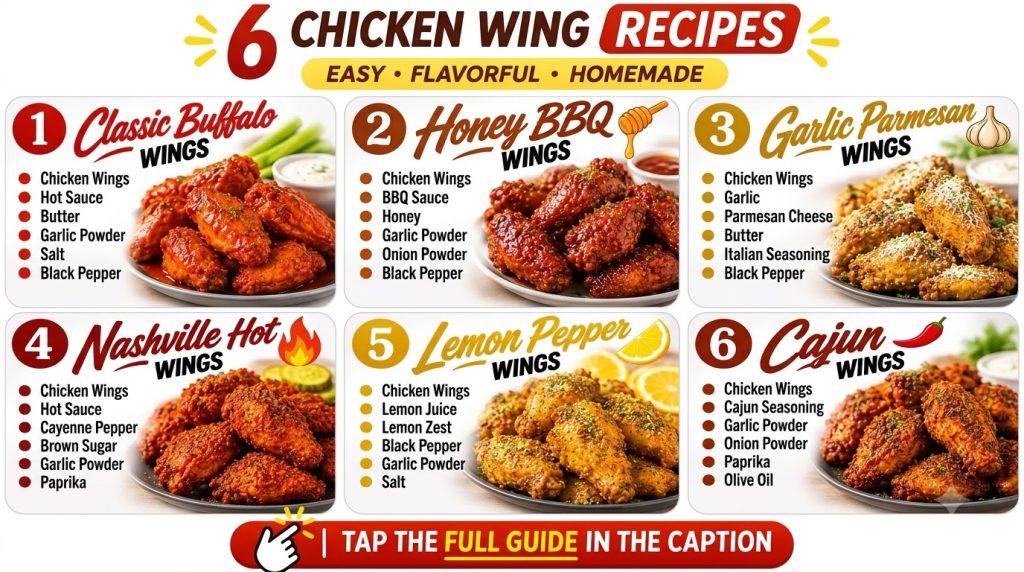
Classic Buffalo
Combine hot sauce with melted butter for a tangy, spicy coating. Add a little vinegar or garlic powder if you want more depth. Serve with cool celery and a creamy dip.
Lemon Pepper
Season the wings with lemon zest, cracked black pepper, and salt, then finish with a squeeze of fresh lemon juice. This flavor is bright and works well for a lighter dinner.
The full guide includes the other four flavor styles shown in the graphic. Each one follows the same core method, so you can switch between flavors easily.
Pro Tips for Better Wings
- Dry the wings thoroughly, and if you have time, refrigerate them uncovered for an hour or two before baking.
- Use a wire rack so the bottoms do not stay soggy.
- Keep sauces warm but not boiling, so they coat evenly without thinning too much.
- Toss in sauce just before serving for the best crunch.
Common Mistakes to Avoid
The most common problem is soft, rubbery skin, which usually comes from wet wings or a crowded pan. Give each wing space to brown. Another frequent issue is sauce that makes the coating soggy, so add it at the end.
Serving Suggestions
Serve wings with celery sticks, carrot sticks, blue cheese or ranch dip, and a simple coleslaw or green salad. For a full dinner, pair them with rice, fries, or corn on the cob.
Storage and Reheating
Store leftover cooked wings in an airtight container in the refrigerator and eat them within a few days. To reheat, use an oven or air fryer rather than the microwave, which tends to make the skin soft. Wings are generally not recommended for freezing if you want to keep the skin crisp.
Frequently Asked Questions
Can I make chicken wings without frying?
Yes. Baking on a wire rack at high heat gives crispy results with much less oil. An air fryer also works well, though cooking times will be shorter, so check the internal temperature.
How do I know when wings are done?
Use an instant-read thermometer. The thickest part of the meat should reach 165 degrees F (74 degrees C), and the skin should look golden and firm.
Why are my wings soggy?
Wet skin, a crowded pan, or adding sauce too early are the usual causes. Dry the wings well, leave space between them, and toss in sauce only before serving.
Can I prepare wings ahead of time?
You can season the wings and refrigerate them uncovered several hours before cooking. Cook them just before serving for the crispest texture.
Which wing flavor are you trying first? Share your pick in the comments and let us know how it turns out.