Getting enough protein does not have to mean complicated meal plans or expensive supplements. A simple way to hit a 30 gram protein goal is to rotate through a few reliable food groups across the day. This cheat sheet breaks protein sources into meats, seafood, dairy, eggs, and other everyday options so you can build meals that are both satisfying and easy to plan.
Below, you will find a practical walkthrough of each group, along with tips for mixing them into breakfast, lunch, and dinner.
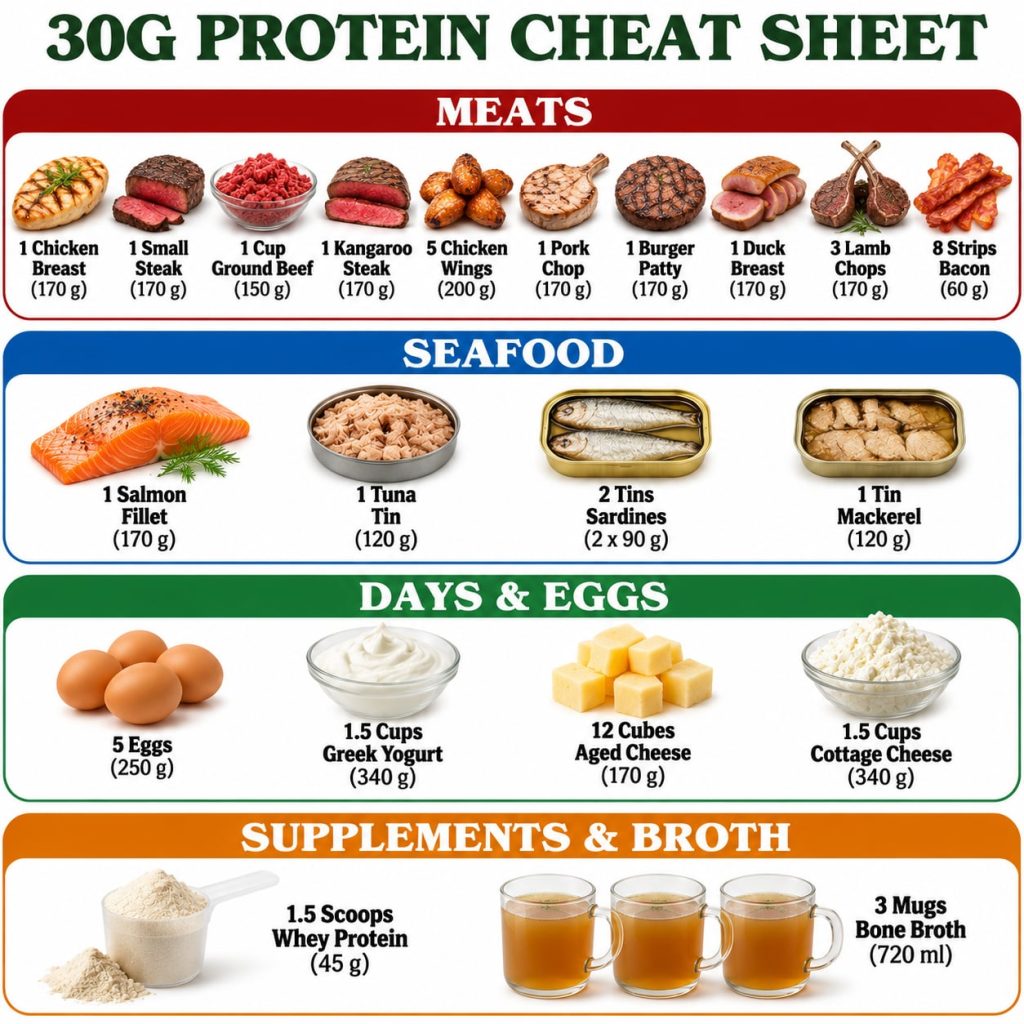
Why a 30 Gram Protein Goal Makes Sense
Many people aim for around 30 grams of protein at each main meal, or spread that amount across the day through snacks. Protein helps keep meals filling, and it is a regular part of a balanced diet. Spreading protein across several meals is often easier than trying to get it all at once.
Meats and Poultry
Lean meats are among the most familiar protein sources. Chicken breast, turkey, and lean cuts of beef or pork can each provide a solid portion of protein in a single serving. Cooking them in batches makes it easier to add them to salads, wraps, and grain bowls throughout the week.
- Choose lean cuts when possible to keep the meal balanced.
- Cook a larger batch and portion it for quick lunches.
- Pair meat with vegetables and a whole grain for a complete plate.
Seafood
Fish and shellfish offer protein along with other nutrients that many people look for in their diets. Salmon, tuna, cod, and shrimp are common choices that cook quickly and pair well with simple seasonings. Canned fish is a practical option for busy days, since it requires no cooking and keeps well in the pantry.
Dairy
Dairy foods are an easy way to add protein to breakfast or snacks. Plain Greek yogurt, cottage cheese, and milk can all contribute meaningful amounts of protein. Plain versions are usually the most flexible, since you can add fruit, nuts, or seeds without adding much extra sugar.
Eggs
Eggs are one of the most convenient protein sources in the kitchen. Scrambled, boiled, or baked into a frittata, they work for breakfast, lunch, or dinner. Hard-boiled eggs also make a portable snack that is simple to prepare ahead of time.
Other Protein Sources
Beyond the main groups, legumes such as lentils and chickpeas, along with tofu and edamame, can help plant-based eaters reach their goals. Combining these foods with grains and vegetables creates satisfying meals with varied textures and flavors.
Simple Ways to Put This Cheat Sheet to Work
- Start breakfast with eggs, Greek yogurt, or a combination of both.
- Build lunch around a lean protein, such as chicken, fish, or legumes.
- Choose a protein-rich snack, like cottage cheese or a hard-boiled egg.
- Plan dinner with one protein source and two or more vegetables.
- Track your intake for a few days to see which foods you naturally enjoy most.
Frequently Asked Questions
Do I need to eat meat to reach my protein goal?
No. Eggs, dairy, legumes, tofu, and seafood can all help you reach your target without relying on meat.
Is it better to get protein from one meal or spread it out?
Spreading protein across meals and snacks is a common approach, since it makes it easier to stay consistent throughout the day.
Final Thoughts
Hitting a 30 gram protein goal is easier when you rotate through meats, seafood, dairy, eggs, and other everyday foods. Use this cheat sheet as a starting point, mix and match what you enjoy, and build meals that feel satisfying rather than restrictive. If you have specific dietary needs or health conditions, consider speaking with a qualified healthcare professional or registered dietitian before making major changes.
Medical Disclaimer: This article is for general information only and is not a substitute for professional medical advice.
What is your favorite way to get protein? Share your go-to meal in the comments and tell us how you keep your daily intake on track.