Healthy plants start below the surface. Before you buy seeds or seedlings, it helps to understand the soil they will grow in. Soil amendments are materials you mix into garden soil to improve its structure, drainage, nutrient content, or pH. Used thoughtfully, they can make a real difference in how well your plants grow.
Why Soil Amendments Matter
Many gardening problems trace back to the soil. Plants may struggle because the ground is too compacted, drains poorly, holds too much water, or lacks the nutrients they need. Amendments address these issues by changing the physical and chemical makeup of the soil over time. They are not a quick fix, but a steady investment in better growing conditions.
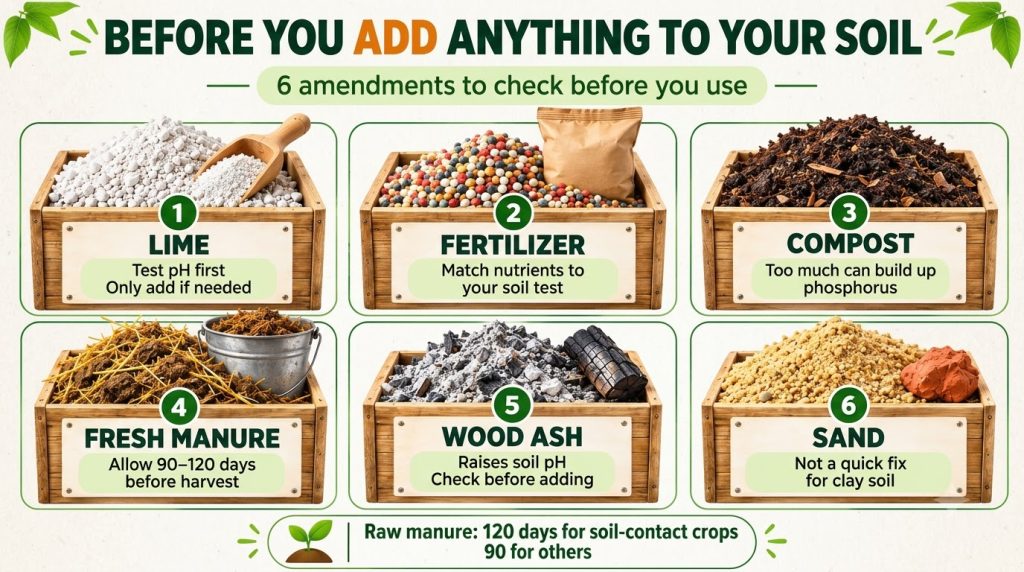
The Six Essential Soil Amendments
1. Lime
Lime is used mainly to raise soil pH when the ground is too acidic. It also supplies calcium, which many plants need. Before adding lime, consider testing your soil so you know whether it is actually needed. Adding lime to soil that is already alkaline can cause problems for plants that prefer acidic conditions.
2. Fertilizer
Fertilizer provides nutrients such as nitrogen, phosphorus, and potassium. It can give plants a boost during periods of active growth. Always follow the instructions on the package, because too much fertilizer can burn roots and harm the surrounding soil. Choose a formula that suits the type of plant you are growing.
3. Compost
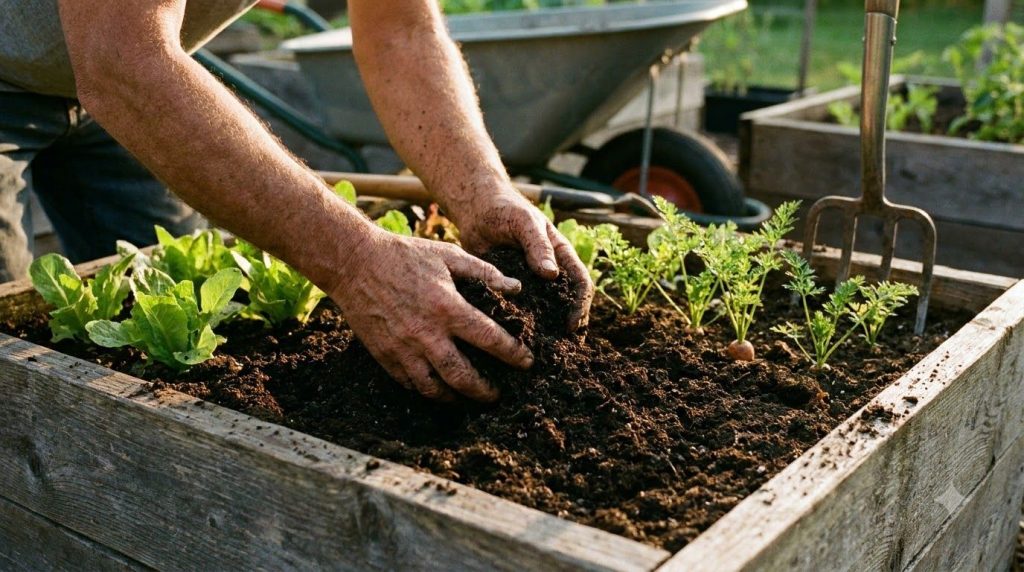
Compost is one of the most versatile amendments for home gardens. It improves soil structure, helps sandy soil hold moisture, helps heavy clay soil drain better, and adds organic matter that supports beneficial soil life. Homemade compost made from kitchen scraps and garden waste is a practical and sustainable choice.
4. Manure
Well-aged animal manure adds nutrients and organic matter to the soil. Fresh manure can be too strong for plants and may carry pathogens, so it should be composted or aged before use. Keep it away from edible crops that will be eaten raw, and wash harvested vegetables thoroughly.
5. Wood Ash
Wood ash from untreated, clean-burning wood contains potassium and calcium, and it can raise soil pH. Because it is strongly alkaline, it should be used sparingly and never on acid-loving plants such as blueberries or azaleas. Avoid ash from treated wood, painted wood, or coal.
6. Sand
Sand can improve drainage in heavy clay, but it must be used carefully. Adding a small amount of sand to clay often makes the mixture harder, not easier to work with. For drainage improvements, sand is usually most helpful when combined with generous amounts of organic matter such as compost.
How to Choose the Right Amendment
The best amendment depends on what your soil needs. A simple approach is to start with a basic soil test, which can show pH and nutrient levels. Then look at the physical feel of your soil. Sandy soil drains quickly and may need more organic matter to hold water. Clay soil holds water and may need compost to loosen it. Once you know the problem, you can select the amendment that addresses it.
Tips for Using Amendments Safely and Effectively
- Test your soil before adding lime or wood ash.
- Mix amendments into the top several inches of soil rather than leaving them in a pile.
- Apply fertilizers and manure according to package or local guidance.
- Water lightly after applying amendments so they begin to settle in.
- Re-evaluate your soil each season, since needs change as plants grow.
Build Healthier Soil One Season at a Time
Good gardens are built gradually. By understanding what each amendment does, you can make confident choices that support strong roots, steady growth, and productive harvests. Start with the problem you see in your garden, learn what your soil needs, and add amendments with care. Your plants will reward the effort.