Many people focus on eating healthy—but overlook something just as important: how well your body actually absorbs nutrients.
You can eat vegetables, proteins, and whole foods every day, but if absorption is inefficient, your body may not fully use what you consume.
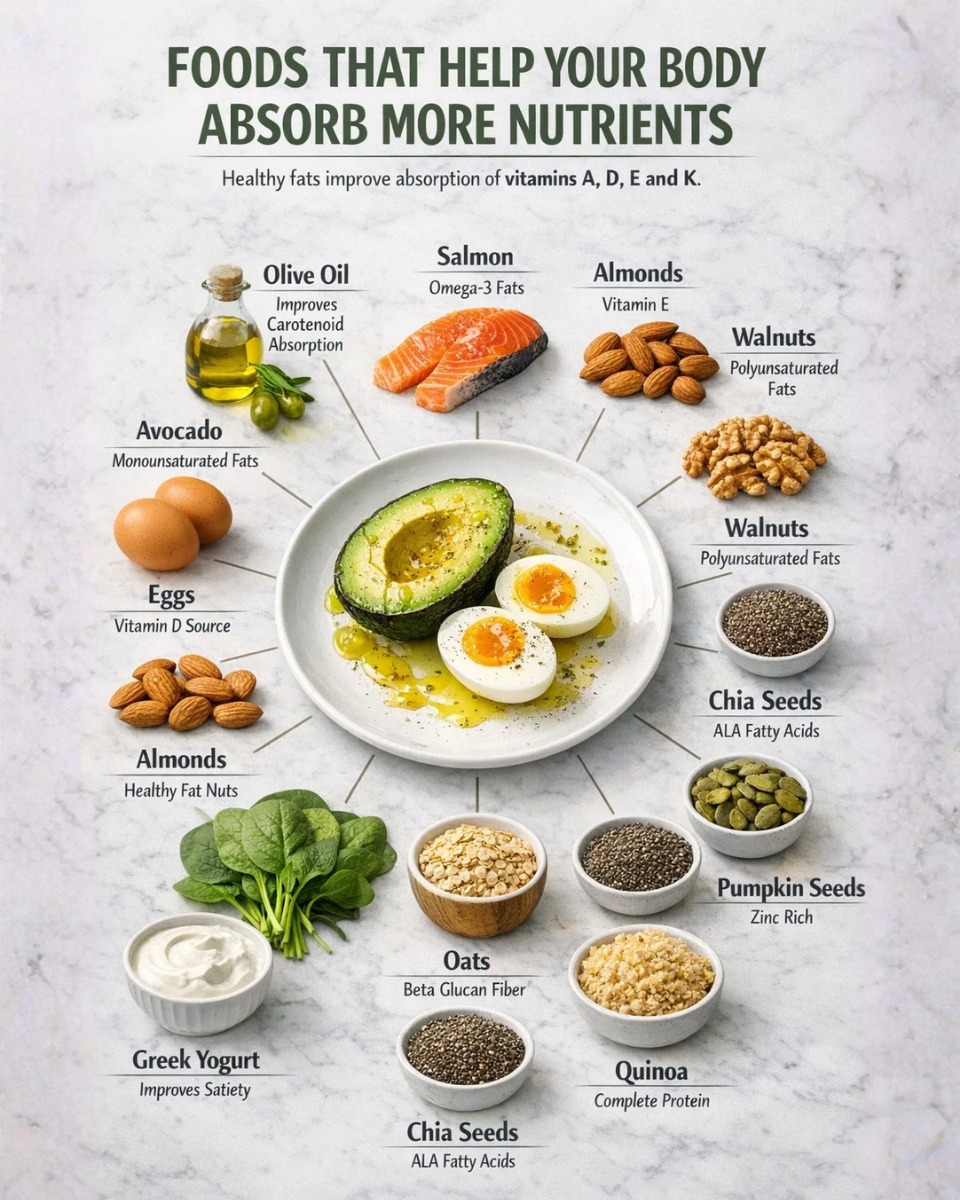
Foods that help your body absorb more nutrients often contain healthy fats, which are essential for absorbing fat-soluble vitamins like A, D, E, and K. These nutrients play a role in vision, immune function, and overall balance.
The key is not just what you eat—but how you combine foods.
Why Nutrient Absorption Matters More Than You Think
Your body doesn’t absorb all nutrients equally.
Certain vitamins—especially A, D, E, and K—require fat to be properly absorbed. Without enough dietary fat, even nutrient-rich meals may not deliver their full benefit.
This is why combining vegetables with healthy fats can make a meaningful difference over time.
Healthy Fats That Improve Nutrient Absorption
These foods provide fats that help your body absorb vitamins more efficiently.
Olive Oil
Olive oil is one of the most widely used healthy fats.
How it helps:
May improve absorption of fat-soluble vitamins and carotenoids from vegetables.
How to use:
- Drizzle over salads
- Add to cooked vegetables
Avocado
Avocado provides monounsaturated fats along with fiber.
How it helps:
Supports absorption of nutrients like beta-carotene from plant foods.
How to use:
- Add to salads
- Spread on toast or bowls
Salmon
Salmon contains omega-3 fatty acids.
How it helps:
Supports overall nutrient balance and may enhance absorption when paired with vegetables.
How to use:
- Pair with leafy greens
- Add to grain bowls
Nuts and Seeds for Daily Fat Intake
These are easy ways to add small amounts of healthy fat consistently.
Almonds
Almonds provide vitamin E and healthy fats.
How to use:
- Snack on a handful
- Add to yogurt or oatmeal
Walnuts
Walnuts contain polyunsaturated fats.
How to use:
- Add to salads
- Combine with fruit
Chia Seeds
Chia seeds provide omega-3 fatty acids and fiber.
Important tip:
Soak before consuming for better digestion.
How to use:
- Add to smoothies
- Mix into yogurt
Pumpkin Seeds
Pumpkin seeds provide fats and minerals like zinc.
How to use:
- Sprinkle over meals
- Add to snack mixes
Supporting Foods That Work Alongside Fats
While fats are essential, these foods help round out nutrient absorption.
Eggs
Eggs contain fat along with vitamin D.
How they help:
Support absorption and provide additional fat-soluble nutrients.
How to use:
- Boiled or scrambled
- Add to salads
Greek Yogurt
Greek yogurt provides protein and some fat, depending on the type.
How it helps:
Supports satiety and can help balance meals.
How to use:
- Pair with nuts and seeds
- Use as a base for bowls
Oats
Oats provide fiber, which helps regulate digestion and nutrient flow.
How to use:
- Combine with nuts or seeds
- Use as a breakfast base
Quinoa
Quinoa is a complete protein that complements fat-containing foods.
How to use:
- Add to bowls with avocado or salmon
- Use as a base for meals
Spinach
Spinach is rich in vitamins like A and K, which require fat for absorption.
How to use:
- Pair with olive oil
- Add to meals with avocado
How to Combine These Foods for Better Absorption
The most effective approach is combining fat with nutrient-rich foods.
Example 1: Simple Salad
- Spinach
- Tomatoes
- Olive oil
- Pumpkin seeds
→ Improves absorption of plant nutrients
Example 2: Balanced Breakfast
- Greek yogurt
- Almonds
- Chia seeds
- Oats
→ Combines protein, fat, and fiber
Example 3: Nourishing Bowl
- Quinoa
- Salmon
- Avocado
- Vegetables
→ Supports both nutrient intake and absorption
Featured Recipe: Nutrient Absorption Bowl
Description:
A balanced bowl designed to help your body absorb more nutrients by combining healthy fats with vegetables.
Ingredients:
- 1 cup spinach
- ½ avocado
- ½ cup cooked quinoa
- 1 boiled egg
- 1 tablespoon pumpkin seeds
- 1 tablespoon olive oil
Instructions:
- Add spinach to a bowl
- Top with quinoa and sliced avocado
- Add boiled egg
- Sprinkle pumpkin seeds
- Drizzle olive oil and serve
Why this works:
This combination pairs fat with nutrient-dense foods, helping improve absorption efficiency.
Practical Tips to Improve Nutrient Absorption
- Add a source of fat to meals with vegetables
- Avoid extremely low-fat diets when focusing on nutrient intake
- Combine different food groups instead of eating foods in isolation
- Focus on consistency rather than one “perfect” meal
Final Thoughts
Foods that help your body absorb more nutrients are not complicated—they are simple ingredients used strategically.
By adding healthy fats like olive oil, avocado, nuts, and seeds to your meals, you can support better absorption of key vitamins and nutrients over time.
Small adjustments in how you combine foods can make a meaningful difference in how your body uses what you eat.