Some home remedies look unusual the first time you see them.
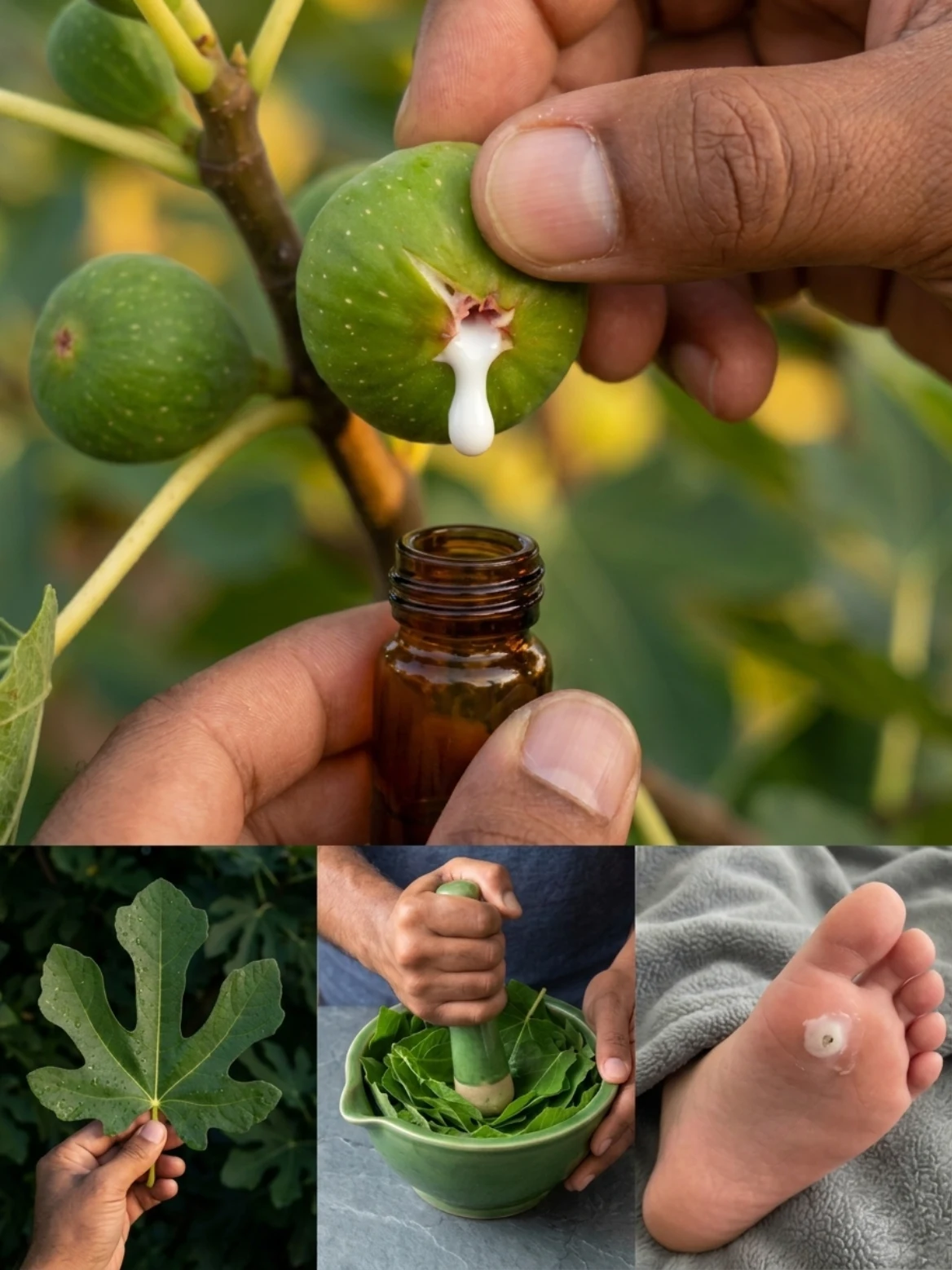
Fig latex, the milky white sap that comes from an unripe fig, is one of them. In traditional practice, people have sometimes used this thick sap and crushed fig leaves as an external remedy for corns, rough skin, and wart-like spots on the feet. It is one of those old remedies that sounds simple, but it is definitely not a casual kitchen treatment.
Most people are surprised that a fig tree can produce a strong white sap at all. That is exactly why this remedy gets attention. The plant looks gentle, yet the latex is active enough that people have used it on stubborn thickened skin for generations.
Still, this is a remedy that needs care, patience, and realistic expectations.
What This Traditional Remedy Is Used For
This kind of fig remedy is usually associated with external skin use, especially for:
- corns on the feet
- small wart-like spots
- rough, thickened skin
- stubborn hardened patches
It is not a drink, not a detox, and not something to use all over the body. In traditional use, it is usually applied only to a small targeted area.
That detail matters. A plant sap that may help on a tiny patch of thick skin can also irritate healthy skin if it is used carelessly.
Ingredients
A basic traditional-style version uses only a few simple things:
- 1 fresh green fig or a small amount of fresh fig latex
- 2 to 4 fresh fig leaves
- a clean bowl or mortar if making a leaf paste
- cotton swab or clean fingertip for spot application
Some people use only the latex. Others combine it with crushed leaves for a stronger plant-based poultice.
How to Prepare It
This remedy is usually made fresh.
Step 1: Collect the latex carefully
A small cut is made on an unripe green fig so the white sap can drip out. Only a small amount is needed.
Step 2: Prepare the leaves
Wash the fig leaves well. Crush them into a soft paste using a mortar, pestle, or spoon. This creates a simple topical plant mixture.
Step 3: Keep the amount small
Whether using latex alone or leaf paste, this remedy is meant for spot use, not broad application.
How to Use It
This remedy is traditionally used only on a small corn or wart-like area.
For fig latex spot use
Apply a very tiny amount of fresh fig sap directly to the thickened spot using a cotton swab. Avoid the surrounding healthy skin.
For fig leaf paste
Place a small amount of crushed fig leaf paste over the targeted area. Leave it on briefly, then rinse.
Best time to use
Many people prefer using it in the evening, when the foot can stay still and the area can be monitored more easily.
Frequency
This is usually repeated in a cautious, occasional way rather than used aggressively several times a day.
Why People Believe It Works
The reason this remedy has lasted in traditional use is simple: fig latex is not just water.
It is thick, sticky, and active enough to make people feel that it is doing something to the hardened skin. On corns and wart-like spots, old remedies often rely on substances that gradually soften, dry out, or irritate the abnormal tissue until it loosens over time.
That is likely why fig latex earned its reputation.
The leaf paste adds another layer to the remedy. Instead of only using the sap, some people apply the crushed leaves because they believe the whole fresh plant helps the area soften more effectively.
Still, this does not mean it works for everyone. It also does not mean every foot bump is a corn or wart.
Who May Be Interested in This Remedy
This traditional remedy may appeal most to people who:
- prefer old-fashioned plant-based skin remedies
- want a targeted home treatment for corns
- are curious about fig latex uses
- like simple external remedies rather than commercial products
It is best suited for small, localized rough spots, not widespread skin issues.
Quick Relief Timeline
This part is important.
A corn or plantar wart usually does not disappear overnight. With remedies like this, people generally expect slow changes over days to several weeks.
The first thing you may notice is that the area feels drier, softer, or slightly looser. That is more realistic than expecting a sudden dramatic result after one application.
If the spot becomes more painful, more red, or starts spreading, that is not a good sign.
Safety Notes You Should Not Skip
This is the most important section.
Fig latex can irritate skin. That means:
- do a patch test first
- use only a tiny amount
- avoid healthy surrounding skin
- never use near the eyes, lips, or sensitive areas
- do not use on broken skin, bleeding skin, or infected skin
Also, not every bump on the foot is a simple corn. A wart, callus, blister, splinter, cyst, or infected lesion can look similar at first.
You should not rely on this remedy alone if:
- the area is very painful
- there is redness, swelling, or pus
- you have diabetes or poor circulation
- the lesion keeps growing
- you are unsure what the spot actually is
In those cases, proper medical care is much safer than repeated home treatment.
Final Takeaway
Fig latex and fig leaf paste are old external remedies people still talk about for corns, plantar warts, and rough foot spots. The appeal is obvious: the treatment is simple, natural, and easy to make fresh from the plant.
But this is not a harmless all-purpose remedy. It is a strong spot treatment that should be used carefully, patiently, and only on a small area.
Sometimes the most useful thing about a traditional remedy is not just knowing how to use it. It is knowing when to use caution too.
Related Source Science
The traditional value of fig latex usually comes from its thick, active sap and its long history of external spot use on hardened skin. The most realistic expectation is gradual softening of a small rough area over time, not instant removal. Safety matters because plant latex can irritate healthy skin just as easily as it can affect the targeted spot.