Good nutrition isn’t just about calories and protein. Micronutrients such as calcium, iron, vitamin D, and zinc play essential roles in bone strength, energy production, immune health, and overall wellness. Fortunately, many everyday foods can help you increase your intake naturally.
Below are some of the best food sources for these important nutrients and practical ways to include them in your meals.
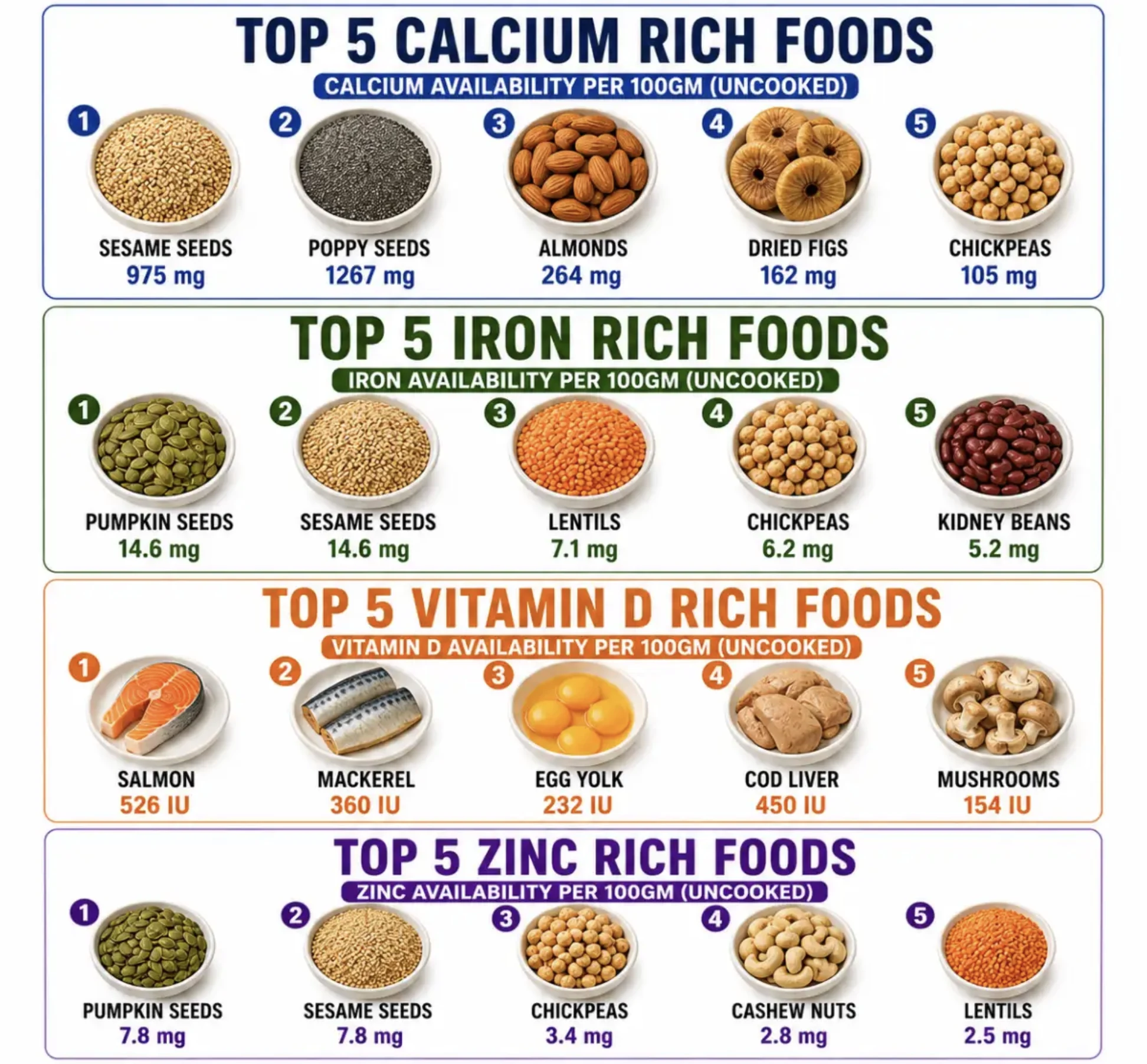
Calcium-Rich Foods for Strong Bones
Calcium is critical for maintaining healthy bones, teeth, muscles, and nerves.
Sesame Seeds
Sesame seeds are among the richest plant-based calcium sources available. Just a small serving can contribute significantly to your daily needs.
Best ways to eat them:
- Sprinkle on salads
- Add to oatmeal
- Blend into smoothies
- Use tahini as a spread or dressing
Poppy Seeds
Poppy seeds provide impressive amounts of calcium and can easily be added to meals.
Try them in:
- Yogurt bowls
- Overnight oats
- Homemade muffins
- Smoothies
Almonds
Almonds provide calcium along with healthy fats, vitamin E, and protein.
Enjoy them:
- As a snack
- With fruit
- In trail mixes
- As almond butter
Dried Figs
Dried figs are naturally sweet and offer both calcium and fiber.
They work well in:
- Oatmeal
- Salads
- Snack plates
- Homemade energy bites
Chickpeas
Chickpeas provide moderate calcium while also delivering plant protein and fiber.
Popular options include:
- Hummus
- Roasted chickpeas
- Grain bowls
- Soups
Iron-Rich Foods for Energy
Iron helps transport oxygen throughout the body and supports healthy energy levels.
Pumpkin Seeds
Pumpkin seeds are one of the best plant-based iron sources.
Easy ways to use them:
- Sprinkle over salads
- Add to yogurt
- Include in granola
- Enjoy as a snack
Sesame Seeds
Besides calcium, sesame seeds also contain significant amounts of iron.
For better absorption, combine them with vitamin C-rich foods like oranges, strawberries, or bell peppers.
Lentils
Lentils are a nutrition powerhouse containing iron, protein, and fiber.
Great uses include:
- Lentil soup
- Curry dishes
- Grain bowls
- Fresh salads
Chickpeas
Chickpeas contribute additional iron and are easy to include in everyday meals.
Kidney Beans
Kidney beans offer iron along with fiber and plant protein.
Add them to:
- Chili
- Burrito bowls
- Salads
- Soups
Vitamin D-Rich Foods
Vitamin D supports calcium absorption and plays a key role in immune function.
Salmon
Salmon is one of the richest natural food sources of vitamin D.
Best preparation methods:
- Baking
- Grilling
- Air frying
- Pan searing
Mackerel
Mackerel delivers vitamin D together with heart-healthy omega-3 fats.
Egg Yolks
Egg yolks provide vitamin D, choline, and high-quality protein.
Simple serving ideas:
- Boiled eggs
- Omelets
- Breakfast bowls
- Avocado toast
Cod Liver
Cod liver has traditionally been valued for its concentrated vitamin D content.
Mushrooms
Certain mushrooms naturally produce vitamin D when exposed to sunlight.
Try them:
- Roasted
- Sautéed
- In omelets
- In stir-fries
Zinc-Rich Foods for Immune Support
Zinc is involved in hundreds of enzymatic reactions and supports immune health, wound healing, and protein synthesis.
Pumpkin Seeds
Pumpkin seeds are among the best plant-based zinc sources available.
Sesame Seeds
Another reason sesame seeds stand out is their impressive zinc content.
Chickpeas
Chickpeas provide zinc while supporting protein and fiber intake.
Cashews
Cashews contain zinc, magnesium, and healthy fats.
Perfect for:
- Snacking
- Trail mixes
- Smoothie bowls
- Homemade sauces
Lentils
Lentils continue to rank among the most nutrient-dense plant foods available.
Tips for Better Mineral Absorption
Getting nutrients into your diet is only part of the equation. Absorption matters too.
Pair Iron with Vitamin C
Examples include:
- Lentils with tomatoes
- Chickpeas with lemon juice
- Pumpkin seeds with berries
- Beans with bell peppers
Soak Legumes Before Cooking
Soaking beans and lentils may help reduce compounds that interfere with mineral absorption.
Include Healthy Fats
Healthy fats help support absorption of fat-soluble nutrients such as vitamin D.
Good options include:
- Olive oil
- Avocado
- Nuts
- Seeds
Eat a Variety of Foods
No single food provides every nutrient. Combining seeds, legumes, fish, fruits, vegetables, and nuts creates a more balanced nutritional approach.
Simple Daily Nutrient-Rich Meal Plan
Breakfast:
- Greek yogurt
- Almonds
- Dried figs
Lunch:
- Chickpea salad with vegetables and olive oil
Snack:
- Pumpkin seeds and fresh fruit
Dinner:
- Baked salmon with roasted vegetables
This combination provides a broad range of calcium, iron, vitamin D, zinc, protein, fiber, and healthy fats.
Final Thoughts
Building a nutrient-rich diet doesn’t require complicated meal plans. Foods such as sesame seeds, pumpkin seeds, lentils, chickpeas, almonds, salmon, and mushrooms provide valuable amounts of calcium, iron, vitamin D, and zinc. By including these foods regularly and combining them thoughtfully, you can support stronger bones, better energy levels, improved immunity, and long-term health through everyday meals.