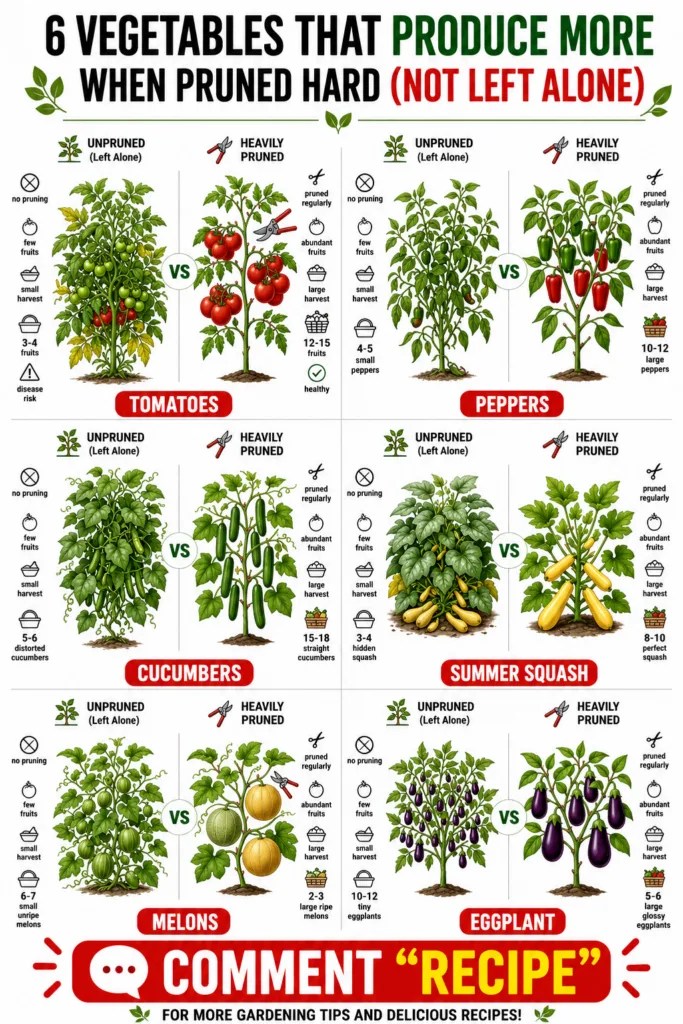
Many gardeners assume that the more leaves a plant has, the bigger the harvest will be. In reality, strategic pruning can encourage healthier growth, improve air circulation, and help plants direct more energy into producing fruits instead of excess foliage.
Not every vegetable requires heavy pruning, but several popular garden crops respond surprisingly well when trimmed correctly. Here’s how pruning can help these six vegetables thrive.
🍅 Tomatoes
Tomatoes are one of the best-known plants for pruning.
Removing unnecessary suckers and lower leaves helps:
- Improve airflow around the plant
- Reduce the risk of fungal diseases
- Allow more sunlight to reach developing fruit
- Direct energy toward producing larger, healthier tomatoes
For indeterminate tomato varieties, regular pruning throughout the growing season can make harvesting easier and improve fruit quality.
🌶️ Peppers
Pepper plants often become bushy with many small branches.
Light to moderate pruning can:
- Encourage stronger stems
- Improve sunlight penetration
- Increase air circulation
- Help the plant focus energy on developing larger peppers
Avoid removing too many healthy leaves, as they are still essential for photosynthesis.
🥒 Cucumbers
Cucumber vines grow rapidly and can become overcrowded.
Pruning helps by:
- Removing damaged or yellow leaves
- Improving airflow
- Reducing mildew problems
- Encouraging straighter, healthier cucumbers
Training vines onto a trellis together with regular pruning can also make harvesting much easier.
🟡 Summer Squash
Summer squash naturally produces many large leaves that sometimes shade flowers and fruit.
Removing a few older leaves can:
- Increase sunlight around developing squash
- Improve pollination
- Reduce moisture buildup
- Make harvesting easier
Always leave plenty of healthy foliage so the plant can continue producing energy.
🍈 Melons
Melon vines spread quickly and can become tangled.
Many experienced gardeners pinch off excessive side shoots to encourage the plant to invest more energy into fewer, larger melons instead of many undersized fruits.
Supporting developing melons on trellises can also improve fruit quality.
🍆 Eggplant
Eggplants respond well to selective pruning.
Removing weak branches and extra shoots helps:
- Produce stronger stems
- Increase sunlight exposure
- Improve air circulation
- Support larger, healthier eggplants
Staking the plant after pruning also prevents branches from breaking under heavy fruit.
Tips for Successful Pruning
✔ Use clean, sharp pruning shears.
✔ Remove yellow, diseased, or damaged leaves first.
✔ Never remove more than one-third of the plant at one time.
✔ Prune during dry weather to reduce the chance of disease.
✔ Water and fertilize appropriately after pruning to support new growth.
Final Thoughts
Pruning isn’t about cutting plants back aggressively—it’s about helping them grow more efficiently. By removing unnecessary growth, improving airflow, and allowing sunlight to reach more of the plant, you can often enjoy healthier vegetables and a more productive garden.
Every garden is different, so observe how your plants respond and adjust your pruning techniques based on the variety and growing conditions.
Gardening Tip: Pruning is only one piece of the puzzle. Healthy soil, consistent watering, adequate sunlight, and balanced fertilization are just as important for maximizing your harvest.