Embarking on a ketogenic diet can be transformative for many, but it often comes with a common hurdle: the dreaded ‘keto flu.’ Symptoms like brain fog, fatigue, muscle cramps, and headaches can derail your progress and make you question your choices. The good news? These issues are often a sign of imbalanced electrolytes, not a failure of the diet itself. Understanding the role of key minerals like sodium, potassium, and magnesium is crucial for maintaining your energy and clarity on your keto journey.
When you reduce carbohydrates on keto, your body releases more water and, with it, essential electrolytes. Replenishing these minerals is key to feeling your best. This guide will reveal 9 powerful, keto-friendly foods that are packed with the electrolytes you need to effortlessly fuel your body, avoid common keto challenges, and say goodbye to brain fog and keto headaches.
Let’s dive into these natural sources and learn how to incorporate them into your daily routine for a smoother, more successful ketogenic lifestyle.
Why Electrolytes Are Crucial for Your Keto Journey
Electrolytes are minerals that carry an electric charge when dissolved in water, playing vital roles in nearly every bodily function. They regulate nerve and muscle function, hydrate the body, balance blood acidity and pressure, and help rebuild damaged tissue. On a ketogenic diet, the reduced carbohydrate intake leads to lower insulin levels, which signals your kidneys to excrete more sodium and water. This increased excretion can deplete other vital electrolytes, leading to the unpleasant symptoms of the keto flu.
Specifically, a sufficient intake of sodium, potassium, and magnesium is paramount. Sodium helps maintain fluid balance, nerve impulses, and muscle contractions. Potassium is essential for heart health, fluid balance, and muscle function. Magnesium plays a role in over 300 enzyme reactions, including energy production, muscle and nerve function, blood glucose control, and blood pressure regulation. Ensuring you get enough of these can make all the difference in how you feel and perform on keto.
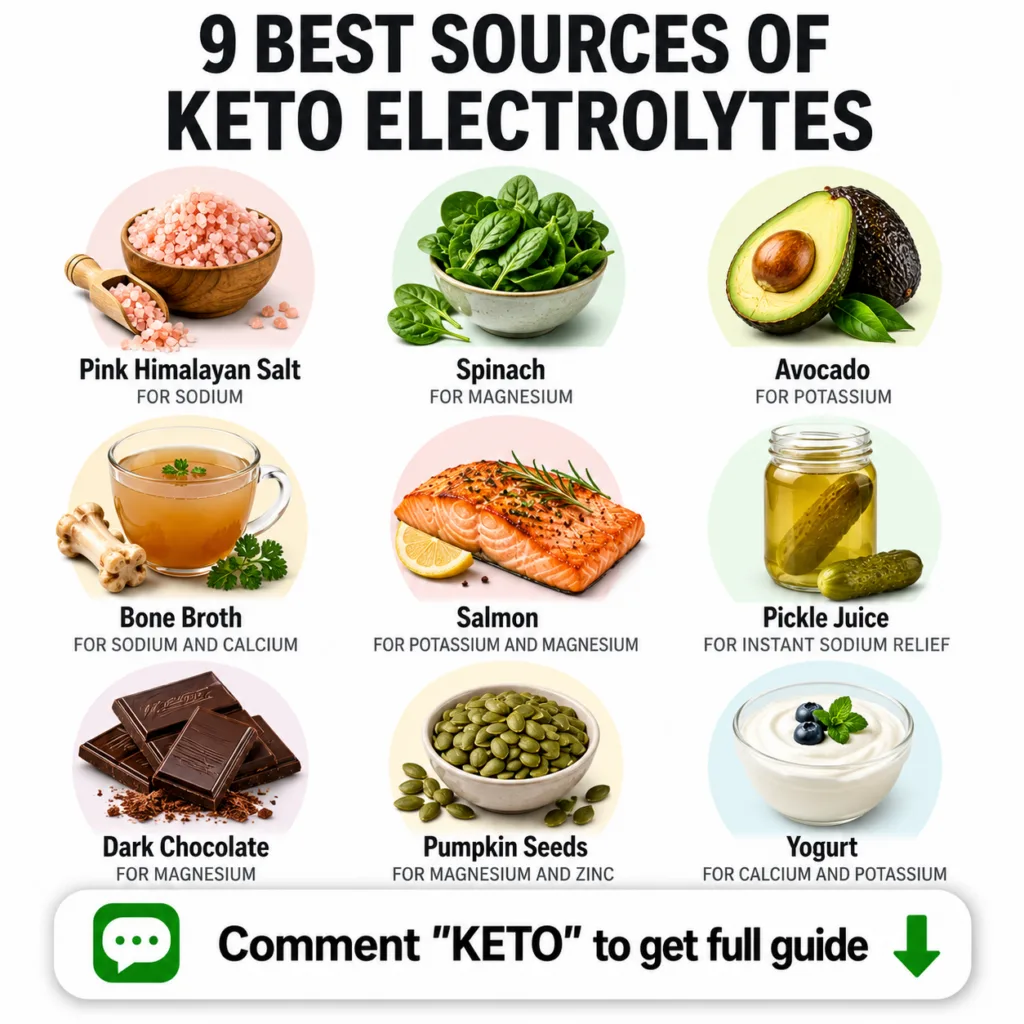
9 Best Keto Electrolyte Sources to Banish Brain Fog and Headaches
To help you navigate your low-carb lifestyle with ease, we’ve identified the top nine keto-friendly foods that are rich in essential electrolytes. Incorporating these into your meals can help you maintain optimal mineral balance and thrive on keto.
1. Pink Himalayan Salt: Your Go-To for Sodium
Sodium is often villainized, but on a keto diet, it’s your friend! Pink Himalayan salt isn’t just sodium chloride; it also contains trace minerals. It’s crucial for preventing dehydration and muscle cramps, especially when carbohydrate intake is low. Adding it to your food or dissolving a pinch in water throughout the day can significantly boost your sodium levels.
- Electrolyte Focus: Sodium
- How to Use: Season all your meals generously, add a pinch to drinking water or homemade keto electrolyte drinks.
2. Spinach: A Powerhouse of Magnesium
Leafy greens like spinach are a magnesium goldmine. Magnesium is vital for energy production, nerve function, and preventing muscle spasms and headaches often associated with keto flu. Cooking spinach can sometimes reduce its magnesium content, so incorporating raw spinach into salads or smoothies is also beneficial.
- Electrolyte Focus: Magnesium
- How to Use: Blend into smoothies, sauté as a side dish, add to omelets, or use as a base for salads.
3. Avocado: Potassium for Optimal Balance
Avocados are celebrated in the keto community for their healthy fats, but they’re also an excellent source of potassium. Potassium works closely with sodium to maintain fluid balance and nerve signals. A single medium avocado provides a substantial amount of your daily potassium needs, helping to prevent fatigue and muscle weakness.
- Electrolyte Focus: Potassium
- How to Use: Slice into salads, mash for guacamole, add to smoothies, or enjoy plain with a sprinkle of salt.
4. Bone Broth: The Triple-Threat Electrolyte Elixir
Bone broth is a traditional remedy gaining popularity on keto for good reason. It’s rich in sodium, potassium, and magnesium, making it an all-in-one electrolyte solution. Beyond electrolytes, bone broth offers gut-healing collagen and amino acids, making it a powerful addition to your diet.
- Electrolyte Focus: Sodium, Potassium, Magnesium
- How to Use: Drink warm as a comforting beverage, use as a base for soups and stews, or cook vegetables in it. Look for high-quality bone broth for maximum benefits.
5. Salmon: Essential Potassium and Magnesium
Fatty fish like salmon are not only packed with omega-3 fatty acids but also provide significant amounts of potassium and magnesium. These nutrients contribute to cardiovascular health, nerve function, and overall vitality, helping to ward off keto-related fatigue.
- Electrolyte Focus: Potassium, Magnesium
- How to Use: Bake, grill, or pan-sear salmon. Serve with keto-friendly vegetables or a fresh salad.
6. Pickle Juice: A Quick Sodium Boost
Though unconventional, pickle juice is a surprisingly effective and quick way to replenish sodium. It’s particularly useful after intense workouts or if you’re experiencing sudden dizziness or muscle cramps. Just a small shot can make a big difference.
- Electrolyte Focus: Sodium
- How to Use: Drink a small shot (1-2 ounces) when experiencing keto flu symptoms, or add a splash to salad dressings. Ensure it’s sugar-free.
7. Dark Chocolate: Indulge in Magnesium
For those with a sweet tooth, dark chocolate (70% cacao or higher) offers a delicious way to boost magnesium intake. Just a small square can contribute to your daily needs, supporting muscle relaxation and mood regulation. Remember to enjoy in moderation due to its carbohydrate content.
- Electrolyte Focus: Magnesium
- How to Use: Enjoy a small square as a snack, or melt and drizzle over berries for a keto-friendly dessert.
8. Pumpkin Seeds: Small but Mighty Magnesium Providers
Pumpkin seeds are a fantastic keto-friendly snack, loaded with magnesium, zinc, and healthy fats. They’re perfect for combating magnesium deficiency, which can manifest as fatigue, irritability, and muscle cramps. They’re also great for satiety.
- Electrolyte Focus: Magnesium
- How to Use: Sprinkle on salads, add to keto yogurt, or enjoy a handful as a crunchy snack.
9. Yogurt: Creamy Goodness with Magnesium and Potassium
Plain, full-fat, unsweetened yogurt (especially Greek yogurt) can be a good source of both magnesium and potassium. Always check the label for sugar content, as many yogurts are high in carbs. Opt for brands specifically marketed as keto or very low in sugar.
- Electrolyte Focus: Magnesium, Potassium
- How to Use: Enjoy with a sprinkle of pumpkin seeds, a few berries, or a dash of cinnamon. Make sure to choose a plain, full-fat, unsweetened variety.
Practical Tips for Maintaining Electrolyte Balance on Keto
Beyond incorporating these foods, consider these additional strategies for optimal electrolyte management:
- Stay Hydrated: While increasing water intake is important, remember that too much plain water can further dilute electrolytes. Balance it with electrolyte-rich foods and beverages.
- Listen to Your Body: Pay attention to symptoms like fatigue, headaches, or muscle twitches. These are often early warning signs of electrolyte imbalance.
- Consider Salt Intake: Don’t be afraid to salt your food generously, especially if you’re active. Many keto dieters benefit from 3,000-5,000 mg of sodium daily.
- Smart Snacking: Keep keto-friendly, electrolyte-rich snacks like pumpkin seeds or a small portion of dark chocolate on hand.
- Meal Planning: Plan your meals to ensure a consistent intake of various electrolyte sources throughout the day.
Frequently Asked Questions About Keto Electrolytes
What exactly is “keto flu”?
Keto flu is a collection of symptoms that can occur when transitioning to a ketogenic diet. These include headaches, fatigue, dizziness, irritability, and muscle cramps. They are primarily caused by the body adapting to burning fat for fuel and significant fluid and electrolyte loss.
How much sodium, potassium, and magnesium do I need on keto?
While needs vary, general recommendations for keto often suggest:
- Sodium: 3,000-5,000 mg per day
- Potassium: 1,000-3,500 mg per day
- Magnesium: 300-500 mg per day
It’s always best to consult a healthcare professional for personalized advice, especially if you have underlying health conditions.
When should I consider electrolyte supplements?
While whole foods are always preferred, supplements may be beneficial if you struggle to meet your electrolyte needs through diet alone, especially during the initial adaptation phase, intense exercise, or in hot climates. Always choose high-quality, sugar-free electrolyte supplements and consult your doctor before starting any new supplement regimen.
Final Thoughts
Managing your electrolytes is not just about avoiding the keto flu; it’s about optimizing your well-being, energy, and mental clarity on your ketogenic journey. By prioritizing these 9 delicious and nutrient-dense foods, you’re not just fueling your body, you’re empowering it to thrive.
Remember that a balanced, whole-food approach is always the best strategy for long-term health and success on any dietary path. Incorporate these electrolyte-rich options, listen to your body, and enjoy the many benefits of a well-supported keto lifestyle!
Medical Disclaimer
The information provided in this article is for general informational purposes only and does not constitute medical advice. It is not intended to diagnose, treat, cure, or prevent any disease. Always consult with a qualified healthcare professional before making any changes to your diet, exercise routine, or supplement regimen, especially if you have any pre-existing health conditions or concerns.