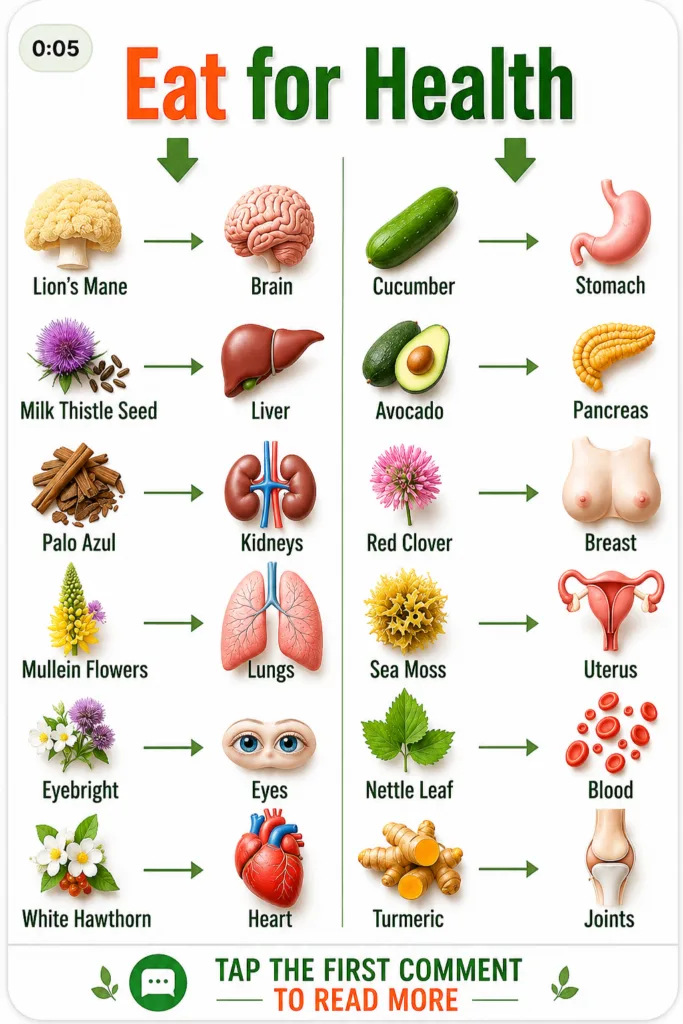
Many foods and herbs have been traditionally used to support overall wellness. While no food can cure or prevent disease on its own, a balanced diet rich in nutrient-dense ingredients can help keep your body functioning at its best.
Let’s explore some popular foods and herbs often associated with different areas of health—and what science says about them.
🧠 Lion’s Mane → Brain
Lion’s Mane mushroom has gained attention for its potential to support cognitive health. Early research suggests it contains compounds that may encourage nerve growth, but more human studies are needed.
How to enjoy it:
- Tea
- Capsules
- Stir-fries
- Mushroom coffee
🍃 Milk Thistle → Liver
Milk thistle contains silymarin, an antioxidant that has been studied for its role in supporting liver health.
It may help protect liver cells from oxidative stress, although it should not replace medical treatment for liver disease.
🌳 Palo Azul → Kidneys
Palo Azul is a traditional herbal tea enjoyed in parts of Central America.
People often drink it as part of a healthy hydration routine, but there is currently limited scientific evidence that it directly improves kidney function.
🌼 Mullein Flowers → Lungs
Mullein has been used in traditional herbal medicine to soothe the throat and respiratory tract.
Many people enjoy mullein tea during seasonal discomfort, though more clinical research is needed.
👀 Eyebright → Eyes
Eyebright has a long history in traditional herbal practices for eye comfort.
While some people use it for mild irritation, scientific evidence supporting its effectiveness remains limited.
❤️ White Hawthorn → Heart
Hawthorn berries and leaves contain antioxidants that have been studied for supporting healthy circulation and cardiovascular function.
Always consult your healthcare provider before taking herbal supplements, especially if you have heart conditions.
🥒 Cucumber → Stomach
Cucumbers are rich in water and can help keep you hydrated.
They also provide fiber, making them a refreshing addition to a balanced digestive-friendly diet.
🥑 Avocado → Pancreas
Avocados contain healthy monounsaturated fats, fiber, vitamins, and minerals that support overall metabolic health.
They fit well into many balanced eating patterns.
🌸 Red Clover → Women’s Health
Red clover contains naturally occurring isoflavones, compounds that have been studied for their possible role in supporting women during menopause.
Results remain mixed, and more research is needed.
🌊 Sea Moss → General Nutrition
Sea moss contains minerals such as iodine and potassium.
Although it’s often promoted online as a superfood, many health claims have not been confirmed by strong scientific evidence.
🌿 Nettle Leaf → Blood Health
Nettle leaves provide vitamins and minerals, including iron, vitamin C, and antioxidants.
They can be part of a nutritious diet but should not be considered a treatment for anemia without medical guidance.
🟡 Turmeric → Joints
Turmeric contains curcumin, a natural compound known for its anti-inflammatory properties.
Some studies suggest curcumin may help reduce mild joint discomfort when consumed regularly as part of a healthy lifestyle.
🌱 Healthy Living Is About Balance
No single food or herb can magically improve one organ overnight. Your overall health depends on many daily habits, including:
- Eating a variety of fruits and vegetables
- Staying hydrated
- Exercising regularly
- Getting enough sleep
- Managing stress
- Following medical advice for existing health conditions
Natural foods can be a valuable part of a healthy lifestyle, but they work best alongside balanced nutrition—not as miracle cures.
💚 Think of food as one important piece of the wellness puzzle, not the entire solution.