Ready for a splash of fun and a brain workout? Our latest visual logic puzzle has been making waves, and it’s time to dive into the science behind it! This isn’t just a simple ‘spot the difference’ or ‘find the missing piece’ challenge; it’s a clever test of your understanding of a fundamental scientific principle. So, grab your thinking cap, because we’re about to explore the intriguing world of the glass water puzzle!
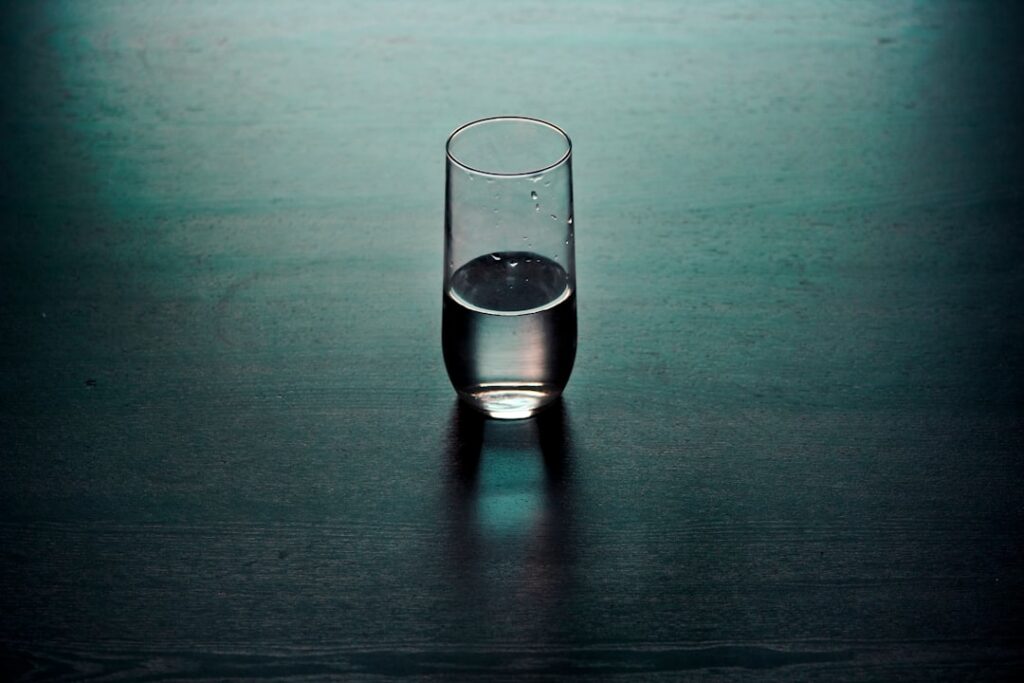
The Setup: Four Glasses, One Mystery
Imagine four identical glasses, each filled with water. Here’s the catch: a different object is submerged in each glass. We have:
- Glass A: Contains a pair of scissors.
- Glass B: Holds a small paper clip.
- Glass C: Has an eraser.
- Glass D: Features a watch.
The trickiest part? All four glasses appear to have the exact same water level. Your mission, should you choose to accept it, is to figure out: which glass actually contains the most water?
Beyond the Surface: Understanding Displacement
At first glance, many people might assume that if the water levels are the same, then all glasses contain the same amount of water. But this, my friends, is where the visual logic puzzle truly comes alive! The key to solving this isn’t the water level you see, but the invisible force at play: water displacement.
Think about it like this: when you put an object into water, it pushes some of that water aside. The amount of water pushed aside is equal to the volume of the object submerged. This is a concept known as Archimedes’ Principle, and it’s super handy for solving puzzles like this!
The Golden Rule for Our Puzzle:
The object occupying the least volume leaves the greatest amount of water inside the glass.
Why? Because if an object takes up less space, it displaces less water. If it displaces less water, then more of the original water volume remains in the glass.
Comparing Our Objects: Scissors, Paper Clip, Eraser, and Watch
Now, let’s look at our submerged items and estimate their volumes:
- Scissors: Typically, scissors are quite bulky. Even if they’re not huge, they’ll occupy a significant volume.
- Watch: A watch, especially a wrist-watch, can be somewhat compact but still has a noticeable volume due to its mechanisms and casing.
- Eraser: Erasers come in various sizes, but generally, they are solid and occupy a fair amount of space, less than scissors but likely more than a small paper clip.
- Paper Clip: A standard paper clip is tiny! It’s made of thin wire and designed to be very small and light. Its overall volume is minimal.
Based on this comparison, the paper clip occupies the smallest volume among all the objects. And what does our golden rule tell us about the object with the least volume?
The Big Reveal: The Answer is B!
That’s right! Because the paper clip in Glass B takes up the least amount of space, it displaces the least amount of water. This means that Glass B contains the most actual water compared to the other glasses.
Isn’t that fascinating? It teaches us that sometimes, what you see isn’t the whole story. You have to think about the underlying principles!
Keep Your Brain Sharp with Quiz!
This glass water puzzle is a fantastic example of how a simple visual challenge can help us learn a bit of science and sharpen our critical thinking skills. It encourages us to look beyond the obvious and consider all the factors at play.
Did you get it right? Share your thoughts in the comments below! And if you loved this challenge, be sure to follow Quiz for more fun, interactive brain teasers, quizzes, and fascinating facts that will keep your mind engaged and your knowledge growing!