Are you looking to enhance your strength, build lean muscle, or simply improve your overall physical well-being? While consistent training is crucial, what you put into your body plays an equally significant role. Nutrition is the bedrock of muscle growth and recovery, providing the essential building blocks and energy your body needs to perform and repair.
Understanding which foods best support your muscle-building goals can transform your results. It’s not just about eating more; it’s about eating smart. In this comprehensive guide, we’ll dive into key foods that fuel muscle growth and aid in recovery, alongside essential lifestyle habits that will help you unlock your full potential.
The Building Blocks: Essential Foods for Muscle Growth & Recovery
Muscles require a steady supply of macronutrients (protein, carbohydrates, and fats) and micronutrients (vitamins and minerals) to repair damaged tissues after exercise, synthesize new muscle protein, and replenish energy stores. Here are some power-packed foods that should be staples in your diet:
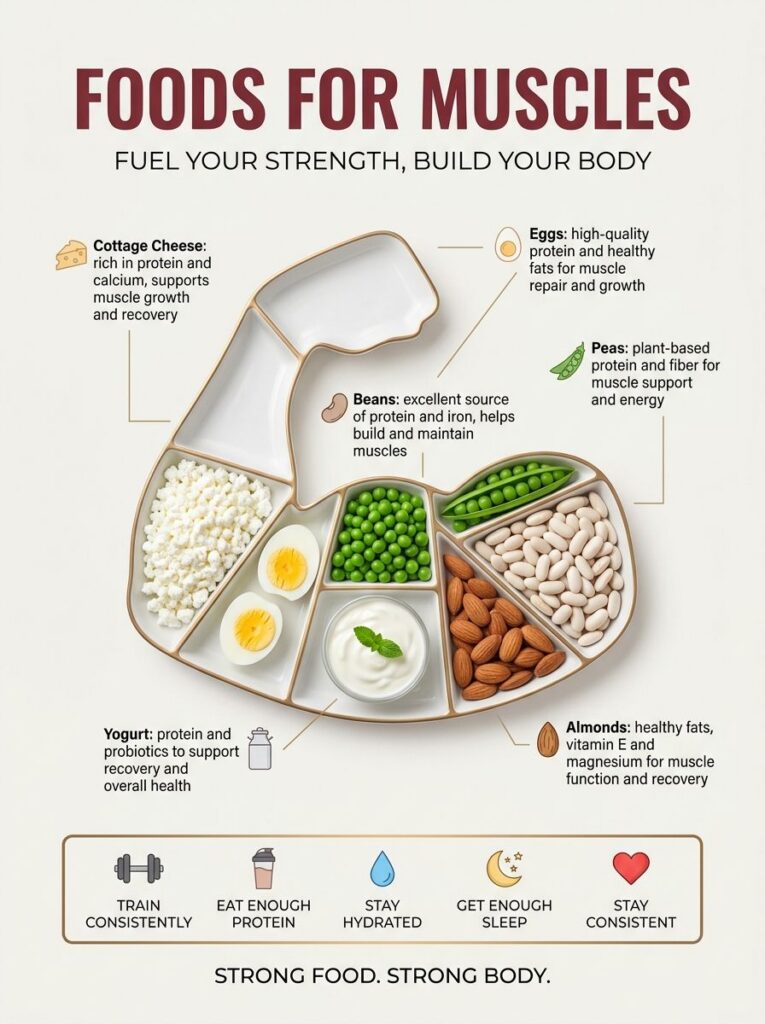
1. Cottage Cheese: The Slow-Release Protein Powerhouse
- Why it’s great: Cottage cheese is renowned for its high protein content, primarily casein protein. Casein is a slow-digesting protein, meaning it releases amino acids gradually into your bloodstream over several hours. This makes it an excellent choice for sustained muscle repair, especially before bedtime, providing a steady supply of amino acids throughout the night. It’s also rich in calcium, vital for bone health and muscle function.
- How to enjoy: Pair it with berries, a sprinkle of nuts, or use it as a creamy base for savory dips.
2. Hard-Boiled Eggs: Complete Protein Perfection
- Why it’s great: Eggs are often called nature’s perfect protein. They contain all nine essential amino acids, making them a complete protein source necessary for muscle protein synthesis. Beyond protein, eggs provide healthy fats (found in the yolk), vitamins (like B12, D, and A), and minerals (like selenium and choline), all contributing to overall health and optimal bodily functions, including muscle repair and energy production.
- How to enjoy: A quick snack, added to salads, or part of a balanced breakfast.
3. Green Peas: A Plant-Based Protein & Fiber Boost
- Why it’s great: Don’t underestimate these small green gems! Green peas are a fantastic source of plant-based protein, making them an excellent choice for vegetarians, vegans, or anyone looking to diversify their protein sources. They also provide complex carbohydrates for energy and dietary fiber, which aids digestion and promotes satiety.
- How to enjoy: Add to stir-fries, soups, pasta dishes, or as a vibrant side.
4. Beans: Complex Carbs Meet Plant Protein
- Why it’s great: Varieties like kidney beans, black beans, or cannellini beans are nutritional powerhouses. They offer a significant amount of plant-based protein alongside complex carbohydrates, which are crucial for replenishing glycogen stores after workouts. Their high fiber content also supports digestive health and helps regulate blood sugar levels.
- How to enjoy: In chili, salads, burrito bowls, or blended into homemade veggie burgers.
5. Yogurt: Protein, Probiotics, and Recovery
- Why it’s great: Especially Greek yogurt, it’s packed with protein, making it excellent for muscle repair. Many yogurts also contain probiotics, beneficial bacteria that support gut health. A healthy gut is essential for efficient nutrient absorption, ensuring your body can effectively utilize the proteins and other nutrients you consume for muscle growth.
- How to enjoy: With granola and fruit, in smoothies, or as a healthy substitute for sour cream.
6. Almonds: Healthy Fats, Protein & Micronutrients
- Why it’s great: Almonds are a dense source of healthy monounsaturated fats, protein, and fiber. They also provide vitamin E, a powerful antioxidant that helps protect cells from oxidative stress, and magnesium, a mineral vital for muscle function and energy production. Their caloric density makes them a great energy booster for active individuals.
- How to enjoy: A handful as a snack, added to oatmeal or salads, or as almond butter.
Beyond the Plate: Lifestyle Habits for Optimal Muscle Health
Eating the right foods is only one piece of the puzzle. For truly effective muscle growth and recovery, you need to integrate these nutritional strategies with smart lifestyle choices:
1. Train Consistently
Regular and progressive strength training provides the stimulus your muscles need to grow stronger and larger. Consistency is key; showing up regularly and progressively challenging your muscles with new exercises or heavier weights ensures continuous adaptation and growth.
2. Eat Enough Protein
While we’ve highlighted specific protein sources, ensuring adequate overall daily protein intake is paramount. Aim for approximately 0.7-1 gram of protein per pound of body weight (or 1.6-2.2 grams per kilogram) to support muscle protein synthesis and recovery, especially if you’re actively training.
3. Stay Hydrated
Water is often overlooked but critical for every bodily function, including nutrient transport, regulating body temperature, and joint lubrication. Dehydration can significantly impair athletic performance and hinder recovery. Keep a water bottle handy and sip throughout the day.
4. Get Enough Sleep
Muscle repair and growth largely occur when you’re resting. During deep sleep, your body releases growth hormone, which is vital for tissue repair and regeneration. Aim for 7-9 hours of quality sleep per night to maximize your body’s recovery processes.
5. Stay Consistent
Building muscle and improving health is a journey, not a sprint. Consistency in your diet, training, hydration, and sleep habits will yield the most significant and lasting results. Embrace the process and celebrate small victories along the way.
Practical Tips for Integrating Muscle-Building Foods into Your Diet
- Meal Prep: Dedicate a few hours each week to prepare meals or components like hard-boiled eggs, cooked beans, or pre-portioned yogurt to save time and ensure you have healthy options readily available.
- Smart Snacking: Replace sugary snacks with muscle-friendly options like almonds, a small container of cottage cheese, or a hard-boiled egg.
- Diversify Your Plates: Don’t rely on just one or two protein sources. Incorporate a variety of foods from the list above to ensure a broad spectrum of nutrients.
- Listen to Your Body: Pay attention to how different foods make you feel and adjust your intake based on your energy levels and recovery needs.
Conclusion
Building a strong, healthy body is an empowering journey that combines dedication in the gym with thoughtful nutrition in the kitchen. By incorporating these key foods and adopting essential lifestyle habits, you’re not just fueling your muscles; you’re investing in a stronger, healthier, and more vibrant you. Remember, consistency is your most powerful tool – both in your workouts and on your plate. Start making these positive changes today and feel the difference!