When it comes to healthy snacking, cashews and peanuts are often at the top of the list. Both are delicious, versatile, and packed with nutrients, but have you ever wondered which one offers more ‘bang for your buck’ nutritionally? Many people assume all nuts are created equal, but a closer look at their nutritional profiles reveals some surprising differences.
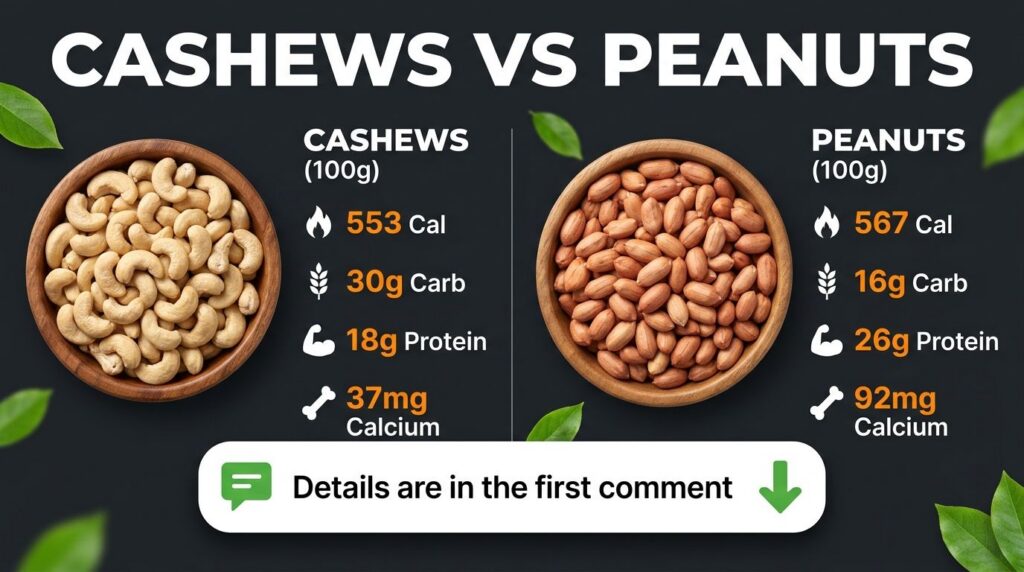
Our detailed breakdown, inspired by a popular infographic, uncovers the key facts about cashews vs. peanuts, focusing on calories, carbohydrates, protein, and calcium per 100 grams. This guide will help you understand their unique benefits and choose the best option to support your health goals.
Nutritional Showdown: Cashews vs. Peanuts (Per 100g)
Let’s dive into the specifics, comparing the typical nutritional values for 100 grams of raw cashews and peanuts. While exact figures can vary slightly depending on preparation and variety, these approximations provide a clear picture of their differences.
Calories
- Cashews: Approximately 553 kcal
- Peanuts: Approximately 567 kcal
The Verdict: Both cashews and peanuts are calorie-dense, which is typical for nuts due to their healthy fat content. While peanuts are slightly higher in calories, the difference per 100g is relatively small, making both potent sources of energy. Moderation is key for both if weight management is a primary concern.
Carbohydrates
- Cashews: Approximately 30g
- Peanuts: Approximately 16g
The Verdict: Here’s a notable difference. Cashews contain almost double the carbohydrates of peanuts. For those monitoring carb intake, such as individuals on ketogenic or lower-carb diets, peanuts offer a significantly lower carb option.
Protein
- Cashews: Approximately 18g
- Peanuts: Approximately 26g
The Verdict: Peanuts emerge as a clear winner in the protein department, offering a substantially higher amount per 100g compared to cashews. This makes peanuts an excellent choice for supporting muscle growth, repair, and overall satiety, which can be beneficial for weight management and active lifestyles.
Calcium
- Cashews: Approximately 37mg
- Peanuts: Approximately 92mg
The Verdict: For bone health, peanuts again take the lead, providing more than double the calcium of cashews per 100g. Calcium is vital for strong bones and teeth, nerve function, and muscle contraction, making peanuts a valuable contributor to your daily intake.
Beyond the Numbers: What This Means for Your Health Goals
Understanding the raw numbers is just the first step. Let’s explore what these nutritional differences mean for your overall health and dietary objectives.
Energy and Weight Management
Given their similar calorie counts, both nuts provide sustained energy. However, the higher protein and fiber content in peanuts (peanuts typically have more fiber than cashews, though fiber wasn’t explicitly in the infographic’s data points, it’s a natural extension for ‘carbohydrates’ explanation) can contribute to greater satiety, helping you feel fuller for longer. This can be advantageous if you’re managing your weight or trying to curb snack cravings.
Muscle Building and Repair
If you’re an athlete or simply focused on maintaining muscle mass, the higher protein content in peanuts makes them a powerhouse snack. Protein is essential for muscle repair and growth, making peanuts a smart choice post-workout or as a regular addition to a protein-rich diet.
Bone Health
The superior calcium content in peanuts makes them a beneficial food for supporting bone density and strength. Including peanuts in your diet can contribute to meeting your daily calcium requirements, which is especially important as we age.
Micronutrients and Healthy Fats
Beyond the highlighted nutrients, both cashews and peanuts are rich in healthy monounsaturated and polyunsaturated fats, which are crucial for heart health. They also provide various other essential vitamins and minerals. Cashews are particularly known for magnesium, copper, and zinc, while peanuts are good sources of vitamin E, B vitamins (like niacin and folate), and magnesium.
Making Your Snack Choice: Cashews or Peanuts?
So, which nut should you pick? The answer often depends on your specific dietary needs and preferences.
Why Choose Peanuts
- Higher Protein: Excellent for muscle support, satiety, and active individuals.
- More Calcium: Beneficial for bone health.
- Lower Carbs: A better option for low-carb diets.
- Affordable: Generally more budget-friendly than cashews.
Why Choose Cashews
- Creamy Texture: Often preferred for their buttery, smooth consistency in dishes and snacks.
- Unique Micronutrients: Good source of magnesium, copper, and zinc.
- Versatile: Popular in vegan cooking, curries, and as a creamy base for sauces.
The Best Approach
Ultimately, a balanced diet often benefits most from variety. Incorporating both cashews and peanuts into your snack rotation allows you to enjoy the unique nutritional benefits and flavors of each. Pay attention to portion sizes, as both are calorie-dense.
Practical Tips for Enjoying Your Nuts
- Portion Control: A small handful (about 1 ounce or 28 grams) is a recommended serving size to keep calories in check.
- Opt for Raw or Lightly Roasted: Avoid heavily salted, candied, or flavored varieties that can add unnecessary sugars and unhealthy fats.
- Include in Meals: Sprinkle chopped nuts over salads, oatmeal, yogurt, or stir-fries for added crunch and nutrition.
- Nut Butters: Enjoy natural cashew or peanut butter (with minimal added ingredients) on toast, in smoothies, or with fruit. Look for brands that list only nuts as ingredients.
Frequently Asked Questions (FAQs)
Q: Are peanuts inflammatory?
A: While some people report sensitivities, research generally suggests that peanuts, when consumed as part of a balanced diet, are not inherently inflammatory for most individuals. They contain antioxidants and healthy fats that can have anti-inflammatory effects.
Q: Can I eat nuts if I’m trying to lose weight?
A: Yes! Despite being calorie-dense, nuts like cashews and peanuts can be part of a weight-loss diet. Their protein, fiber, and healthy fat content contribute to satiety, helping reduce overall calorie intake. The key is mindful portion control.
Q: What’s the best way to store cashews and peanuts?
A: To maintain freshness and prevent rancidity, store nuts in an airtight container in a cool, dark place. For longer storage, refrigeration or freezing is recommended, especially for raw nuts.
Final Thoughts
Both cashews and peanuts offer fantastic nutritional benefits and can be a valuable part of a healthy diet. While peanuts stand out as a surprising winner in terms of protein, calcium, and lower carbohydrate content per 100g, cashews bring their own unique profile of micronutrients and a distinct creamy texture. The ‘best’ choice truly depends on your individual health goals and taste preferences. Enjoy them in moderation, and savor the goodness each provides!
Medical Disclaimer
The information provided in this article is for general informational purposes only and does not constitute medical advice. Always consult with a qualified healthcare professional before making any changes to your diet, especially if you have existing health conditions or concerns.