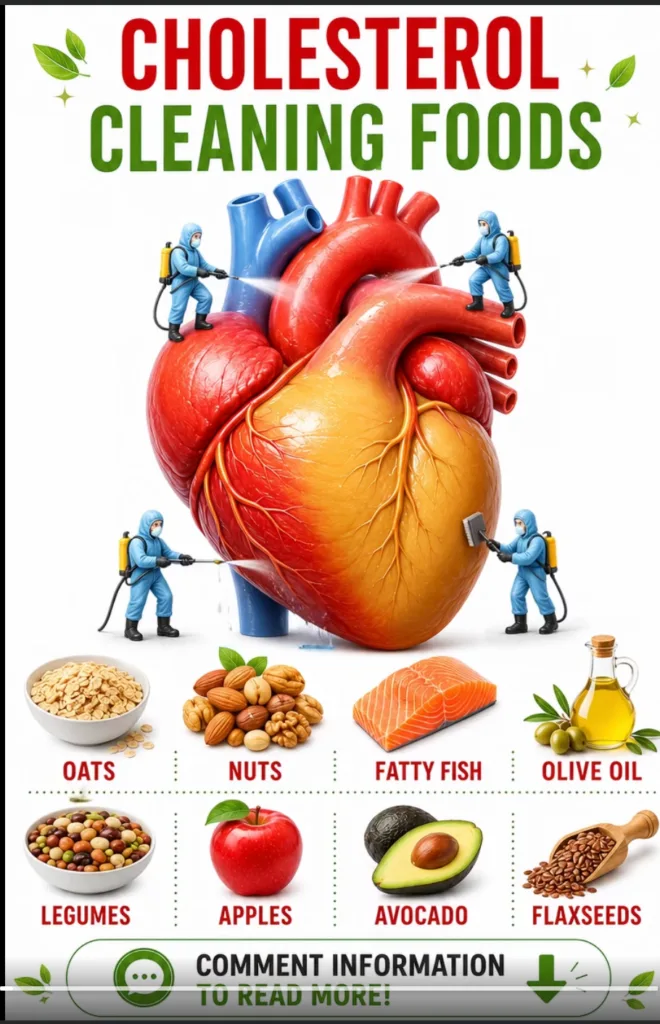
High cholesterol is often called the “silent threat” because it usually develops without noticeable symptoms. Over time, excess LDL (“bad”) cholesterol can contribute to plaque buildup in the arteries, increasing the risk of heart disease and stroke.
While no single food can literally “clean” cholesterol from your arteries, a healthy eating pattern rich in nutrient-dense foods can help support healthy cholesterol levels, improve heart health, and reduce cardiovascular risk.
In this guide, we’ll explore eight science-backed foods that are excellent additions to a heart-friendly diet.
Why Cholesterol Matters
Your body needs cholesterol to produce hormones, vitamin D, and healthy cells. The problem begins when LDL cholesterol becomes too high, allowing fatty deposits to accumulate inside blood vessels.
Maintaining healthy cholesterol levels can help:
- Support healthy blood circulation
- Reduce the risk of heart disease
- Lower the chance of stroke
- Improve long-term cardiovascular health
- Promote overall wellness
Lifestyle habits—including diet, exercise, sleep, and avoiding smoking—play a major role.
1. Oats
Oats are one of the best foods for supporting healthy cholesterol.
They contain beta-glucan, a soluble fiber that binds cholesterol in the digestive system and helps remove it from the body.
Benefits
- Supports healthy LDL cholesterol
- Keeps you feeling full longer
- Supports healthy blood sugar
- Great for digestive health
Easy ideas
- Oatmeal
- Overnight oats
- Smoothies
- Homemade granola
2. Nuts
Almonds, walnuts, pistachios, and pecans provide healthy fats, plant sterols, fiber, and antioxidants.
Regular nut consumption has been associated with improved heart health when eaten in moderation.
Benefits
- Rich in healthy unsaturated fats
- Supports healthy cholesterol balance
- Provides vitamin E and magnesium
- Helps satisfy hunger
Recommended serving:
One small handful (about 1 ounce) per day.
3. Fatty Fish
Fatty fish like:
- Salmon
- Sardines
- Mackerel
- Trout
are excellent sources of omega-3 fatty acids.
Omega-3 fats support heart health by helping maintain healthy triglyceride levels and supporting normal blood vessel function.
Benefits
- Supports cardiovascular health
- Rich in protein
- May help reduce inflammation
- Supports healthy circulation
Aim for two servings per week.
4. Extra Virgin Olive Oil
Olive oil is a cornerstone of the Mediterranean diet.
Its monounsaturated fats and antioxidant compounds make it one of the healthiest cooking oils available.
Benefits
- Supports healthy cholesterol levels
- Rich in polyphenol antioxidants
- Heart-friendly fat source
- Great replacement for butter
Use it for:
- Salad dressings
- Roasted vegetables
- Grilled fish
- Whole-grain dishes
5. Legumes
Beans, lentils, chickpeas, and peas are packed with fiber and plant protein.
Replacing some animal protein with legumes can benefit overall heart health.
Benefits
- High in soluble fiber
- Excellent source of plant protein
- Helps maintain fullness
- Supports digestive health
Great options include:
- Black beans
- Kidney beans
- Lentils
- Chickpeas
6. Apples
The saying “An apple a day” has some scientific support.
Apples contain pectin, another type of soluble fiber, along with antioxidants such as polyphenols.
Benefits
- Supports healthy digestion
- Rich in antioxidants
- Helps increase daily fiber intake
- Naturally sweet snack
For maximum nutrients, eat the skin whenever possible.
7. Avocados
Avocados provide healthy monounsaturated fats along with potassium, fiber, and antioxidants.
Benefits
- Supports heart health
- Rich in fiber
- Helps replace saturated fats
- Excellent source of healthy fats
Enjoy avocado on:
- Toast
- Salads
- Sandwiches
- Smoothies
8. Flaxseeds
Flaxseeds are nutritional powerhouses containing:
- Soluble fiber
- Omega-3 (ALA)
- Lignans
- Protein
Ground flaxseed is easier for the body to digest than whole seeds.
Benefits
- Supports healthy cholesterol
- Supports digestive health
- Rich in antioxidants
- Adds fiber to meals
Try adding ground flaxseed to:
- Yogurt
- Smoothies
- Oatmeal
- Baking recipes
Lifestyle Habits That Support Healthy Cholesterol
Food works best when combined with healthy daily habits.
Consider:
✅ Walking or exercising regularly
✅ Eating more fruits and vegetables
✅ Choosing whole grains
✅ Limiting ultra-processed foods
✅ Avoiding smoking
✅ Getting enough quality sleep
✅ Managing stress
These habits work together to support long-term cardiovascular health.
Can Food Really “Clean” Your Arteries?
It’s a common misconception that specific foods can literally wash plaque out of blood vessels.
The reality is:
Healthy foods cannot instantly remove existing plaque, but research shows that long-term healthy eating patterns can help improve cholesterol levels, reduce inflammation, and lower the risk of further plaque buildup.
Think of these foods as part of a comprehensive heart-healthy lifestyle rather than a quick fix.
Final Thoughts
Healthy cholesterol management isn’t about one miracle food—it’s about consistently making smart choices.
Adding foods like oats, nuts, fatty fish, olive oil, legumes, apples, avocados, and flaxseeds to a balanced diet can support heart health while providing important nutrients your body needs every day.
Small, sustainable habits often make the biggest difference over time.
Disclaimer: This article is for educational purposes only and is not a substitute for professional medical advice. If you have high cholesterol, heart disease, or take cholesterol-lowering medications, consult your healthcare provider before making significant dietary changes.